Weather decides what to wear on a trail ride more than style does: a navy puffer with grey breeches handles a cold morning, and a fleece vest over your base layer covers the stretch in between.
The ideas range from bold magenta breeches to head-to-toe black, but every outfit shares the same base of a helmet and closed shoes.
A fleece vest you can layer under or over a jacket beats any single heavy piece when the forecast can change within an hour.
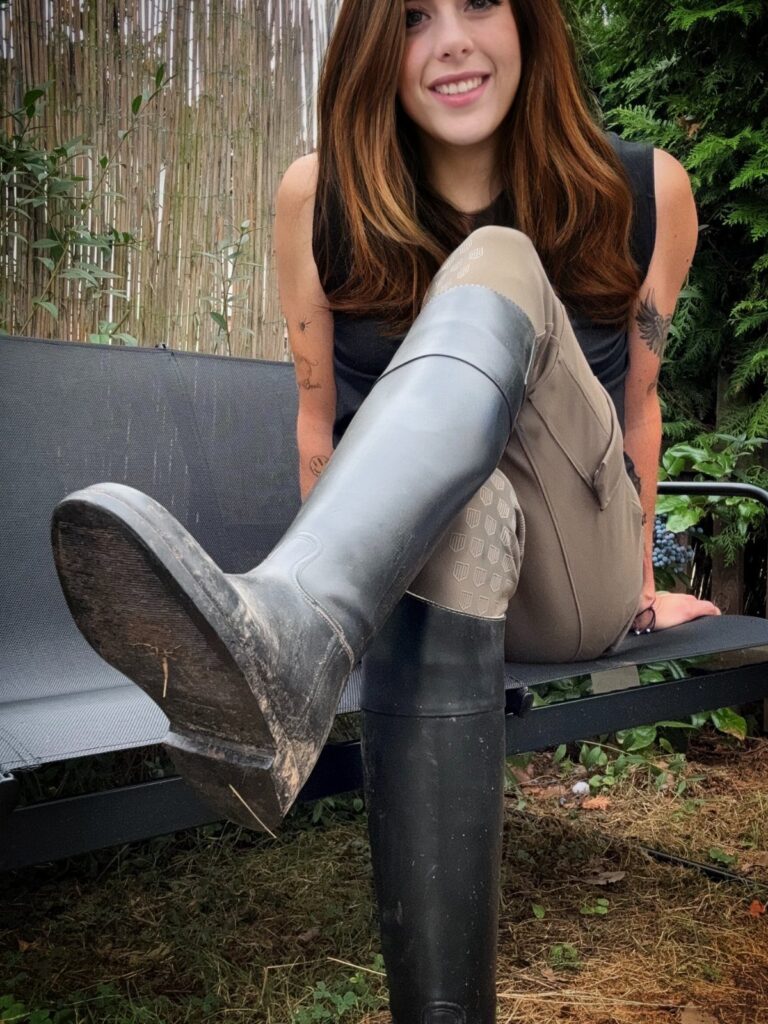
1. Tan Breeches and Black Boots
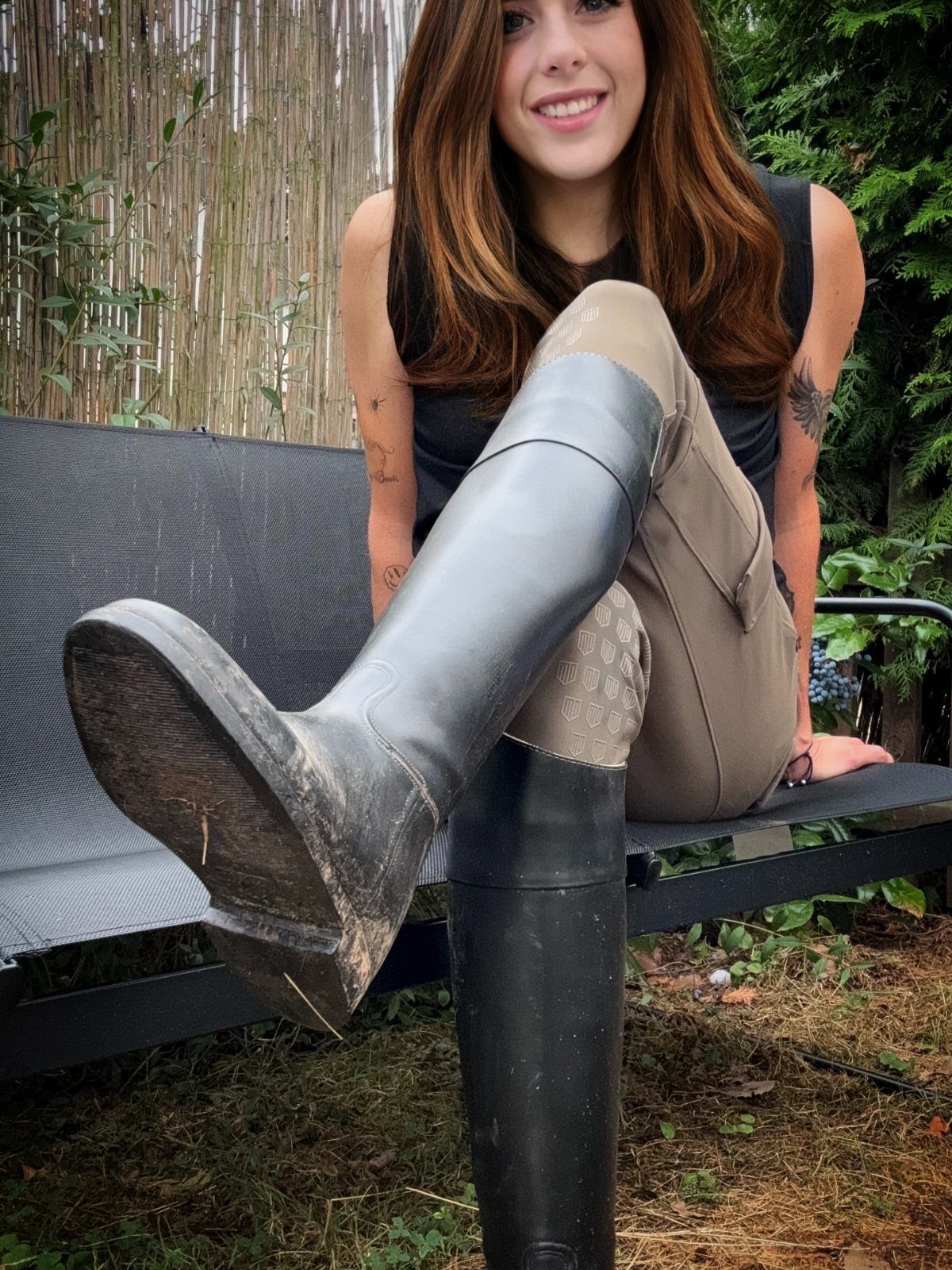
Tan breeches with tall black boots is the pairing I reach for first, because the light leg and dark boot give a clean line that makes legs look longer.
Black stays neutral, so a sleeveless black top works as an easy base on warm days.
Choose boots that reach just below the knee and fit snugly through the calf; loose shafts wrinkle and look sloppy. Tan shows dirt, so keep a damp cloth in the truck.
If the trail is shaded or cool, a light layer over the top is an easy add.
2. Navy Jacket with Magenta Breeches
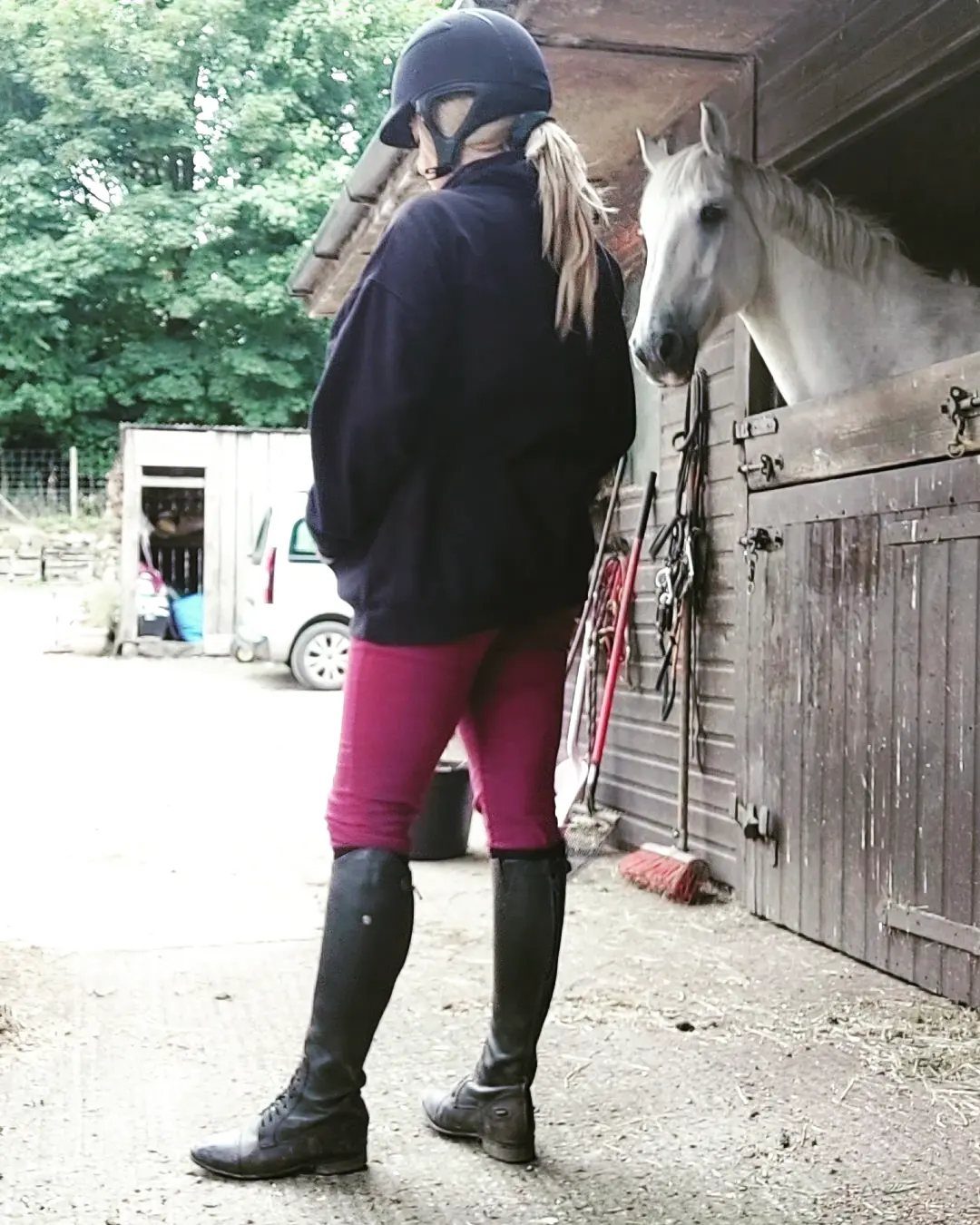
Bold magenta breeches are a fun choice if neutral riding clothes bore you. Anchor them with quieter pieces: a navy jacket, black boots and a helmet in a matching dark tone keep the color from taking over.
I like this because one loud piece is easy to repeat. A plain navy jacket is enough up top; the magenta breeches already have the outfit covered.
Bright fabric shows mud and wear faster than dark colors do, so I’d wash the breeches soon after a muddy ride.
3. All-Black Equestrian Riding Gear
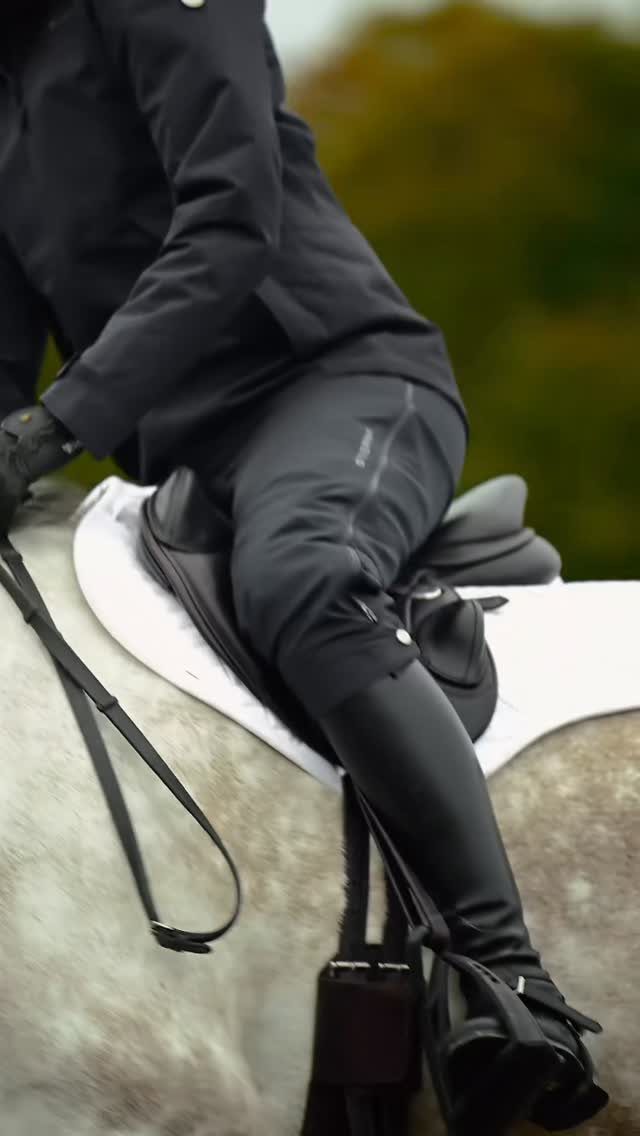
Head-to-toe black reads polished with almost no planning. Jacket, breeches, tall leather boots and gloves all match, so nothing needs coordinating, and it works on any horse.
Wear gloves: they keep the reins from slipping through your fingers and save your palms from rubbing raw. I would pick black ones that fit close so the fingers don’t bunch.
Black does soak up sun, so on a hot day choose lighter fabrics. It also hides mud well, which is a real plus on a trail.
4. Navy Puffer and Grey Breeches
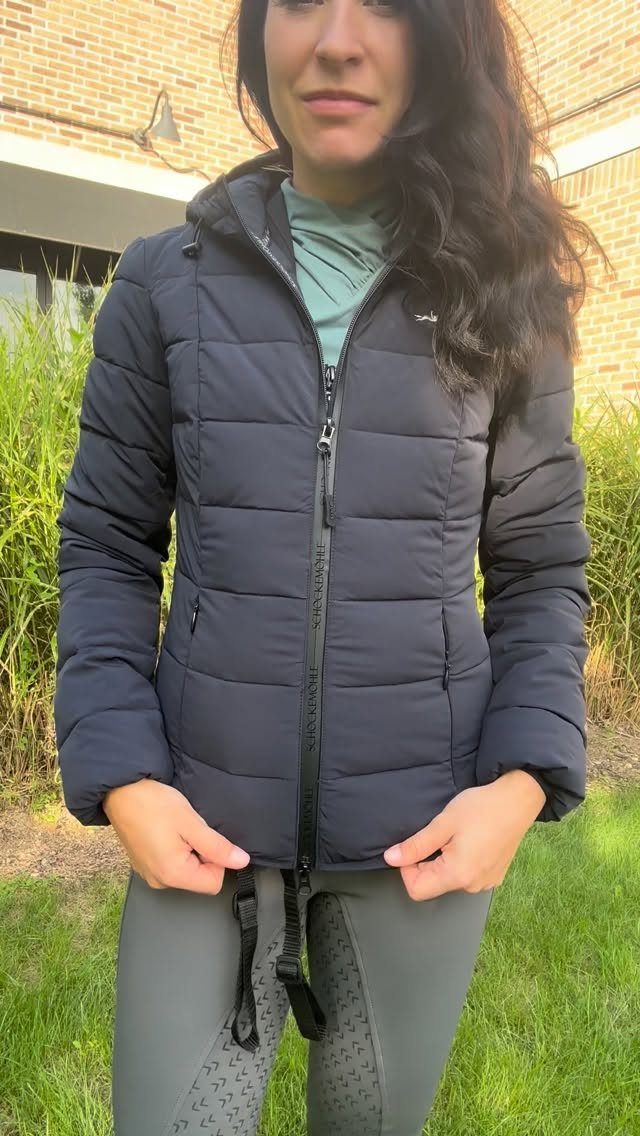
A quilted puffer over a turtleneck is my pick for cold mornings, because the layers trap warmth without adding bulk at the waist. Grey breeches keep the outfit calm, and green under navy adds just enough color.
Choose a puffer that ends near the hip so it doesn’t bunch in the saddle.
A turtleneck is a base layer you can’t peel off mid-ride without pulling it over your helmet, so pick one thin enough to stay comfortable once you warm up, and put any removable warmth in a zip-front layer on top.
Zip the jacket fully before you mount; a loose front catches the wind.
5. Pink Jacket with Riding Helmet
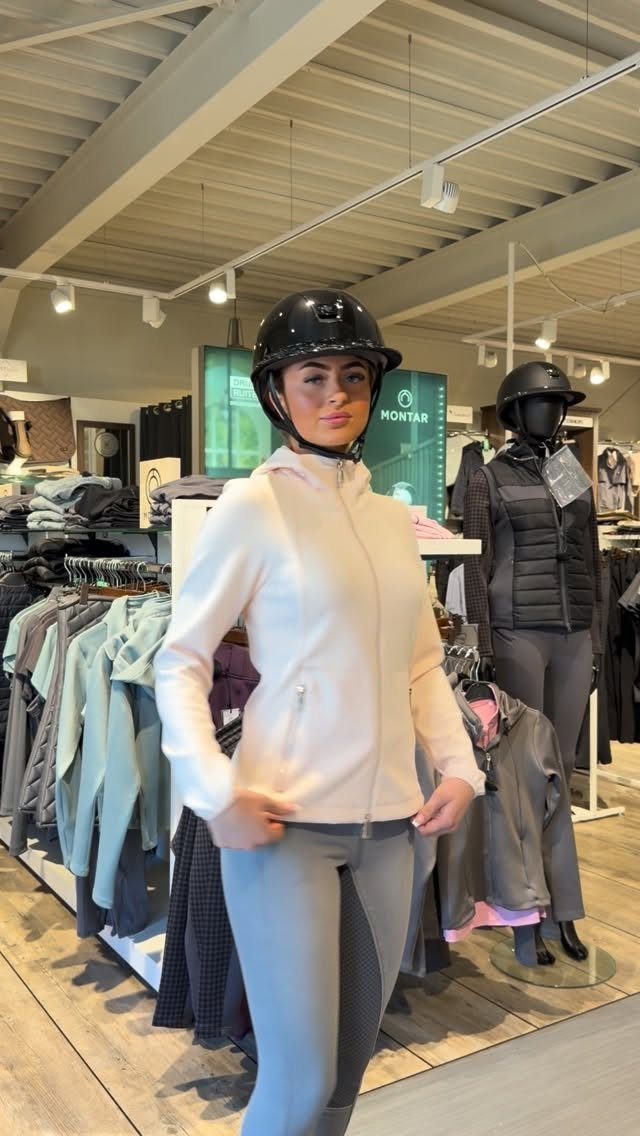
A light pink zip-up with grey breeches and a black helmet is soft, but it still looks like a rider’s outfit. The helmet does the serious work, and the pastel jacket keeps things friendly.
I would wear this for an easy, sunny ride. The zip front lets you adjust temperature quickly, which beats pulling anything over your helmet.
Pale pink will show dust and horse hair, so a lint roller helps before you leave the barn.
6. Fleece Vest Layer with Helmet
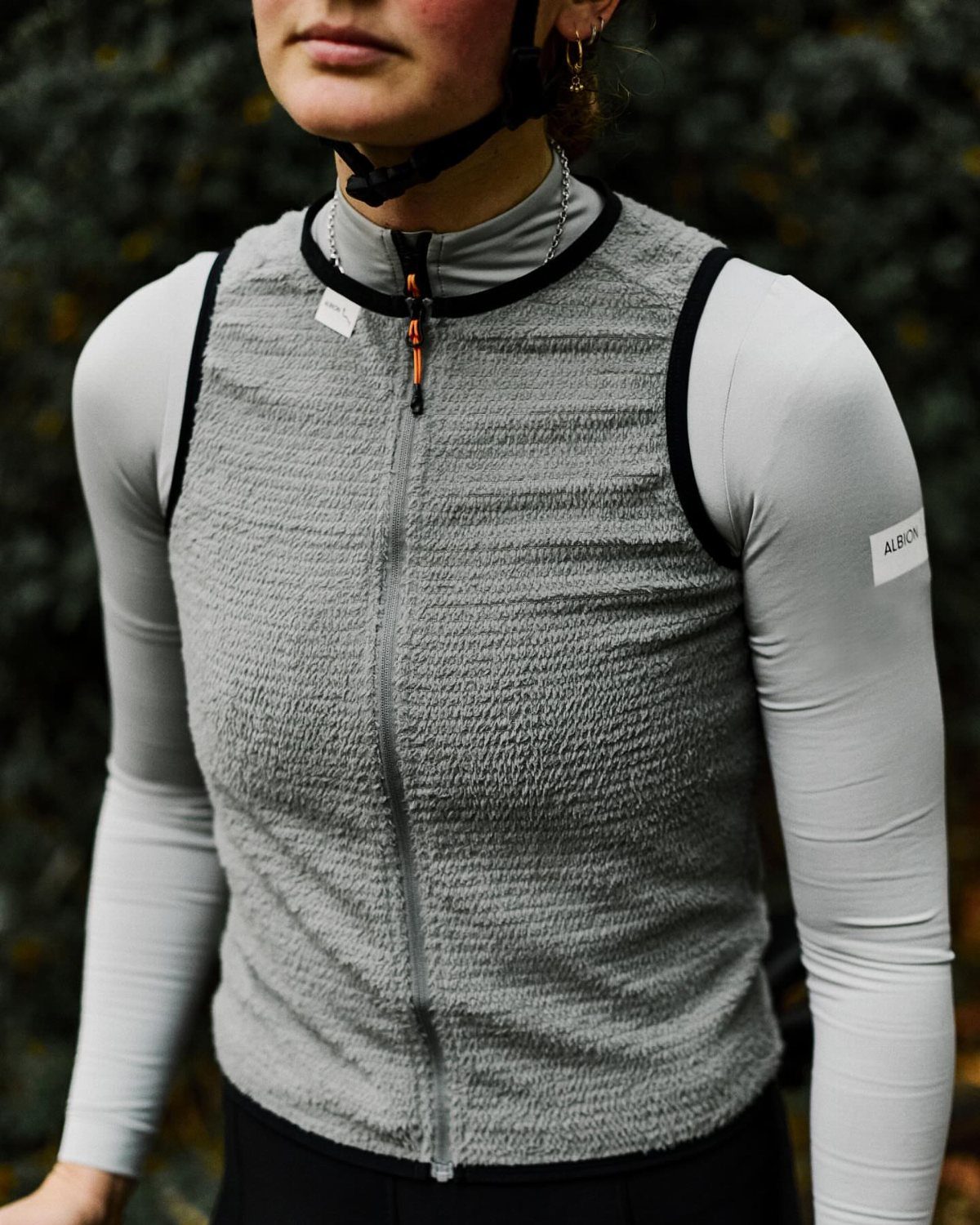
Fleece vests solve the awkward middle ground between too warm and too cold. Worn over a long-sleeved athletic top, a grey textured fleece vest keeps your core warm and leaves your arms free to move on the reins.
I like that the layer is easy to take off and tie behind the saddle or tuck into a bag. Pair it with a helmet every ride.
The limit is bare shoulders-to-wrist coverage: your arms are protected only by the base top, so choose one with a snug sleeve.
7. No Open-Toed Shoes
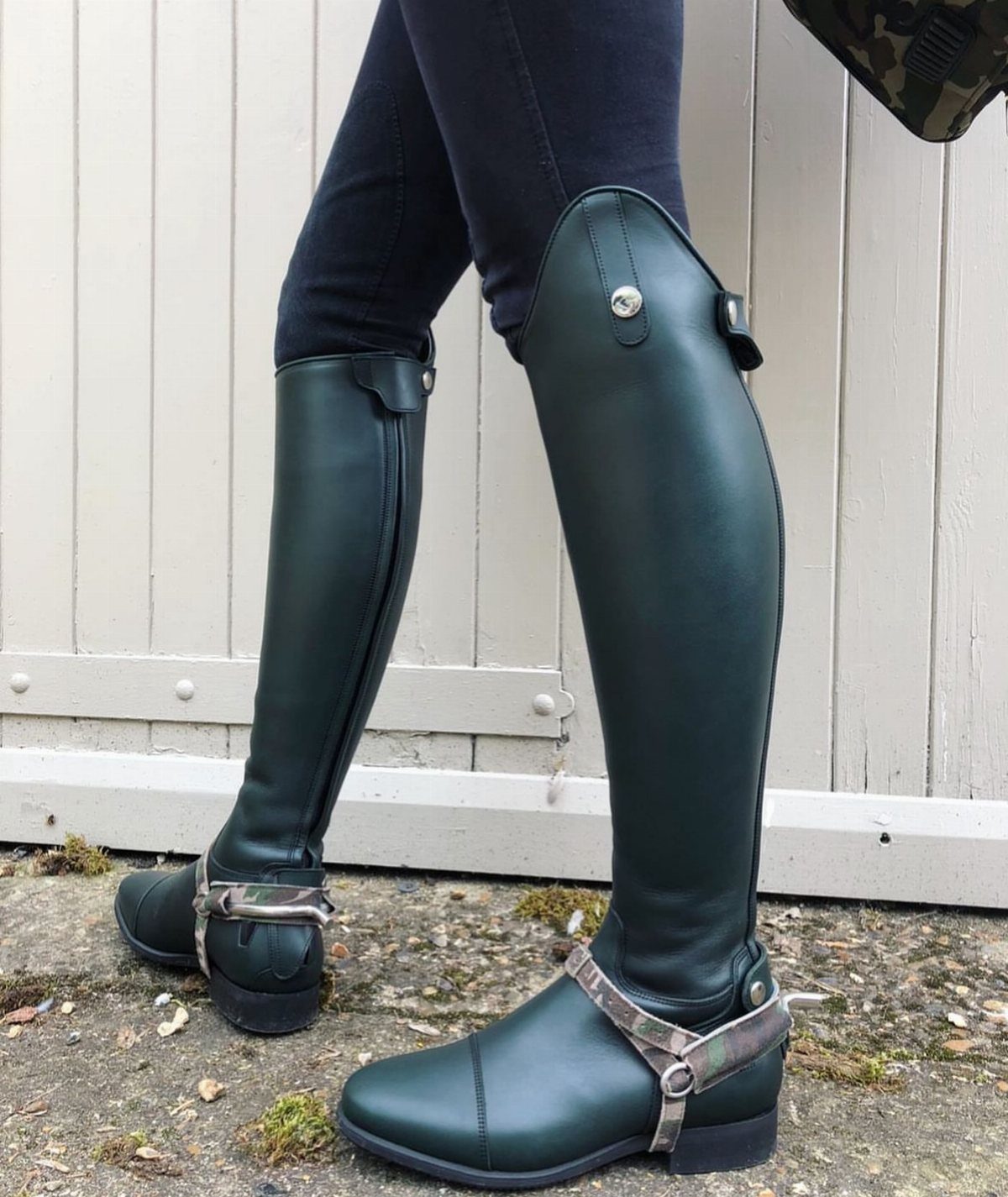
Closed shoes only, and for trail riding I’d go a step further: tall leather boots, like the dark green pair here, cover the foot and the lower leg together.
Paired with navy leggings or dark jeans, they work as they are, so nothing else in the outfit needs replacing.
Sandals and flip-flops leave toes bare, which puts them in easy reach of a hoof or a stirrup. Closed leather protects the foot, and that is the whole reason to skip open toes.
Pick boots that fit snugly and wipe them down after the ride.
Importance of Safety Gear
A helmet is technically optional at many stables, but I treat it as part of the outfit. Beginners gain the most, since a fall is more likely when you are still learning how a horse moves under you.
Even experienced riders get surprised on a trail. A spooked horse or a slick patch doesn’t care how many years you have been riding, and a helmet is the one piece that protects your head if you land badly.
Closed-toe shoes belong in the same category. They protect your feet and keep them from slipping through a stirrup.
Fit matters more than price: a helmet should sit level and snug, with the chin strap fastened every time.
Weather Considerations
Weather on a trail can change within an hour, so layers beat any single heavy piece.
A snug tee or tank makes the best base layer, and a light jacket or sweater on top can come off and tie behind the saddle once the day warms up.
For rain, a waterproof jacket is the main item. If rain is in the forecast and you already own a pair of waterproof pants, pull them on, because wet denim against a saddle gets miserable fast.
Many rides go ahead in drizzle, so expect to get a little damp and plan for it rather than fight it.
Neck and hands get sun for the entire ride, so they need sunscreen as much as your face does.
Comfort Over Fashion
Trail riding is muddy, dusty and sometimes wet, so comfort and function should decide what you put on. Pick clothes you won’t mind getting dirty.
Before you leave, move around in the outfit: sit low, lift your knee, reach forward. If anything pinches, rides up or rubs, swap it out.
Pieces you already own and wash easily are often better than something new you worry about staining.
Frequently Asked Questions
What should I wear for trail riding?
Start with closed shoes, long pants and layers you can peel off. For most days, I’d go with snug breeches or leggings, tall leather boots, a fitted tee or tank underneath, and a light jacket tied behind the saddle.
A trail can go from sunny to chilly in under an hour, so 2 or 3 thin layers beat a single bulky one.
Is there a dress code for horseback riding?
Usually not a strict one on the trail, and rules vary by stable, but comfort and safety set the standard. Plan on closed shoes, long pants and clothes you won’t mind getting muddy or dusty.