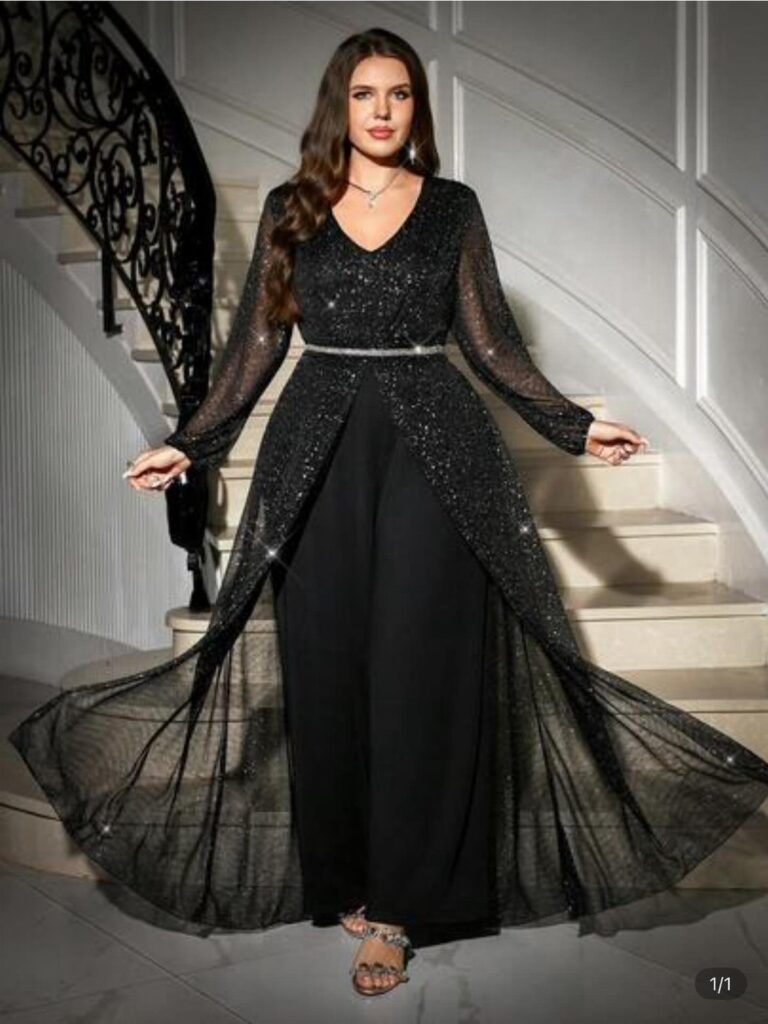
The right cut depends on how much you want covered and how much you plan to dance: a wide-leg style or a jumpsuit with an overskirt reads as a gown, a cape sleeve adds coverage over the shoulders, and sequins or off the shoulder lace look best with plain shoes and a quiet bag.
The styles here range from a strapless white jumpsuit with a floor-length overskirt that unsnaps at the waist to a sequined silver one with long sleeves and side cut-outs.
Whichever style you pick, sit, squat and raise both arms in it first, because anything you tug at during that fit check you will tug at all night.
1. Prom Jumpsuits
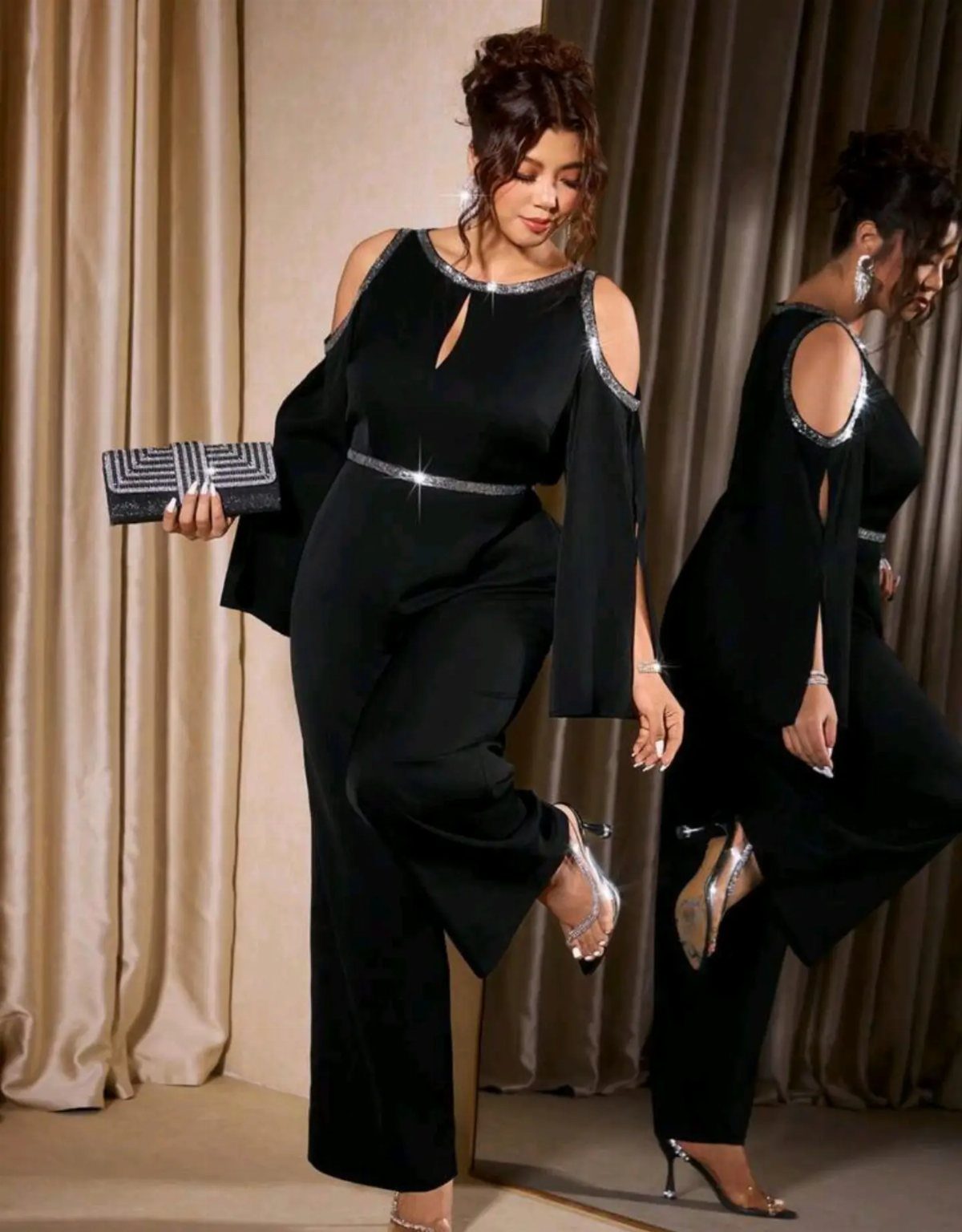
A jumpsuit makes the strongest case for itself in black, and the silver detailing on this one does the work a necklace would. Skip heavy jewelry and let a clutch and silver heels carry the shine.
Cold shoulders keep the look from feeling severe, and a wide leg moves better than a straight one if you plan to dance.
Hem it with your heels on, since a jumpsuit that skims the floor looks most polished from the front.
2. Wide-leg Jumpsuits
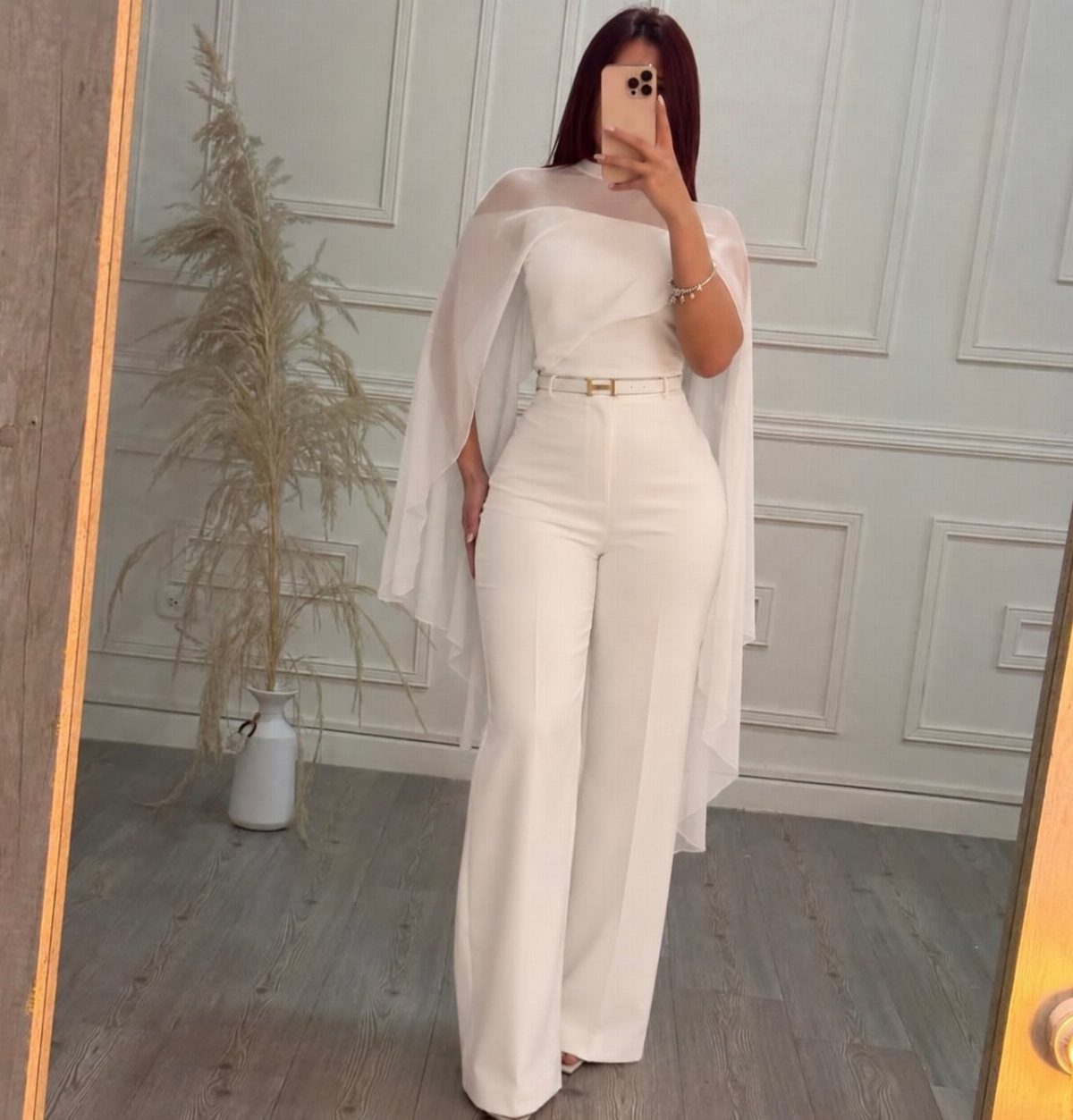
Wide legs are what make a jumpsuit read as a gown: the fabric swings when you walk, and from a distance the pants look like a skirt.
I like a thin belt for this style because it marks the waist without breaking the line.
A sheer cape adds drama and covers the arms, though it can catch on a chair or a car door, so test it sitting down.
Choose a long inseam so the hems brush the shoes.
3. Jumpsuit with Overskirt
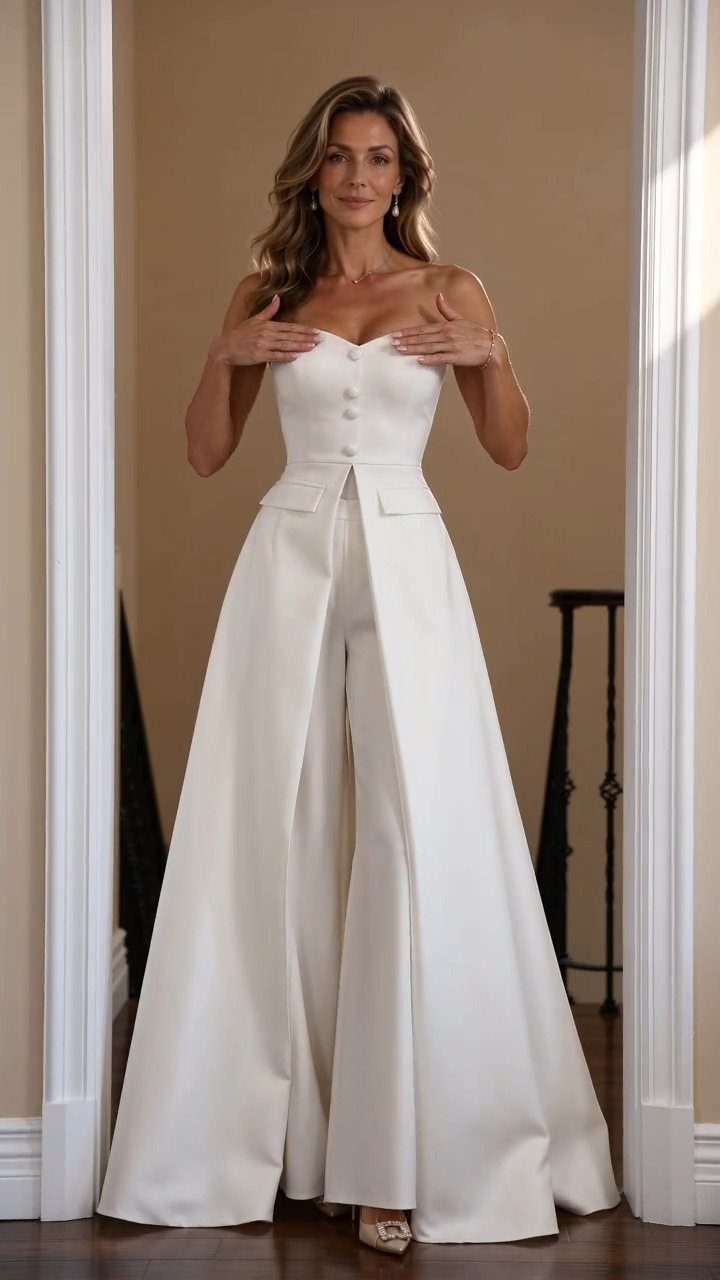
Strapless, white and topped with a floor-length overskirt: this is a jumpsuit that can walk into the room as a gown.
A skirt that unsnaps at the waist gives you two outfits in one: floor-length for the ceremony, then bare-legged tailoring once the dancing starts.
Wear it for the entrance and photos, then take it off for dancing and you have a clean jumpsuit underneath.
Strapless styles need a snug bodice, so check that it stays put when you raise your arms. White also shows every smudge, which makes a quick pre-event steam worthwhile.
4. Cape Sleeve Jumpsuit
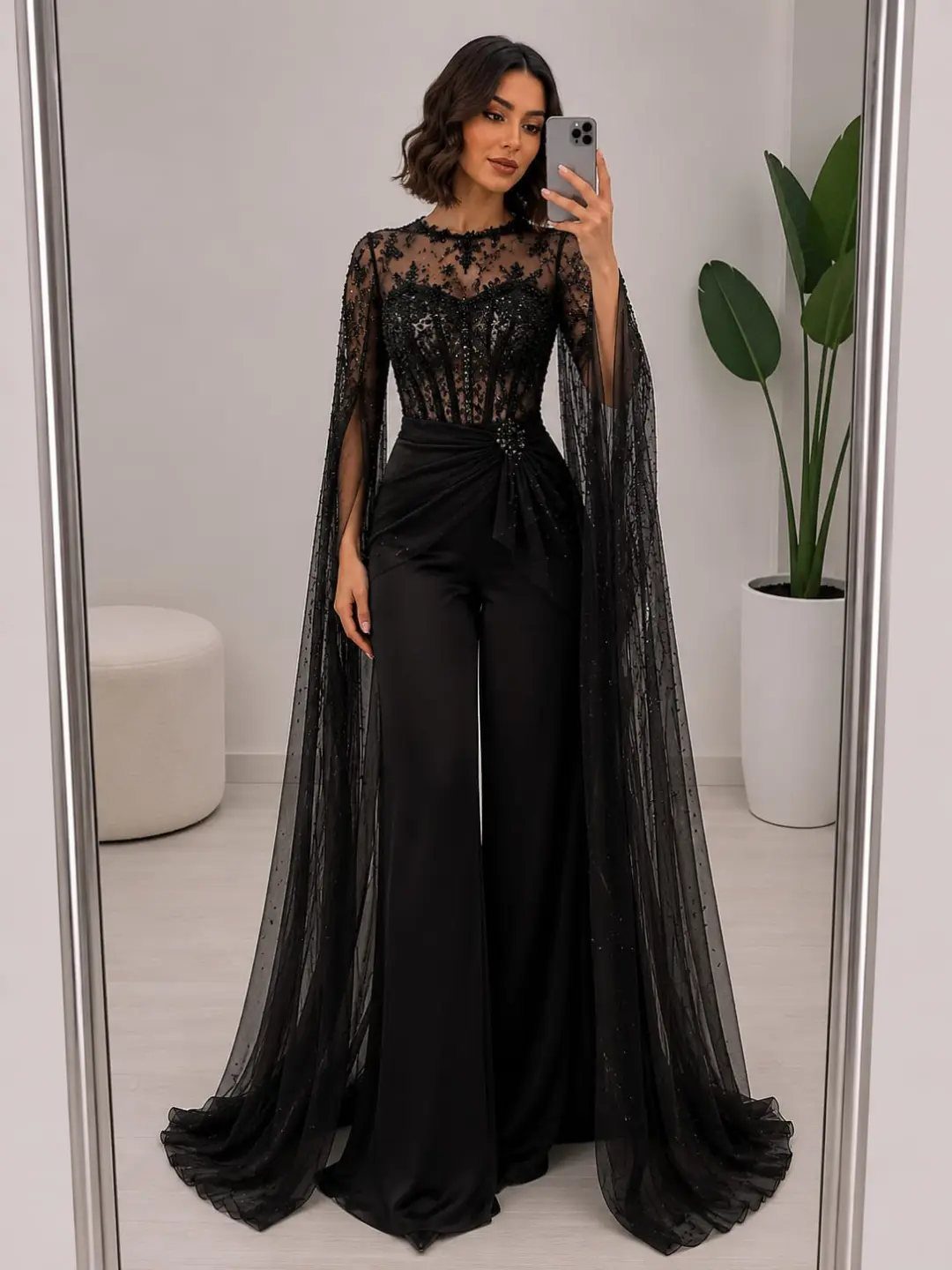
Sheer capes attached at the shoulders give a black lace and satin jumpsuit the drama of a formal gown, with the practicality of pants.
For anyone who feels self-conscious about bare arms, this cut is my pick, since the cape covers the upper arm and still moves. The cape covers them and still floats lightly.
Everything else should stay quiet: small earrings, hair pulled back so the shoulder line shows, and a simple heel. Lace plus a long cape already fills the outfit, so extra layers would only crowd it.
5. Sparkly Sequined Jumpsuit
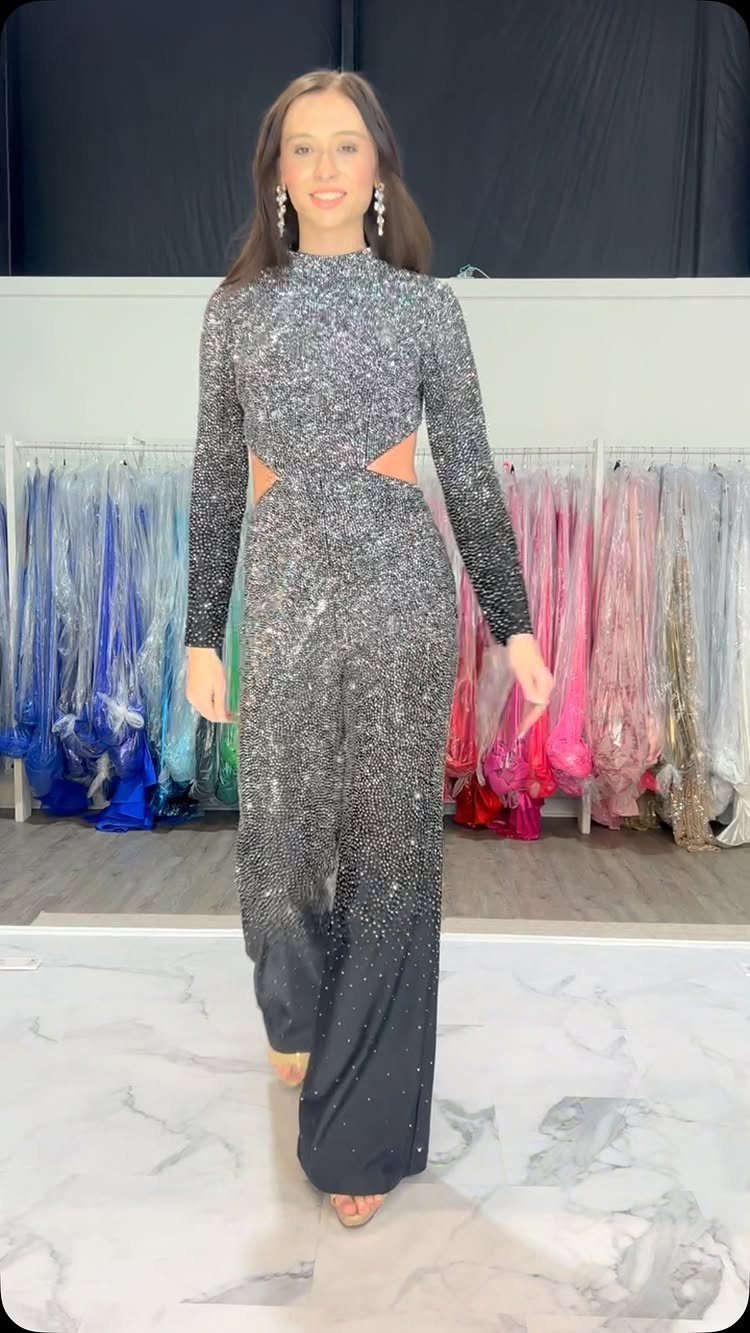
Sequins cover this silver jumpsuit from collar to ankle, and the side cut-outs keep all that shine from feeling heavy.
Because the fabric does the talking, I would keep shoes, bag and jewelry plain. A sleek bun or low ponytail shows off the long sleeves.
Sequined fabric tends to be heavier and can itch, so try it on and sit down before you commit. Check for scratchy seams at the underarm and waist.
6. Off the Shoulder Lace Jumpsuit

White lace with an off-the-shoulder neckline feels romantic, and a gold belt adds a clear waist and a bit of polish.
Wear your hair up to keep the shoulders and collarbone visible, and choose a strapless bra or one built into the garment, since regular straps will show.
Lace is delicate, so check the seams before your event. If white feels too bridal for you, a different shade is an easy swap, but the gold belt works well with the white.
Comfort and Movement
Lightweight fabric and built-in support are what let a jumpsuit or romper stay put through dancing and sitting. Before buying, do a full test at home: sit, squat, raise both arms and take a few big steps.
If you have to tug at anything during that test, you will be tugging at it all night. Pick the one that stays still.
Dancing also runs warm, so a light, breathable fabric will keep you comfortable longer than a thick one.
Choosing the Right Fit
Body shape and occasion should decide the cut, not what looks boldest on a hanger.
Start with where the garment sits at your waist, because a jumpsuit with a torso that is too short pulls at the shoulders and the crotch.
If your torso and legs are in different proportions than the average, a belt or a wrap waist gives you room to adjust. A tailor can shorten straps and hems, but changing the torso length is much harder.
Bold cuts and standout details work best when only one part of the outfit is doing the talking.
Choose the one feature you love most, whether that’s a plunging neckline, wide legs, or a cinched waist, and let everything else in the fit stay plain.
Accessorizing Your Outfit
Jewelry, shoes and a bag are where a jumpsuit becomes yours, so choose a small number of pieces and make each one count. Match the metal across everything you wear: earrings, buckle and shoe hardware should agree.
Check the neckline before choosing a necklace. A high or detailed neckline usually looks best with earrings only.
A small clutch with a strap is easier for dancing than a bag you have to hold.
Keep a pair of flat shoes or sandals handy in it or in the car, since a jumpsuit has no skirt to hide a quick change.
Frequently Asked Questions
What is the difference between a prom romper dress and a prom jumpsuit?
Length of the bottom half.
Full-length pants are what make a jumpsuit read as formal, since the unbroken line from shoulder to hem lengthens the body; a romper stops above the knee, and the dressy trims on it keep the mood lighter and more playful.
If you want something that reads as a gown, I’d go with a wide-leg jumpsuit, since the fabric swings like a skirt when you walk.
Do rompers for prom come in plus sizes or petite fits?
Yes, a good number of brands cut prom rompers in plus sizes and in petite lengths, though the choice is narrower than for dresses.
Check the size chart and look closely at the inseam length and waist fit, since those 2 measurements decide whether the garment sits right.
Straps and hems are easy fixes for a tailor, but a torso that runs too long or too short is a far bigger job and rarely comes out right.
Are formal rompers for prom comfortable enough to wear all night?
Yes, as long as the fabric is lightweight and the bodice has real support built in. Those 2 features let you dance and sit without constant adjusting.
Try it at home first: sit, squat, lift both arms and walk with long steps, and treat any spot you keep pulling at as a problem that will only get worse by midnight.
Light, breathable fabric also helps, since dancing runs warm.