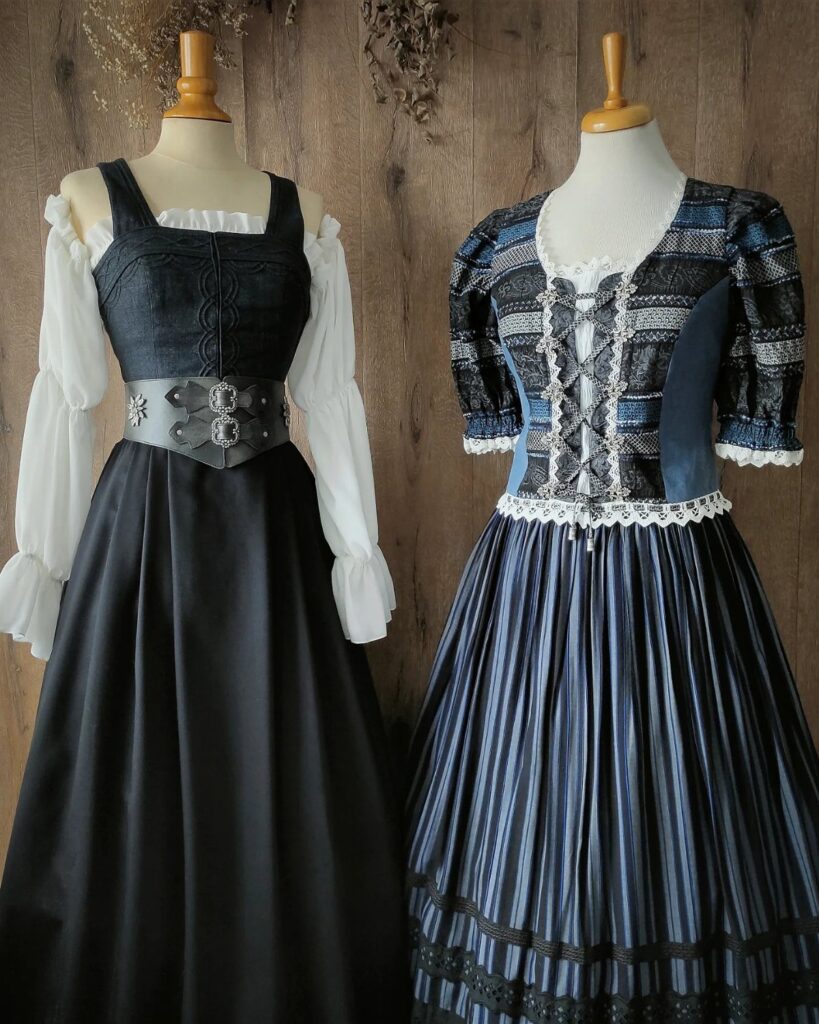
The looks here run from a plain kirtle with a close row of small buttons to a brocade houppelande with fur trim that only suits an event.
How often you would actually wear it decides which one is yours: if the piece has to share a closet with jeans and sweaters, choose separates like the peasant blouse with a corset skirt or the blouse with an embroidered vest, while a heavy green velvet or brocade gown is for the occasion that calls for it.
A laced bodice over a chemise sits in the middle, and the lacing adjusts to your waist and bust.
1. Kirtle
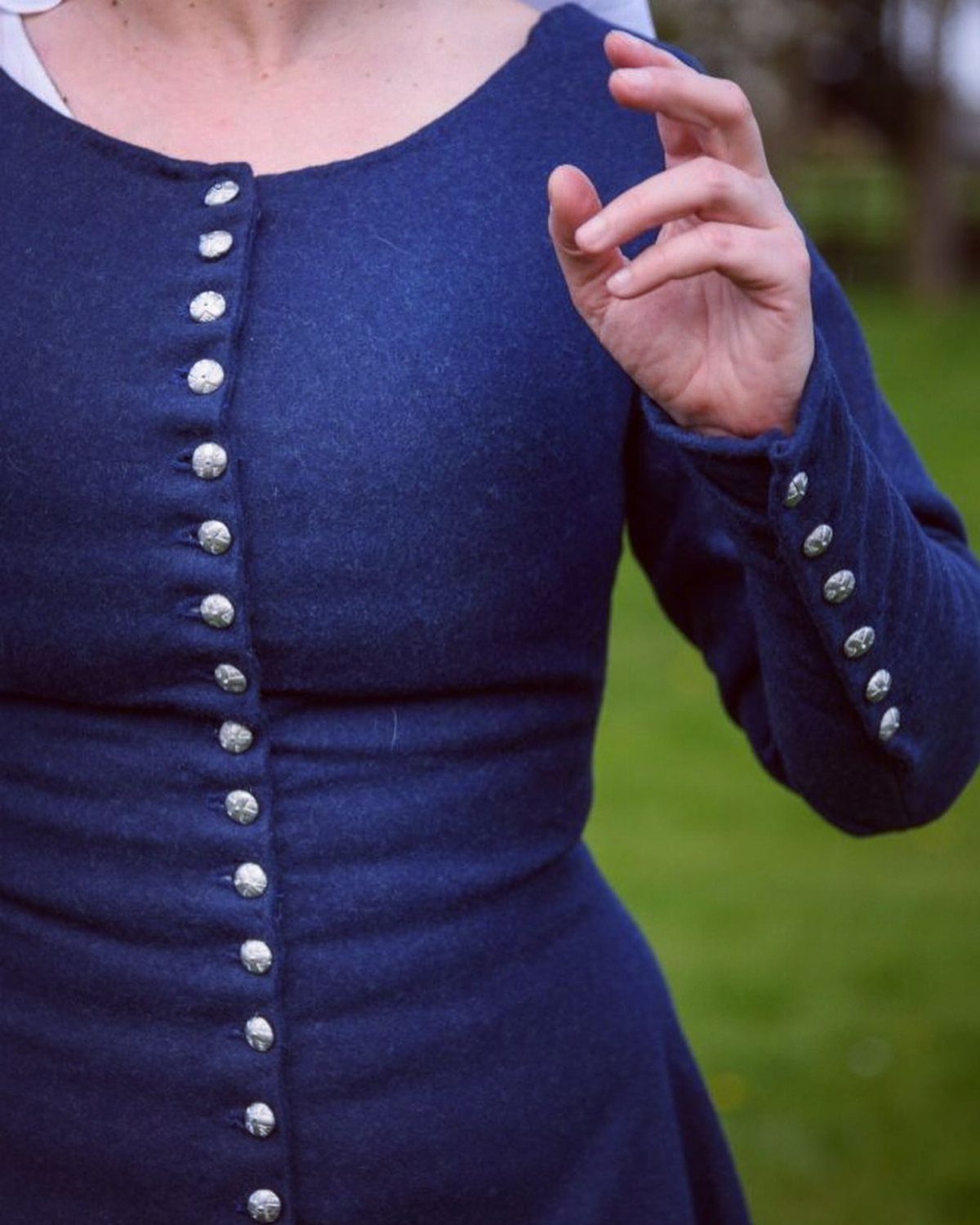
Small buttons are what make this navy wool dress work: a close row down the front and along each sleeve gives a plain, fitted shape its detail without any trim or embroidery.
A kirtle is a good first piece if you want medieval dress that sits easily next to jeans-and-sweater clothes.
The fitted cut flatters most shapes, and navy reads as a modern neutral. I’d choose wool over a thin blend, since it holds the fit and keeps the buttons from pulling.
2. Houppelande
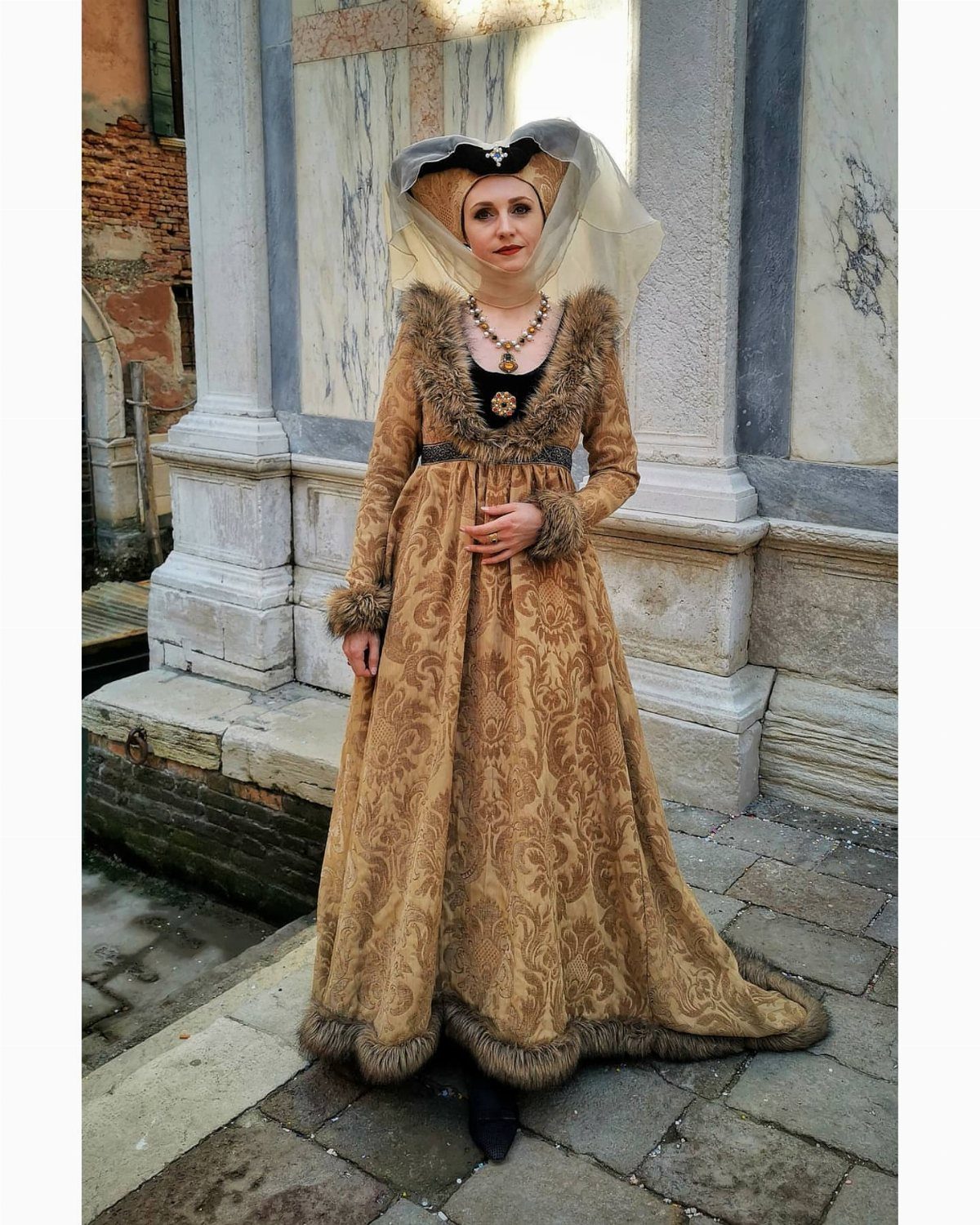
Volume is the whole story with a houppelande, and in gold brocade with fur trim it becomes a statement piece rather than everyday wear.
The long sleeves and full body hide a lot, which suits anyone who wants comfort over a close fit. A belt at the waist would give you shape if the fabric feels like too much.
Because the gown is heavy on detail, I’d keep the headdress simple and skip other patterns. Save this one for an event, not a regular outing.
3. Laced Bodice Over Chemise Dress
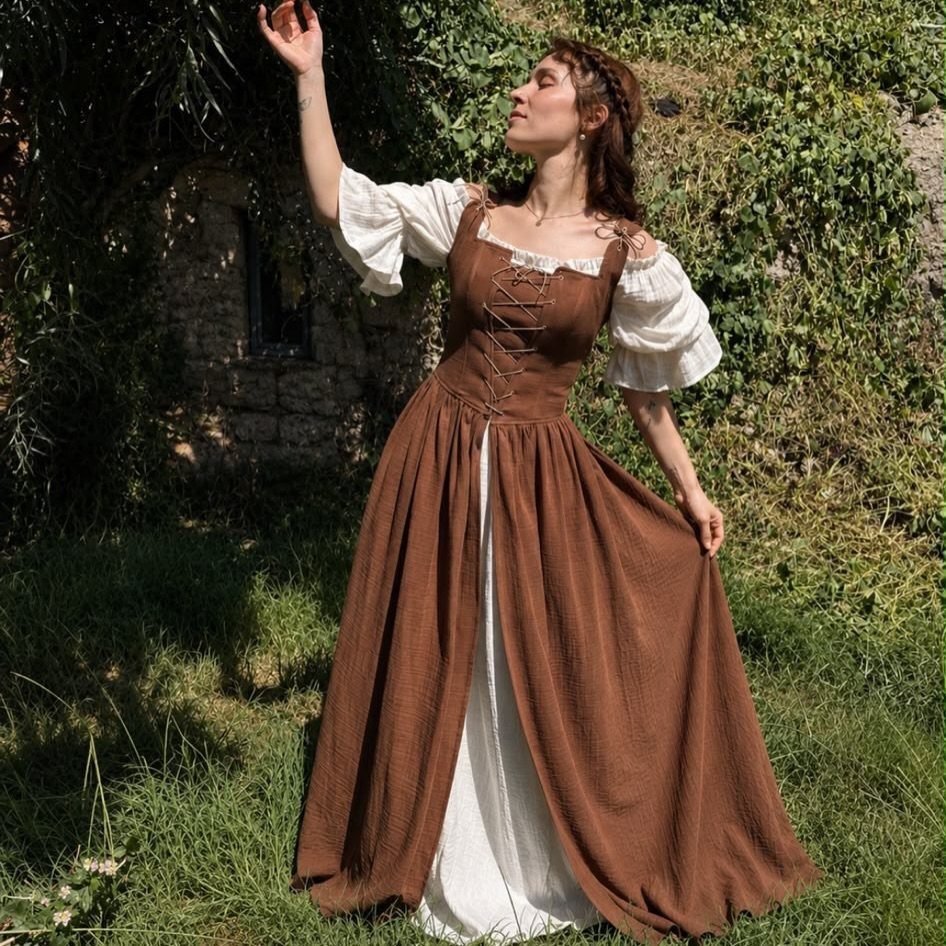
A white puff-sleeved chemise under a brown lace-up bodice and matching skirt is the easiest medieval look to build from your own closet.
The chemise can be a plain white blouse you already own. Lacing lets you adjust the bodice to your waist and bust, which beats fixed-size zippers for fit across body shapes.
Brown is forgiving and pairs with boots or flats. I’d put the money into the bodice, since that is the piece that shapes everything else.
4. Medieval Gown with Hanging Sleeves
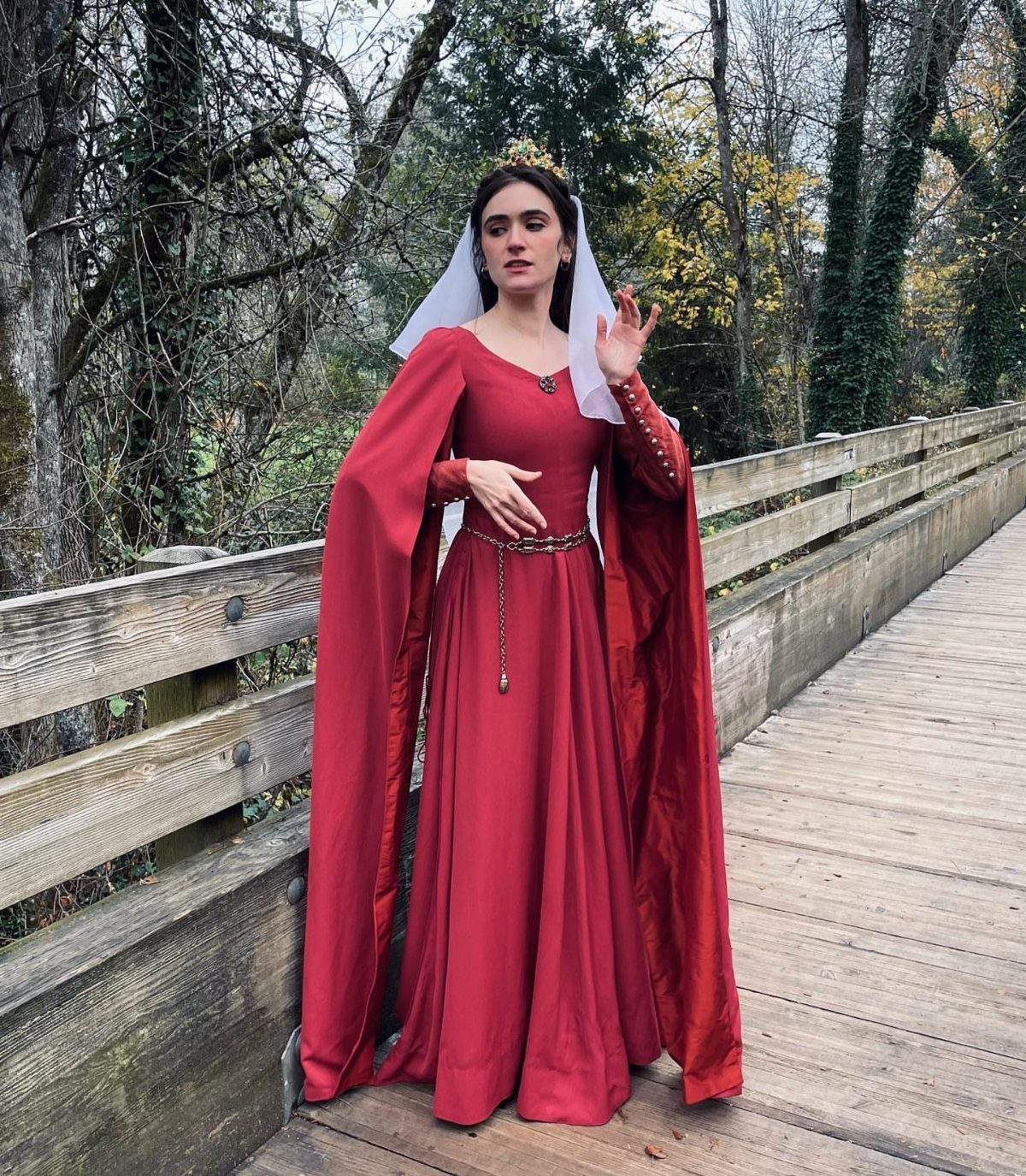
Hanging sleeves do the drama here: wide, falling past the wrist, they turn a simple red gown into something that moves when you walk.
A gold belt marks the waist and keeps the length from swallowing a shorter frame.
Red is bold, so I’d keep the veil white and the jewelry minimal. One trade-off: sleeves this wide catch on doorknobs and dinner plates, so this suits outdoor events and photos better than a crowded room.
5. Peasant Blouse with Corset Skirt
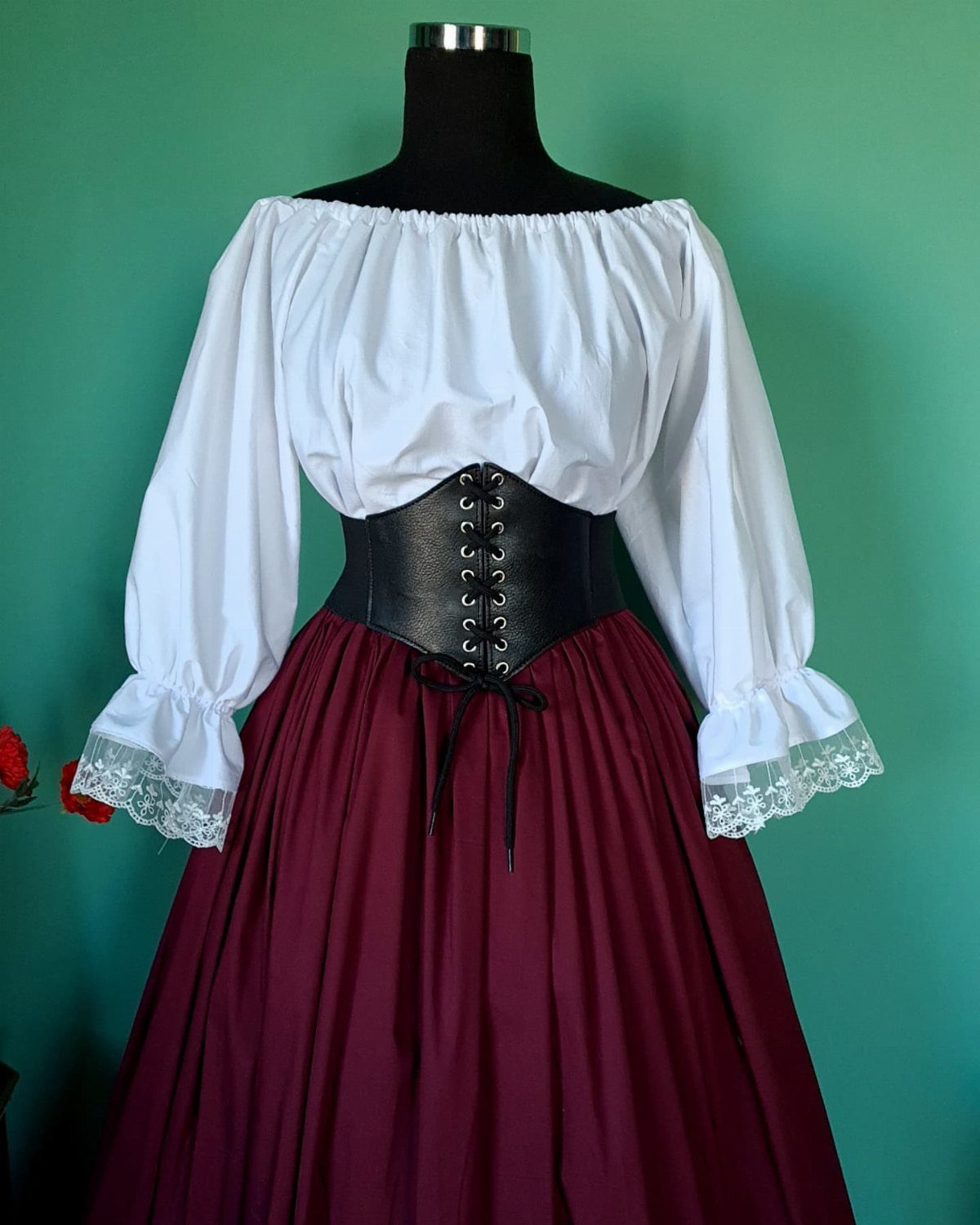
3 separate pieces make this look: a white off-the-shoulder blouse, a black underbust corset, and a burgundy skirt.
Separates are the smart route if you shop for quality, because each one works alone. The blouse goes with jeans, the skirt with a plain knit top, and the corset over a fitted shirt.
An underbust style sits at the waist without squeezing the ribs, so it is easier to wear for hours. I’d spend the most on the corset.
6. Green Velvet Medieval Gown
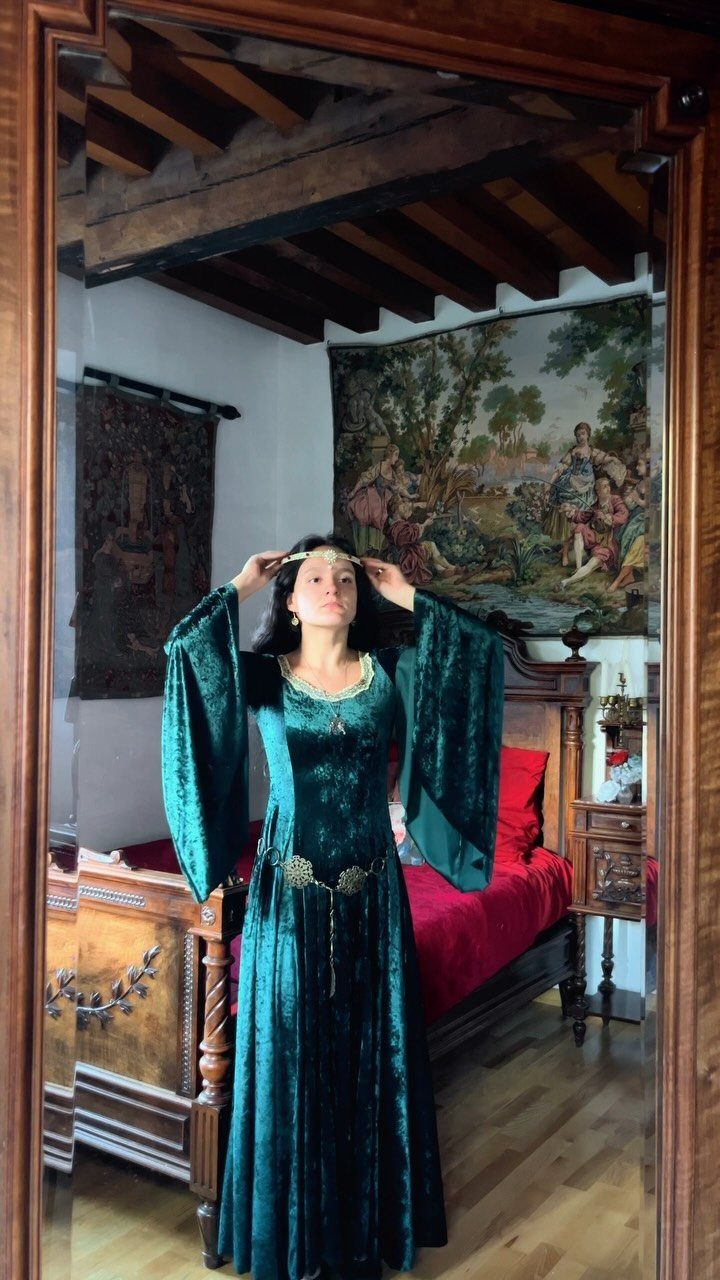
Dark green velvet gives a floor-length gown depth that cheaper fabrics can’t fake, and the gold trim at the neckline frames the face without any jewelry.
Wide sleeves balance the long, straight skirt, which works on most body shapes. Velvet is warm, so I’d save it for fall and winter occasions.
It also shows creases and lint, so hang it rather than folding it. If you only buy one formal medieval gown, this is the one I’d choose.
7. Brocade Royal Medieval Gown
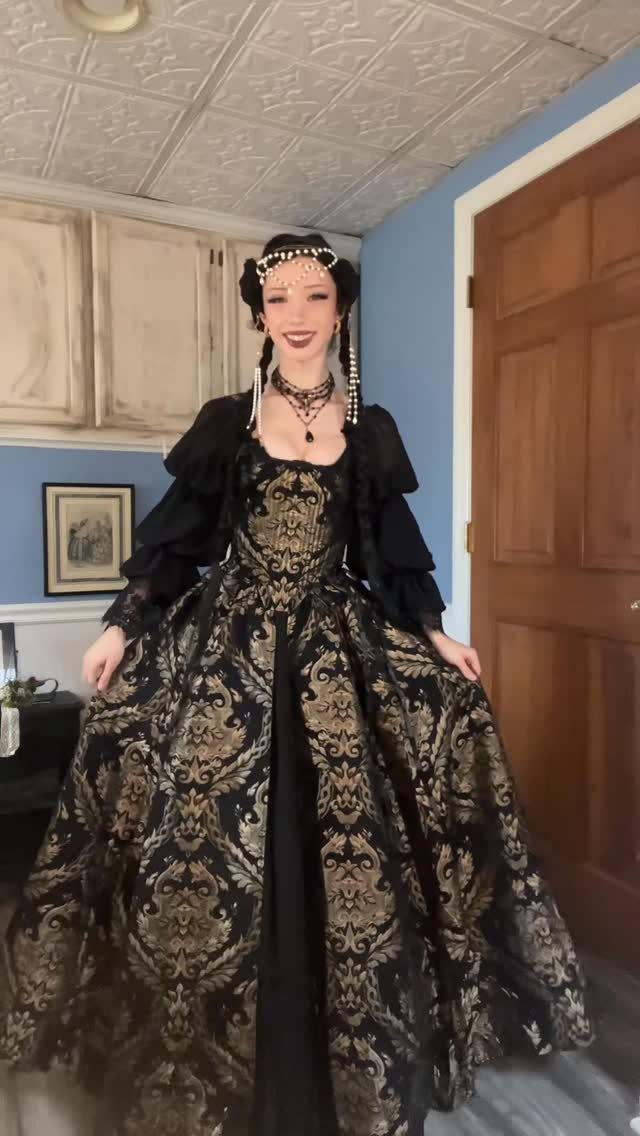
Black and gold brocade carries a full skirt with almost no help, and the matching jacket makes the whole gown read as one deliberate piece.
Pearls on the headpiece soften all that dark weight, so I’d stay with pearls and skip colored stones.
The pattern is already busy, which means jewelry should match the gold and stay quiet. A full skirt suits most body shapes, though it is an occasion gown, not a regular outing.
8. Medieval Blouse and Embroidered Vest
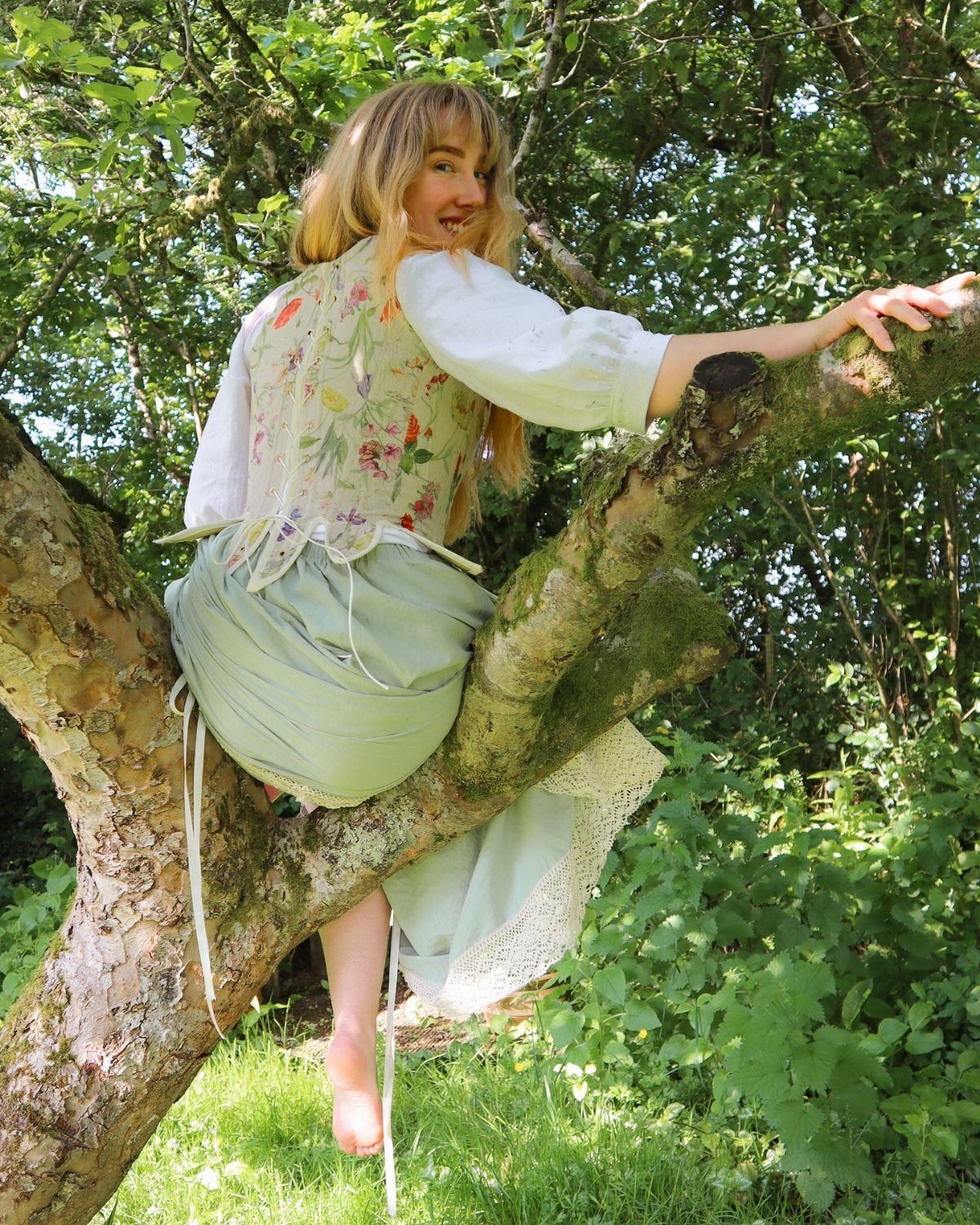
A long-sleeved white blouse under an embroidered floral vest, with a long green skirt below: this is the most wearable way into medieval dress I can think of.
Each piece works alone. Each piece also works apart from the costume: the blouse with jeans, the vest over a plain slip dress, the skirt with a fitted knit.
I’d put the money into the vest, because the embroidery is what makes the outfit look considered. Green and florals suit spring and outdoor days best.
9. Laced Medieval Gown with Cloak
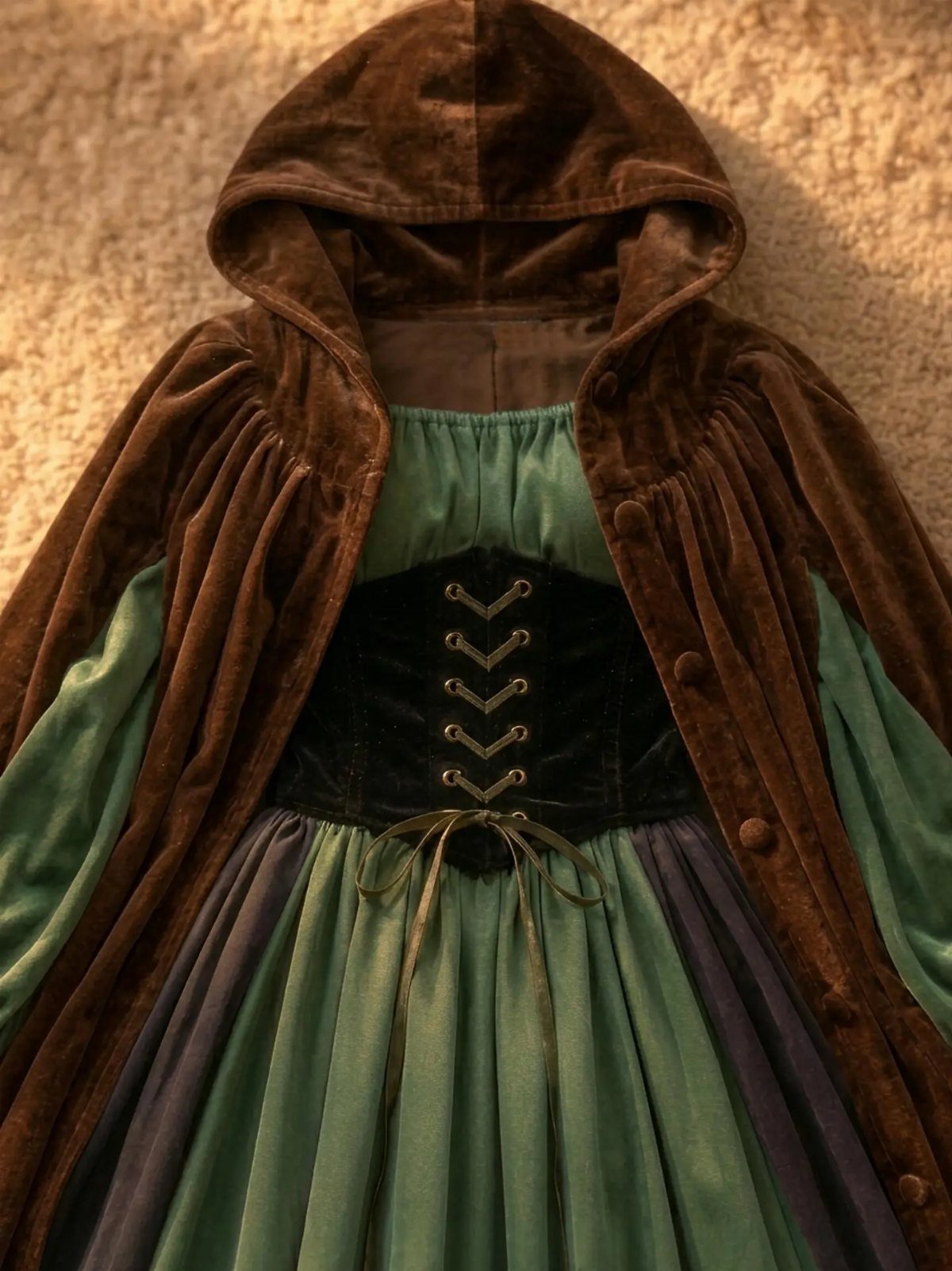
Under a draped brown velvet hooded cloak, a green gown with a black laced bodice gets a second layer that changes the whole silhouette.
The lacing adjusts at the waist and bust, so fit is forgiving. Brown velvet against green feels earthy and warm, and the hood gives you cover outdoors.
Velvet holds creases and picks up lint, so a hanger works better than a drawer for the cloak. Wear the cloak open to show the bodice, or closed for a simpler line.
10. Brocade Overdress with Belt
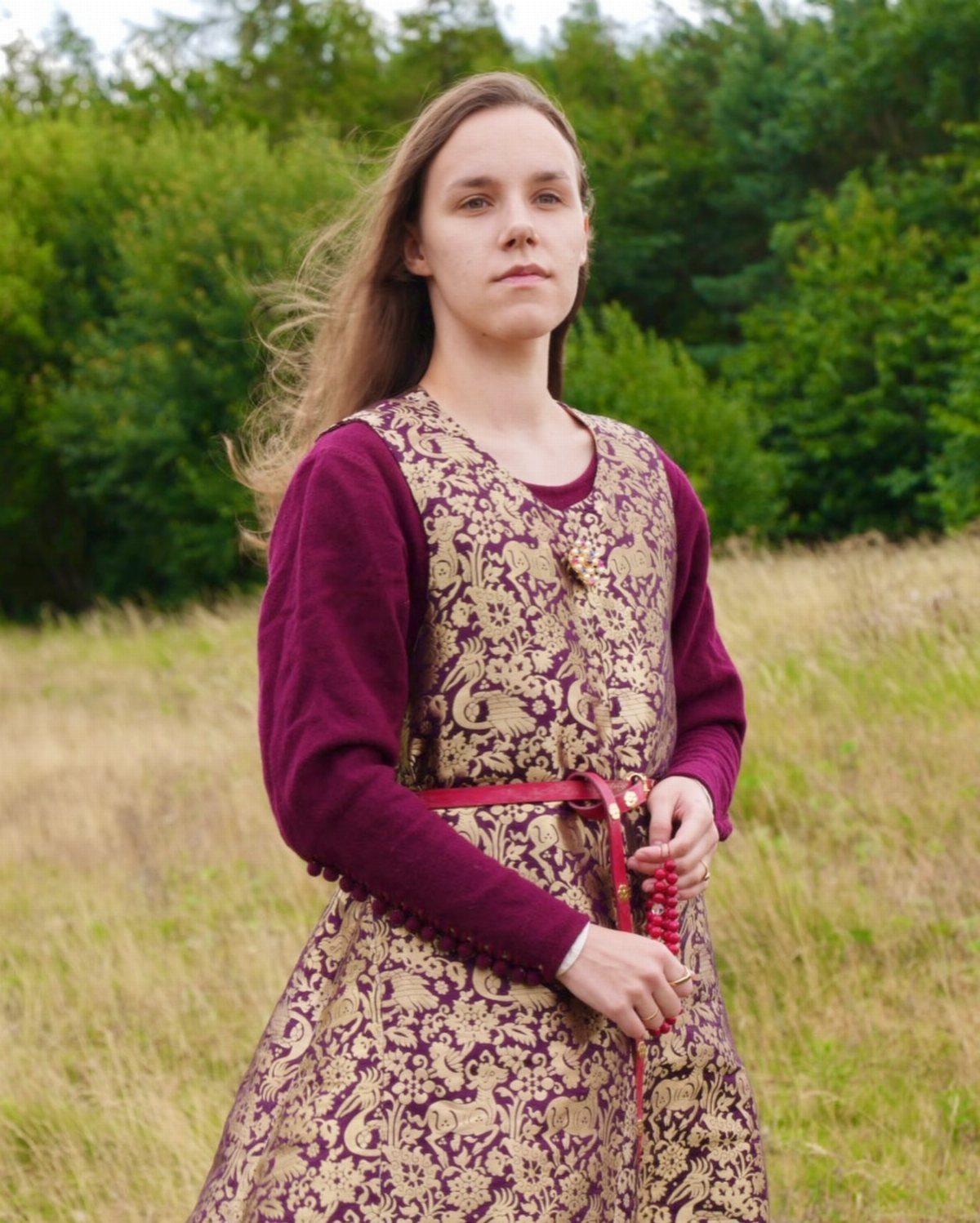
Slim belts do a lot of work on a brocade overdress: cinched at the waist, a red one breaks up the purple and gold pattern and gives the shape definition.
Because the purple shirt underneath has long sleeves, the dress stays practical and covers your arms.
I’d keep jewelry minimal, since the brocade is already busy. Layering this way also lets you wear the shirt on its own later, which suits anyone buying fewer, better pieces.
11. Wool Hoods
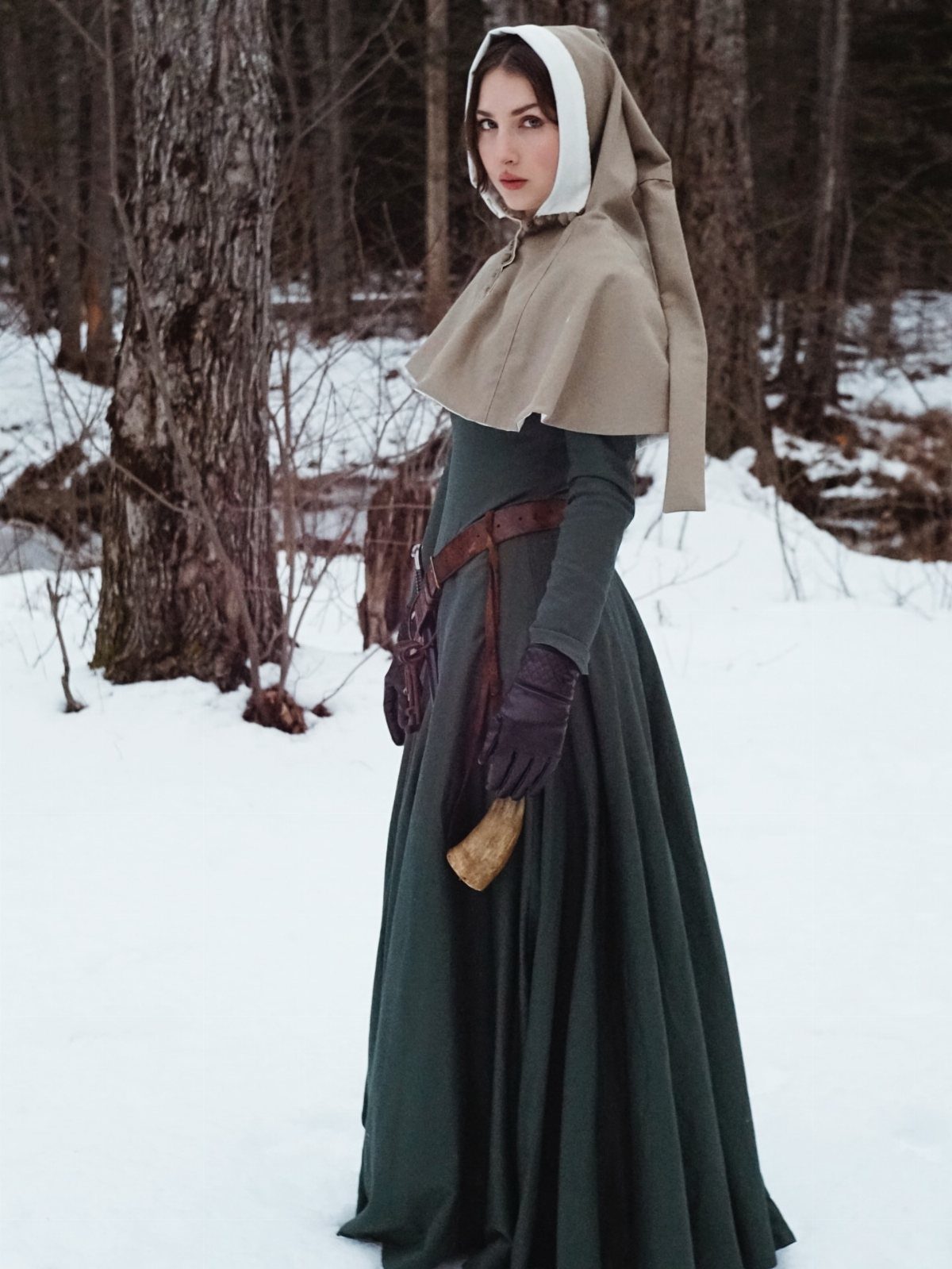
A tan wool hood over a dark green dress is the easiest cold-weather layer here, and the contrast keeps both pieces from looking flat.
Brown gloves finish the look without more fuss.
A hood also works with a winter coat you already own, so it is a small buy that gets used. I’d pick a neutral tan.
12. Accessories
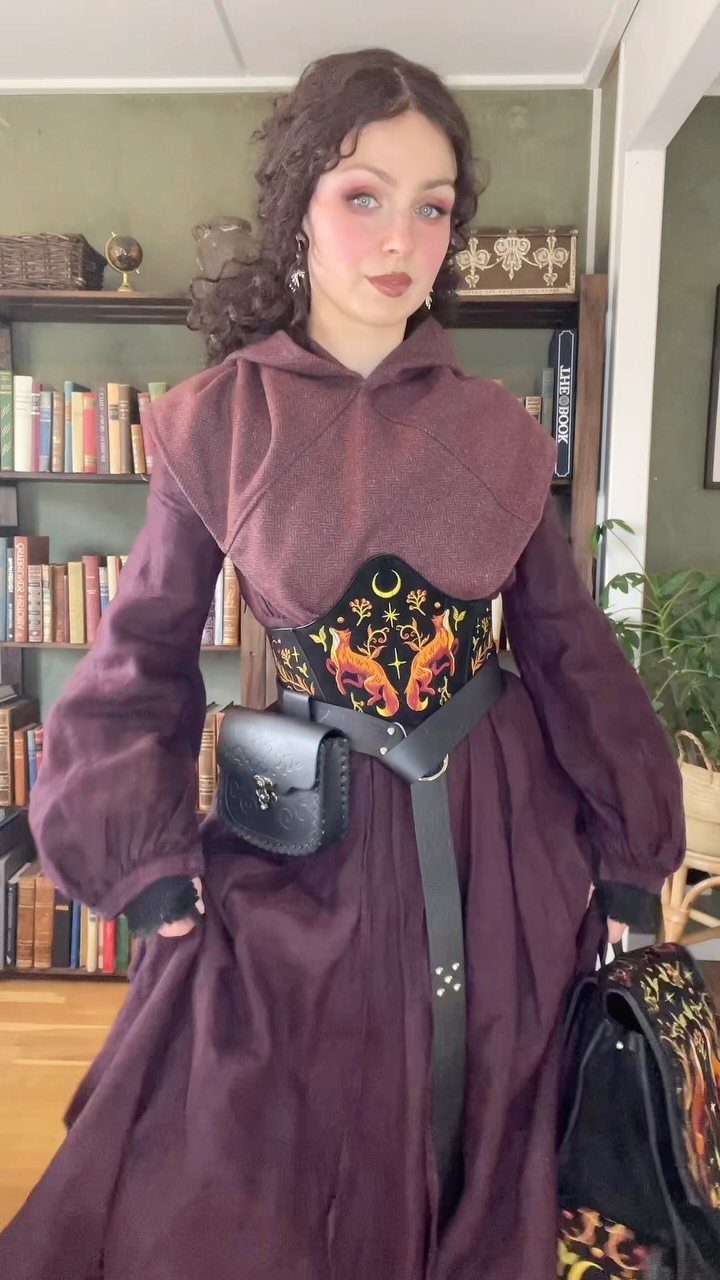
Small pieces finish a medieval dress faster than another gown does: an embroidered corset and a leather waist pouch make a purple dress look complete.
The pouch is practical too, since it holds a phone and keys when the dress has no pockets. I’d buy one good leather pouch and an embroidered belt before anything else.
A hooded cape adds a layer. Keep the colors close to the dress so the details look chosen, not piled on.
Historical Accuracy in Clothing
Medieval clothing worked as a message about rank, trade and marriage status, so accuracy starts with asking what a piece was supposed to say about its wearer.
Silk or fine wool made up a noblewoman’s gown, and the bodice fit snugly while long, generous sleeves quietly announced how much money the family had.
Practicality ruled the working woman’s kirtle: plain fabric, little trim, and a cut that let her move through a full day of hard work instead of standing in a court.
If you want a look that reads as true, match the fabric and finish to the role you are borrowing.
Color and material carried meaning too, so a fancy gown paired with a laborer’s plain accessories sends a mixed signal. Pick one social position and keep every layer consistent with it, from the belt to the headpiece.
Early medieval European dress, from about 400 AD to 1100 AD, changed very gradually. The main feature of the period was the meeting of late Roman costume with that of the invading peoples who moved into Europe over this period.
Role of Clothing in Society
Think of medieval clothing as an identity card you wore on your body.
Cloth, color and cut told the story fast, so a glance across a market square was enough to sort a merchant’s wealthy wife from a craftswoman or a household maid.
Every item, color and material added to that story, and clothing also gave protection from the elements.
That is useful when you plan an outfit: decide who you want to look like first, then choose each piece to support that one person.
Mixing signals muddies the read. A modest working-woman base with one grand showpiece will look confused, so keep fabric quality and detail level even across the whole outfit.
Evolution of Women’s Clothing
Women’s clothing moved from loose garments toward more fitted styles, and that shift followed changing fashion and social norms. It is a handy guide for choosing a silhouette today.
If you prefer comfort, the looser, earlier shapes are the honest choice, and they ask little of your body. If you want definition, the fitted cuts do that work, though they depend more on good tailoring and the right size.
Pick the era’s shape that suits how you want to move and sit, then build the details around it.
Frequently Asked Questions
What did women wear in the medieval period?
Most women wore a chemise as the base layer, a kirtle over it, and then outer pieces such as gowns and cloaks.
What you wore shifted with your rank and work: a noblewoman’s gown used silk or fine wool with long, generous sleeves, while a working woman’s kirtle stayed plain and easy to move in.
Fabric and finish were the quickest signal of who someone was.
What should I wear to a medieval theme party?
The simplest costume to pull together from what you already own is a white chemise or plain white blouse worn under a lace-up bodice and a long skirt.
Because laces cinch to fit your waist and bust, a bodice forgives size changes, and brown leather looks right with boots or flats.
2 small extras finish the look: an embroidered belt, and a leather pouch at the waist big enough for a phone and keys, both in shades near the dress color.
What are the key differences between medieval and Renaissance dresses?
Medieval dresses were generally looser and simpler, while Renaissance dresses became more fitted and elaborate. Medieval clothing itself shifted over time, moving from loose garments toward closer-fitting cuts.
For an easy day, the looser early silhouettes barely restrict you, while the fitted cuts shape you more but only look right with careful tailoring and the correct size.