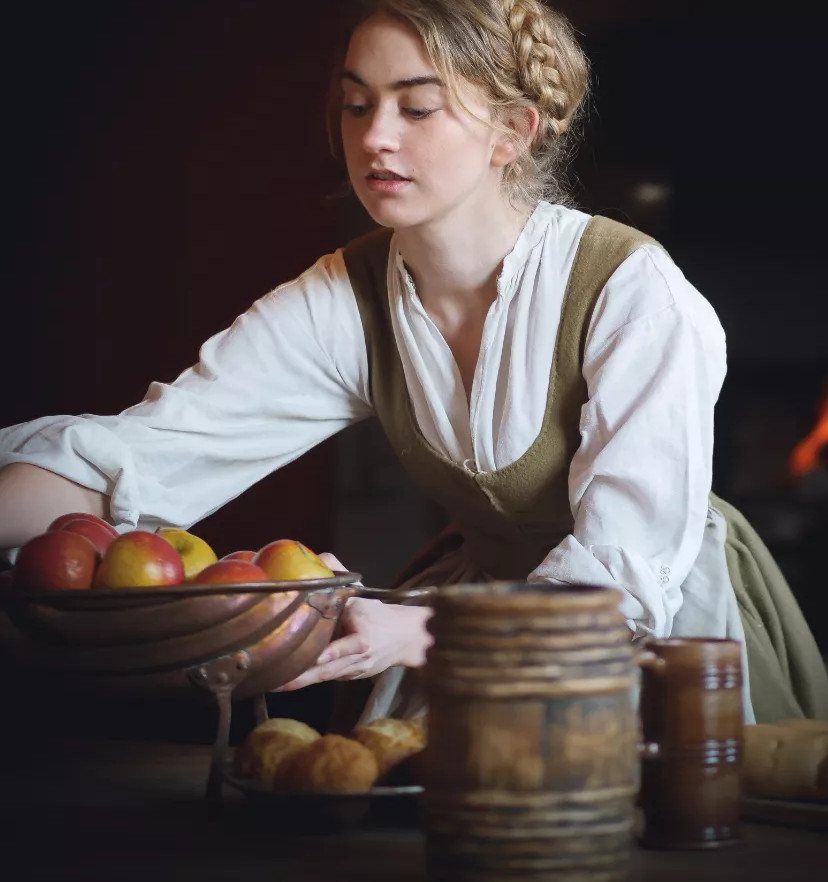
Which of these 16th-century looks suits you depends on how much of it you want to wear: a single borrowed piece like the olive green blouse or the embroidered cream corset, or a full bodice-and-skirt build like the gold bodice with a red skirt.
The span runs from an olive green bodice over a plain blouse to velvet gowns with fur trim, and the heavy ones, like the black velvet and the red velvet jeweled gown, only make sense in cool weather and for evenings.
Cream embroidery with green ribbon lacing sits in the middle, a piece that reads as its own garment rather than a costume.
1. Olive Green Bodice and Blouse
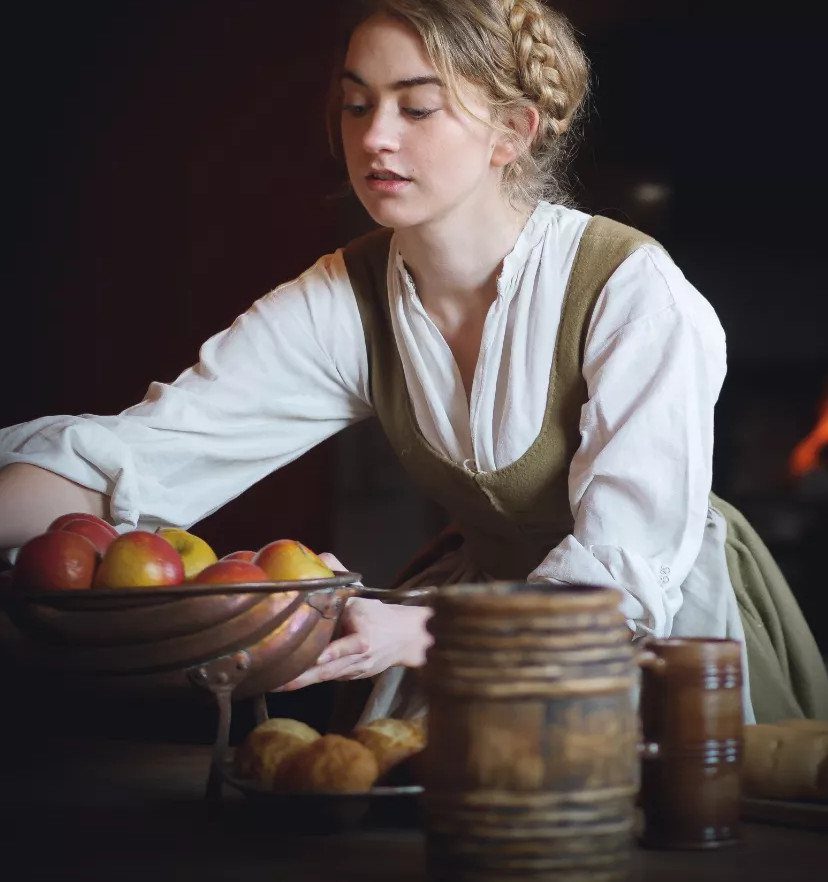
A fitted olive bodice over a long-sleeved white blouse is the easiest way into 16th-century dressing, because the blouse is something most closets already hold.
Pick one in cotton or linen with full sleeves and a soft neckline; the bodice supplies all the structure.
Olive is a forgiving color against warm and cool skin alike, and it keeps a rustic skirt from looking costumy. I would keep the skirt in a muted earth tone and let the white blouse stay plain.
For everyday wear, swap the long skirt for dark jeans and wear the bodice as a vest. Of the nine looks here, this one carries over to a modern outfit with the least effort.
2. Green and Gold Brocade Gown
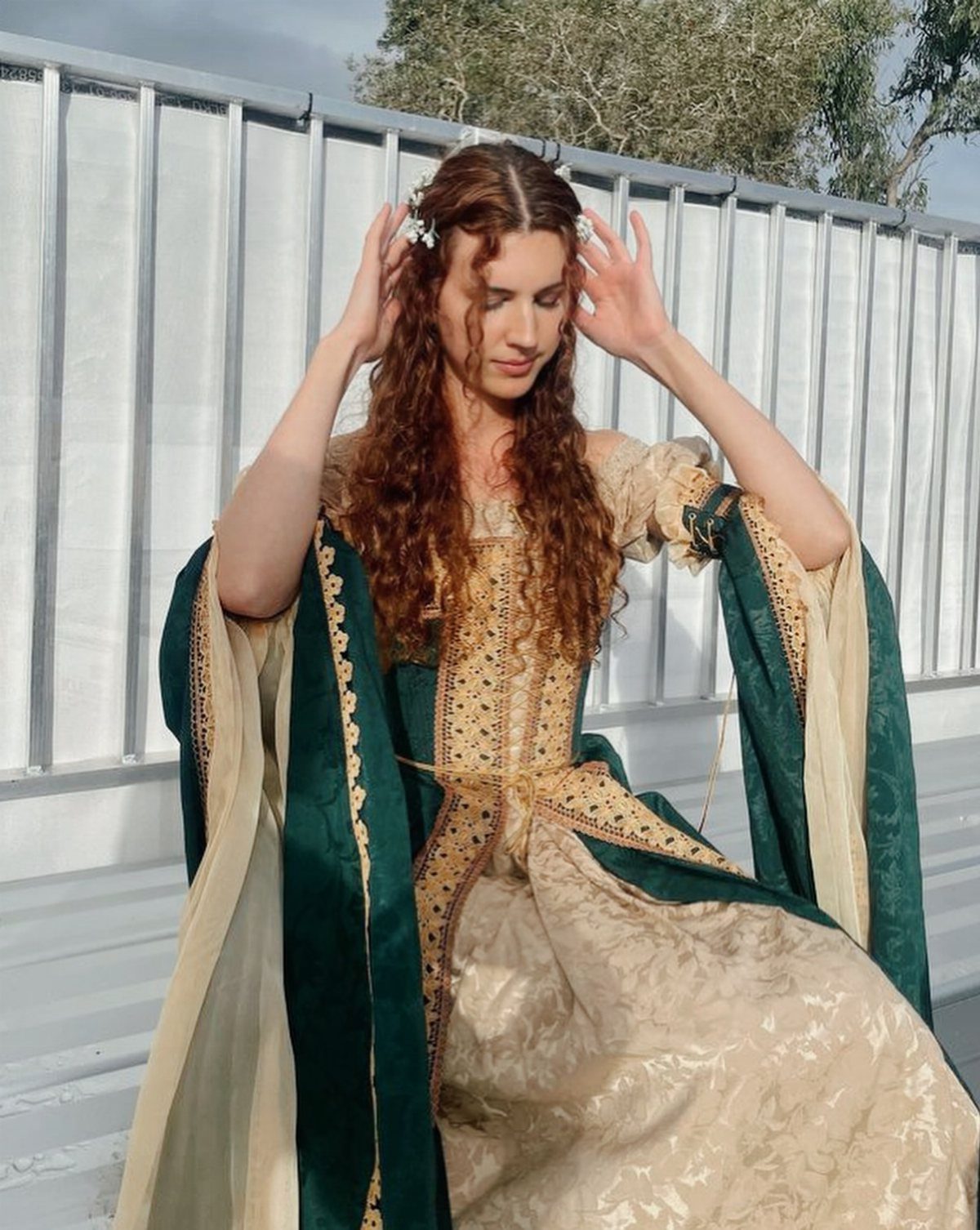
Gold and dark green brocade does the work of a whole outfit, so wide sleeves are the only other thing this gown needs.
Brocade has a woven-in pattern, which means the richness comes from the fabric rather than from trim piled on top.
To borrow the idea, skip the gown and buy one piece: a brocade jacket or a wide-sleeved top in green and gold. Wear it with plain black trousers or dark denim and let the pattern be the only loud element.
Weight is the cost. Brocade is stiff and warm, so it suits cool weather and evening far better than a summer afternoon.
3. Orange Laced Bodice Gown
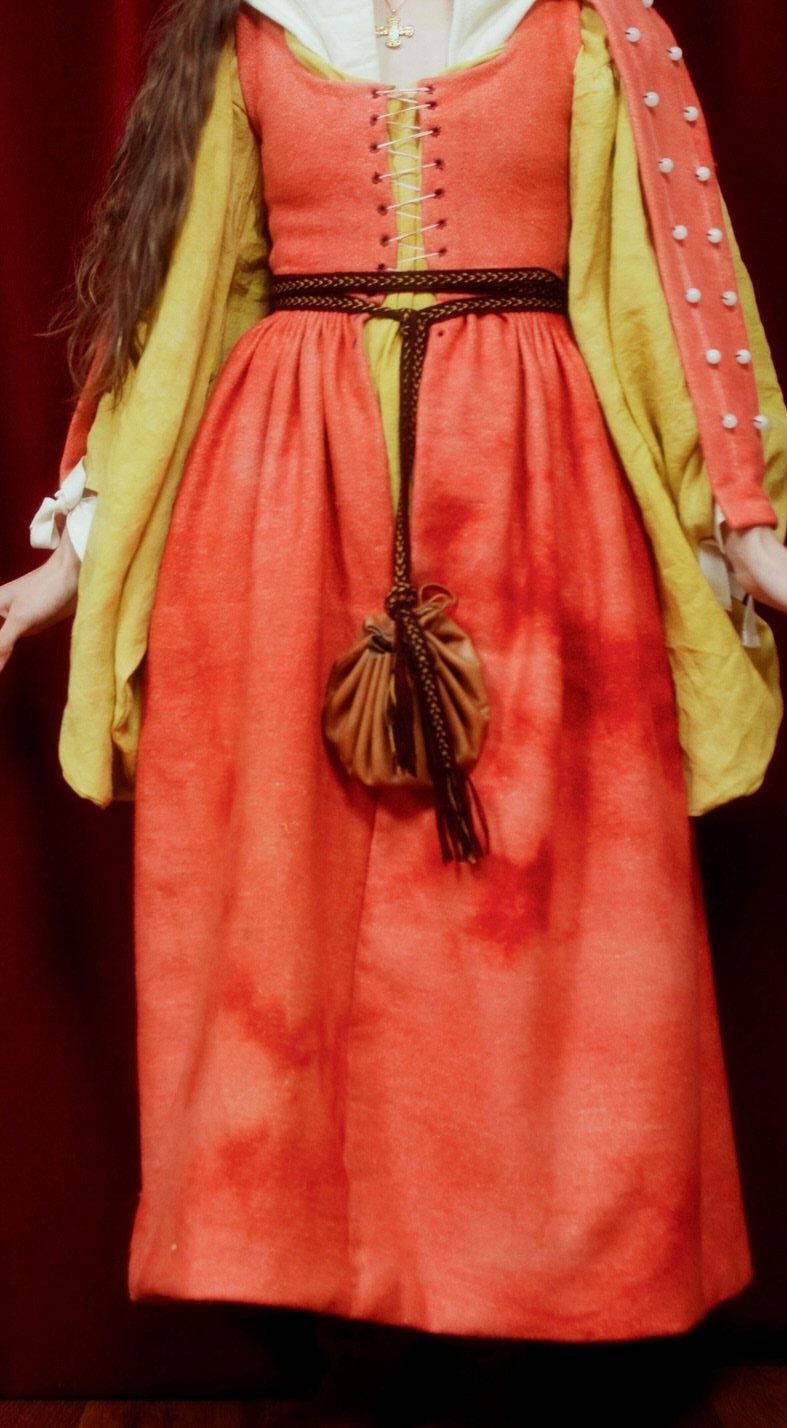
Front lacing is the detail that makes this orange dress practical to imitate. A laced bodice adjusts to your waist and bust, so fit is forgiving in a way zippers and set buttons are not.
Wide yellow sleeves against orange make a warm, close palette.
For a modern version, I would try a lace-up corset top in rust or orange under a plain skirt, then borrow the belt with a pouch: a leather belt with a small bag hanging from it holds a phone and keys.
Keep the leather brown and the rest simple. Orange and yellow together are bold enough without a third bright color.
4. Red Velvet Jeweled Gown
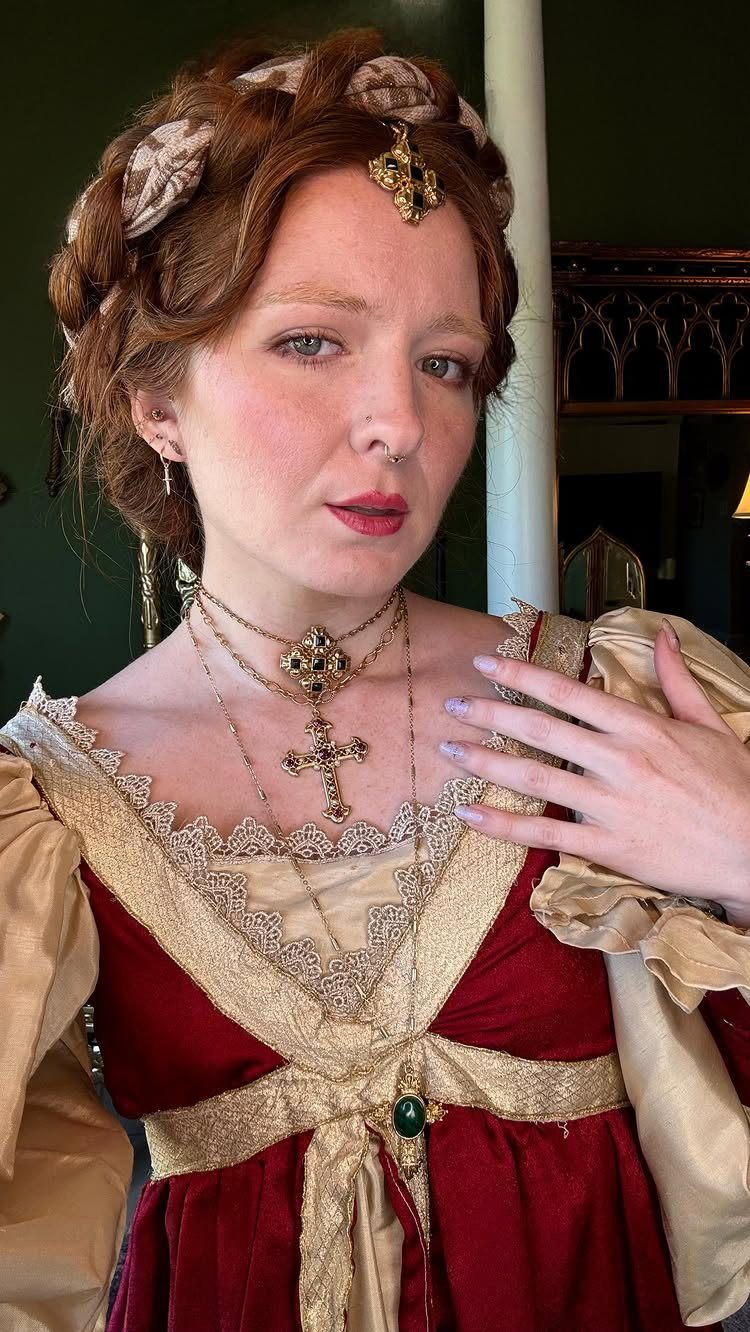
Red velvet with gold trim, lace at the edges and layered gold cross necklaces adds up to a look built on richness, and the jewelry is the part you can copy tomorrow.
Stack 2 or 3 gold chains at different lengths, with a cross pendant on at least one.
A braided headpiece finishes it. A single braid pinned across the crown or wrapped around the head gives the same effect without buying anything.
I would wear this for a winter evening or a holiday party, since velvet reads as formal.
A red velvet dress with a lace collar gets you most of the way there. The cost is that velvet crushes and shows lint, so store it hung.
5. Red and Gold Puffed-Sleeve Dress
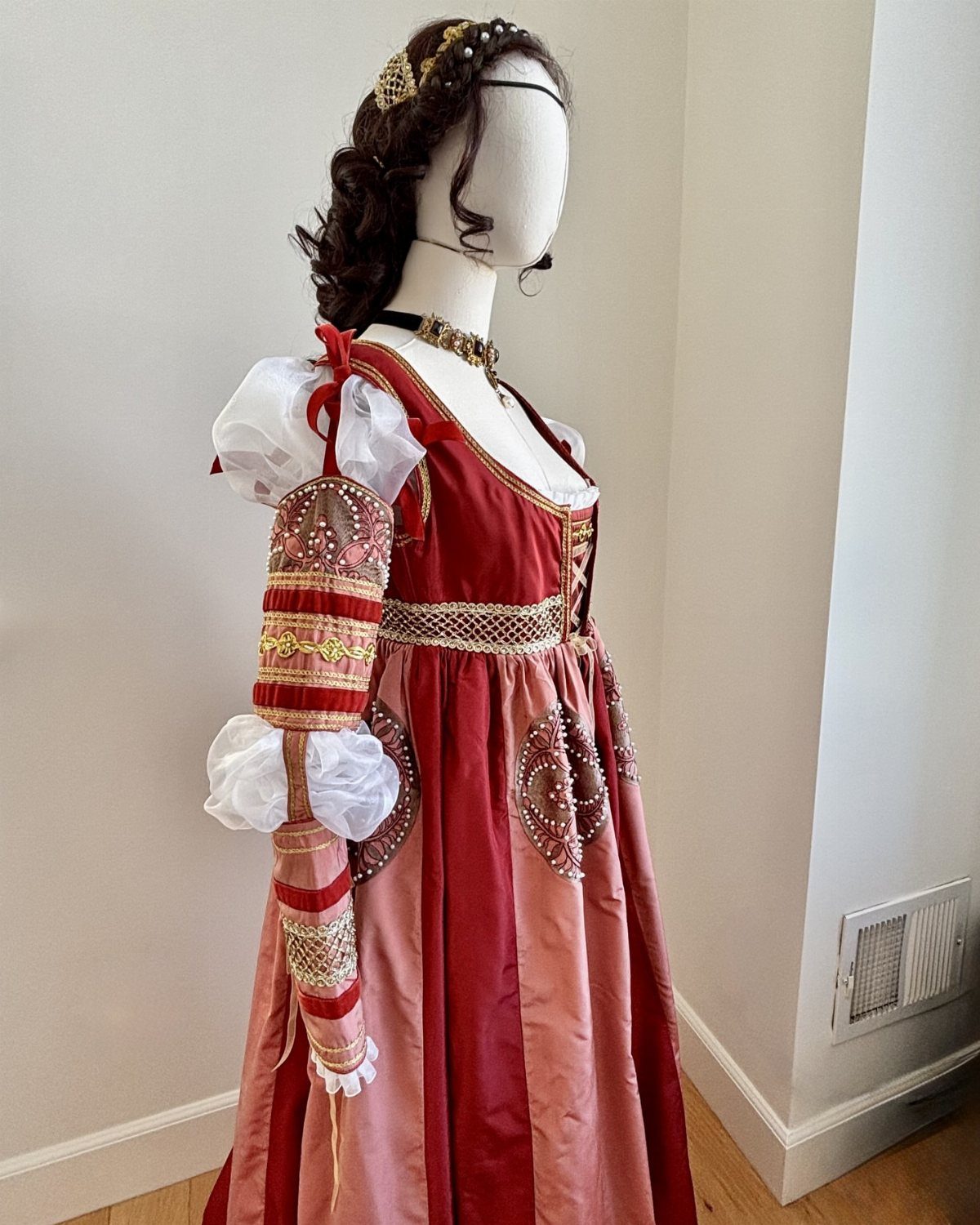
White puffed sleeves against a red and gold body give this gown its outline: the sleeves sit full, the bodice stays structured, and the matching cap ties the colors together.
Embroidery in gold thread carries the detail so the red can stay one solid field.
To wear the idea, pair a white blouse with voluminous sleeves under a red structured vest or dress. Add a small cap or a headband in the same red for the matched effect.
Choose the sleeves with care. Puffed sleeves fight with a bulky coat, so this works best indoors or under a cape.
6. Gold Bodice and Red Skirt
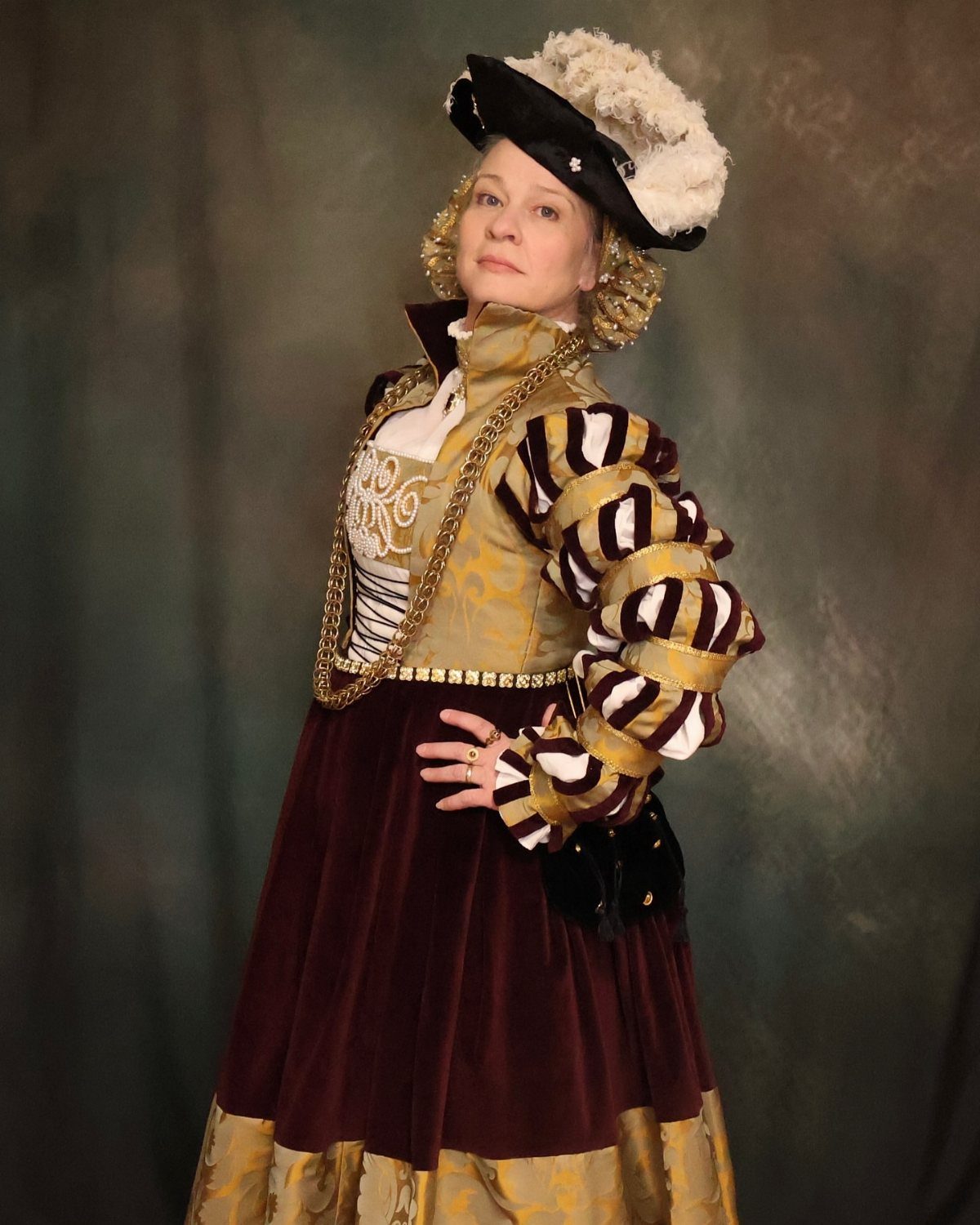
Mixing a gold bodice with a red velvet skirt works because the 2 pieces are separate, which means you can build it from tops and skirts you can actually buy.
Striped puffed sleeves add pattern at the arms without touching the clean lines of the body.
I like a structured gold top with a long red velvet skirt, and I would keep the sleeves the busiest part.
Velvet has a nap, so it looks darker or lighter depending on the light; that depth is the reason to pay for real velvet rather than a flat imitation.
Red and gold is a strong pair. Keep shoes and bag in black or brown so nothing else competes.
7. Black Velvet Fur-Trimmed Gown
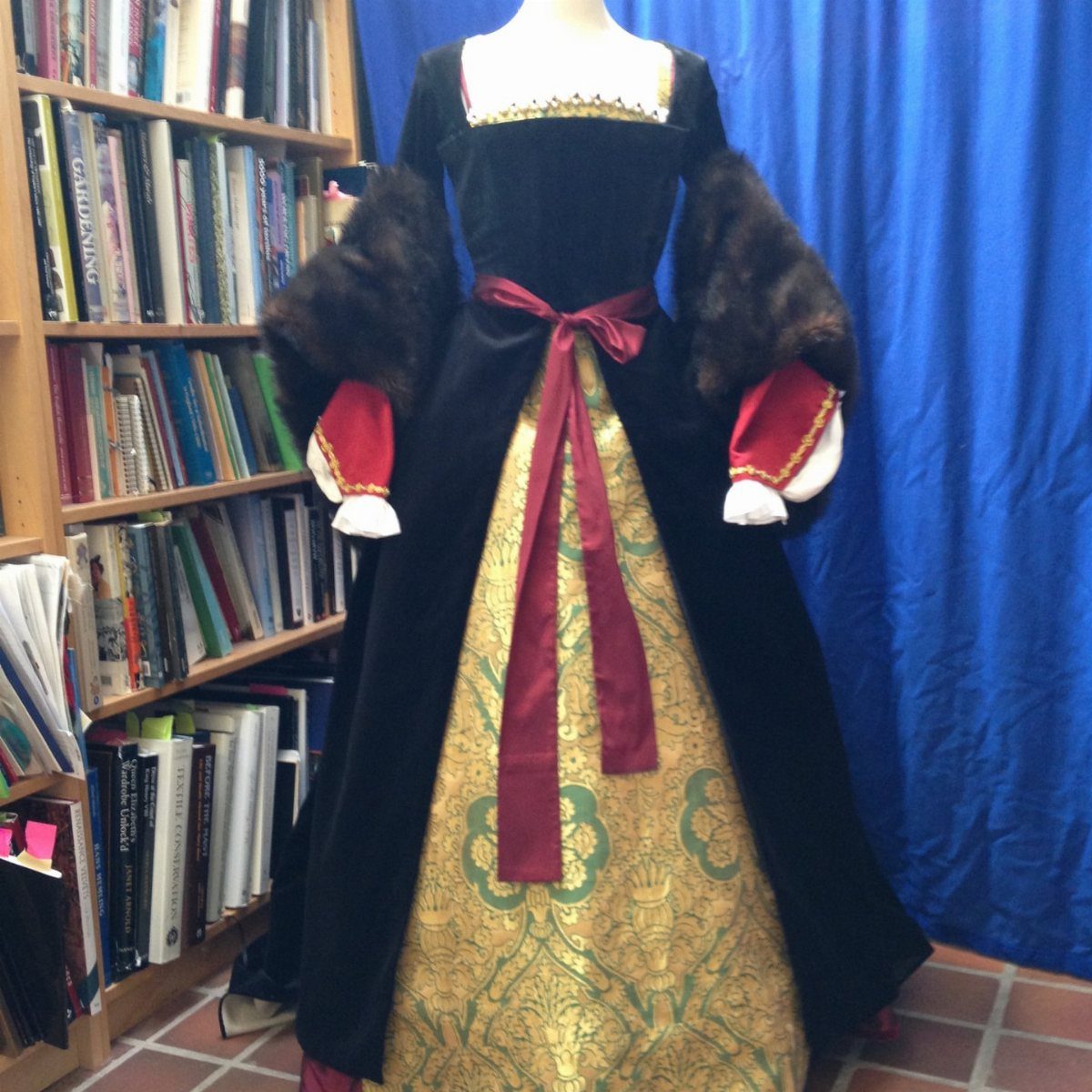
Black velvet with brown fur at the sleeves and a red sash at the waist is a lesson in contrast: dark body, soft texture at the arms, one bright line at the middle.
The sash is the cheapest piece to borrow.
For a modern version, I would pick a black velvet dress or a velvet blazer, then add a red belt cinched at the natural waist.
Fur-trimmed sleeves are harder to find, so a faux fur collar or cuffs on a black coat gets the same effect.
Keep jewelry minimal. Velvet and fur already carry the texture, and the red sash needs room to be the only color.
Heavy fabric makes this a cold-weather, evening look.
8. Embroidered Cream Corset
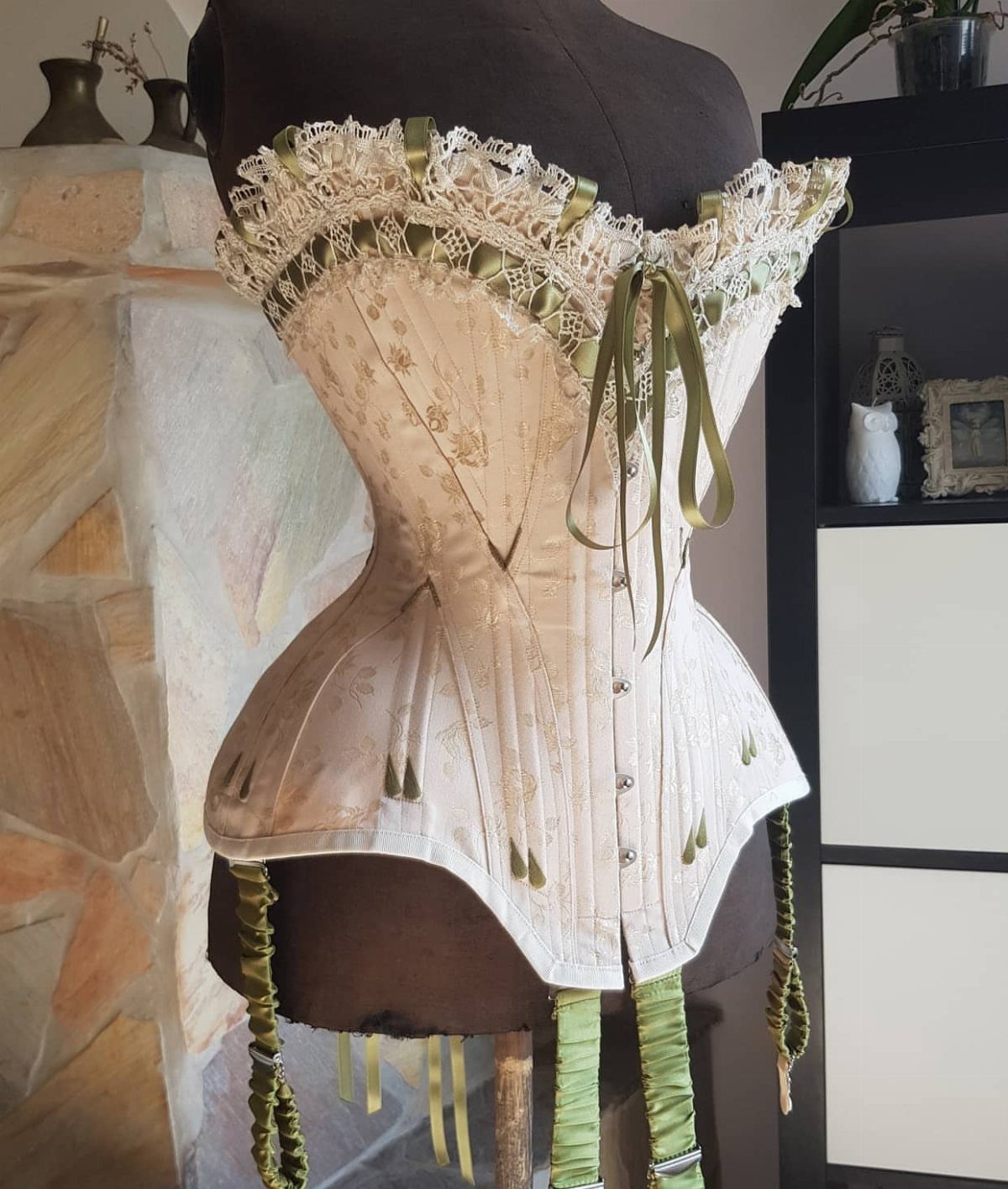
Cream with gold floral embroidery, green ribbon lacing and lace trim reads softer and more delicate than the dark, heavy gowns common to the 1500s. It reads as a piece of its own, not part of a costume.
To wear the idea, look for a cream corset-style top with embroidered flowers and lace-up ribbon at the front or back.
I would layer it over a crisp, long-sleeved white shirt, then add dark jeans or a simple skirt so the embroidery stays the focus.
Green ribbon is the detail worth copying. If your top has plain ties, swap in a green ribbon of your own for a close match.
Cream shows wear, so spot-clean gently and store it flat.
9. Red and Blue Peasant Bodice
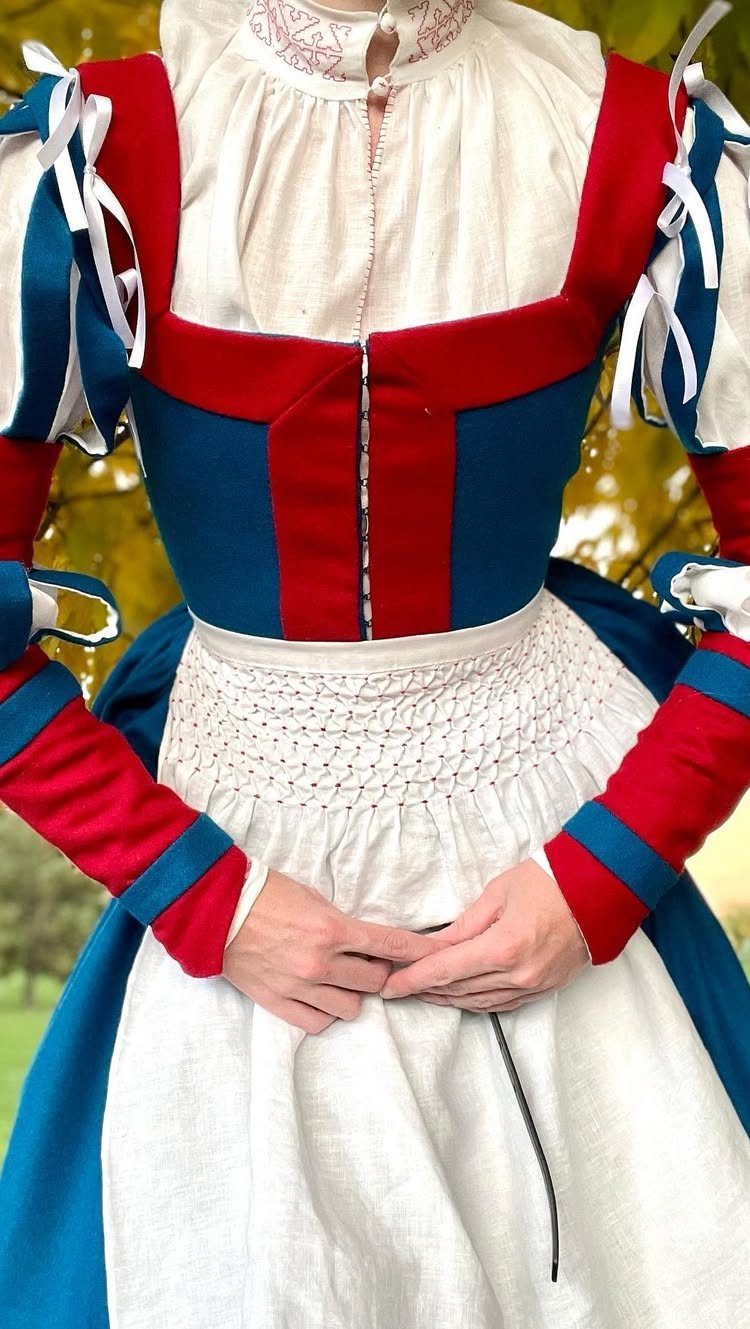
A red and blue lace-up bodice over a white chemise, topped with a white apron, is the working-class side of 16th-century dressing, and it is far more wearable than a court gown.
The look is plain on purpose: sturdy color, simple layers.
To build it, start with a white blouse in a loose, gathered cut.
Add a lace-up vest or bodice in red or blue, then a white apron tied at the waist. Cotton or linen keeps it practical.
I would wear it with a long skirt and flat boots for autumn, when the colors suit the season. A cotton apron is the one piece that slips over almost any outfit in your closet.
Fashion Evolution
Sleeves changed the most. Early in the 1500s, a gown’s sleeves could be cut from a different fabric and color than the body, and that one change opened up a lot of options.
For your own closet, the same idea works: treat sleeves as the part you can swap. A plain dress with contrasting sleeves, or a vest over a blouse with full sleeves, gets the effect without a costume.
The silhouette moved toward structure. Fashion followed wealth and royal taste, so the clothes with the most fabric and shaping belonged to people at court.
I would pick one structured piece and keep everything else soft. Two stiff pieces in one outfit start to look like armor.
Social Status in Fashion
Sumptuary laws set rules about which materials and styles each social class could wear, so clothing worked as a visible label of rank.
That is a useful way to look at an outfit today, minus the legal part.
Decide which single piece carries the status: the best fabric, the finest detail, the one item that looks expensive. Then let the rest stay plain.
I would spend on that piece and save on the layers under it. A well-made jacket or skirt in a good fabric does more than 5 mid-priced pieces, and it fits the quality-over-quantity approach.
Comfort Vs. Style
Elaborate dress cost wearers comfort, and many garments were stiff and heavy. You can borrow the look without paying that price.
Try any structured piece on and move around in it first: reach, sit, lift your arms, and see whether it holds up.
Raise your arms, sit down, and lean forward; if the bodice digs in or the sleeves pull, it will stay in the closet.
Pick softer fabrics where the body moves most, and keep the stiff, heavy ones for places where you will mostly stand or sit. Adjustable closings help too, since they let you loosen a fit by the hour.
Comfort decides how often something gets worn, so I weigh it as heavily as the look.
Frequently Asked Questions
What fabrics were common in 16th century women’s fashion?
Silk and velvet were popular, often decorated with embroidery.
Gowns also used brocade, which has the pattern woven into the cloth, and fur trim at the sleeves. Cotton and linen suit working-class looks like a chemise and apron, and they are the easiest to wear today.
How did social status affect clothing in the 16th century?
Sumptuary laws spelled out which fabrics, colors and cuts each class was allowed to wear, so a stranger’s rank showed before anyone spoke. Working-class dress stayed plainer, built from simple layers in sturdy color.