Business professional attire is the safest standard for a career fair, since looking a little sharper than the booth you’re visiting beats looking underdressed for it.
A trial run at home pays off: put the complete outfit on for an hour or two, because a waistband or heel that annoys you at minute 30 will be miserable by hour 4.
1. Business Professional Attire
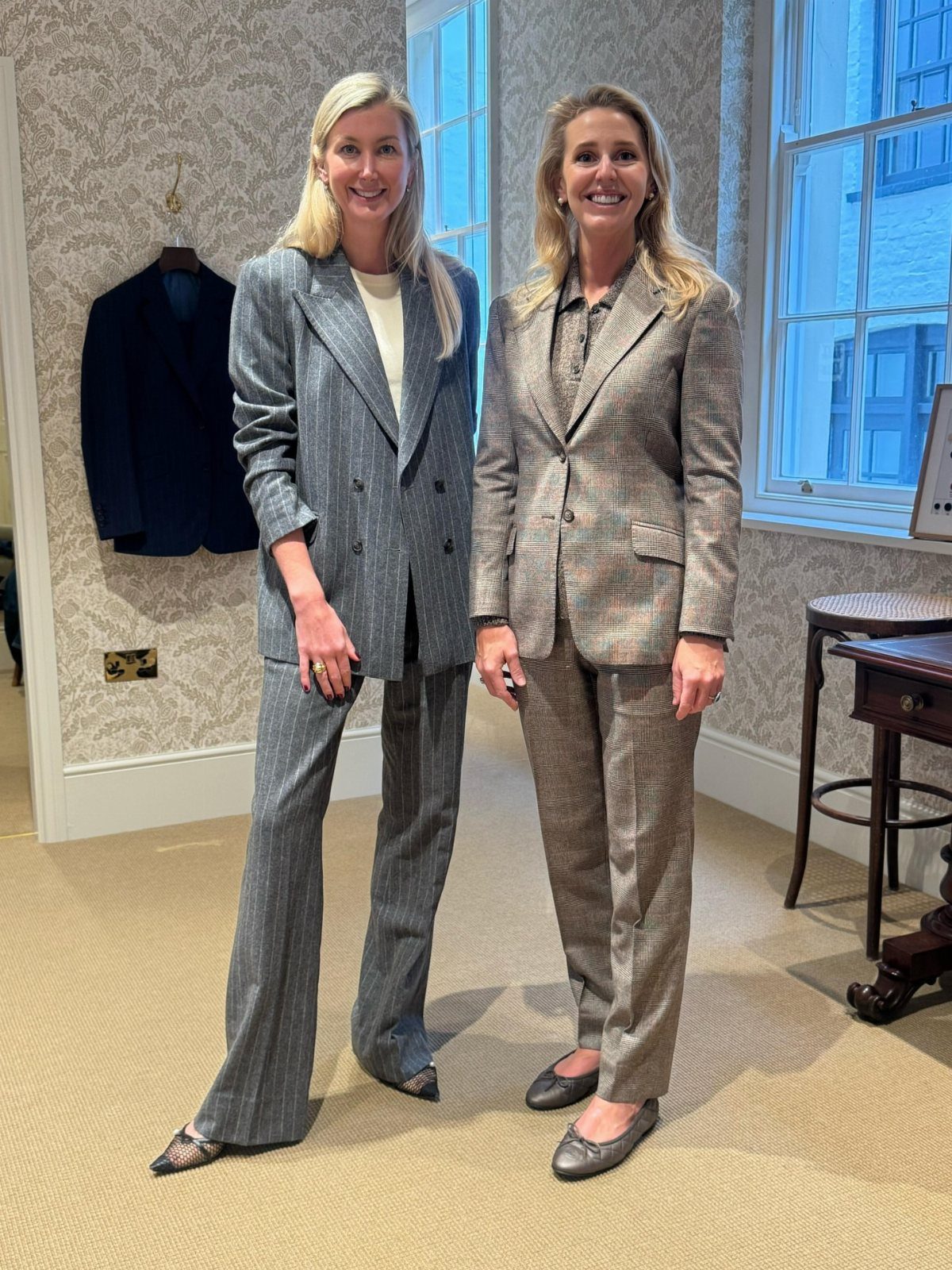
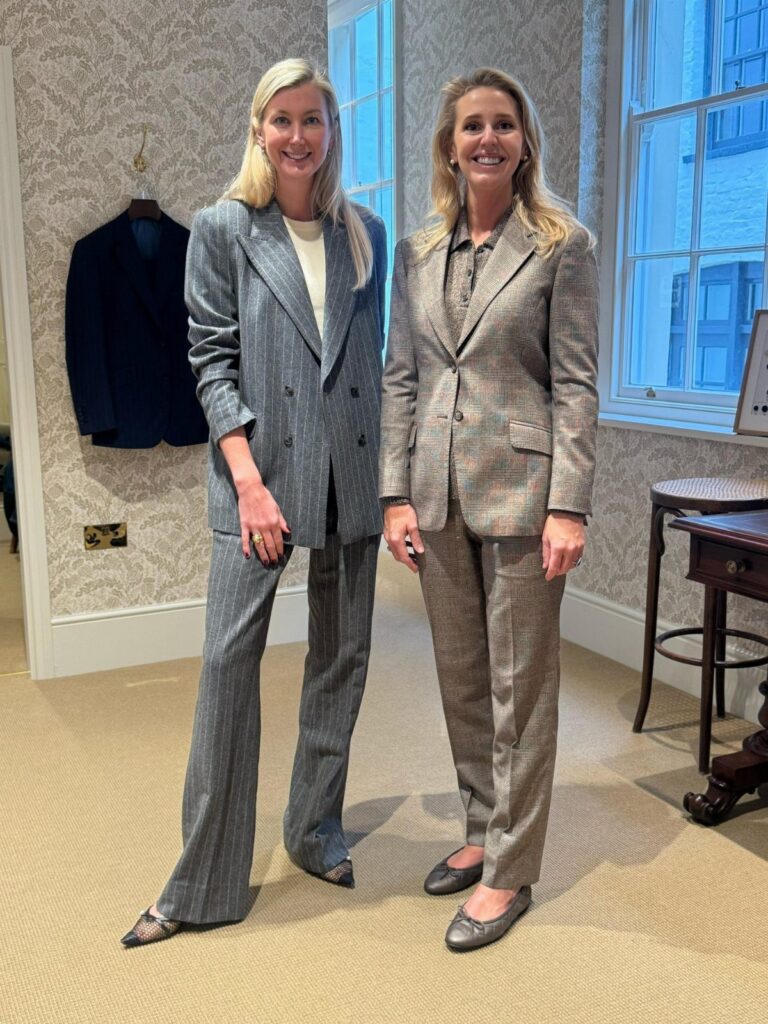
A suit with real structure does the talking before you say a word. Shoulders that sit square, trousers that hang straight, and a jacket that matches the bottom half all signal that you took the day seriously.
I would pick the suit in a fabric with some body, like the pinstripe or the plaid, since pattern adds personality without losing authority. Keep everything under it quiet.
Warmth and stiffness are the price of a structured suit: wool and heavy lining hold shape but run hot in a crowded hall.
A convention hall packed with people can get stuffy, so choose a jacket you can wear open and still feel put together.
2. Business Casual Attire
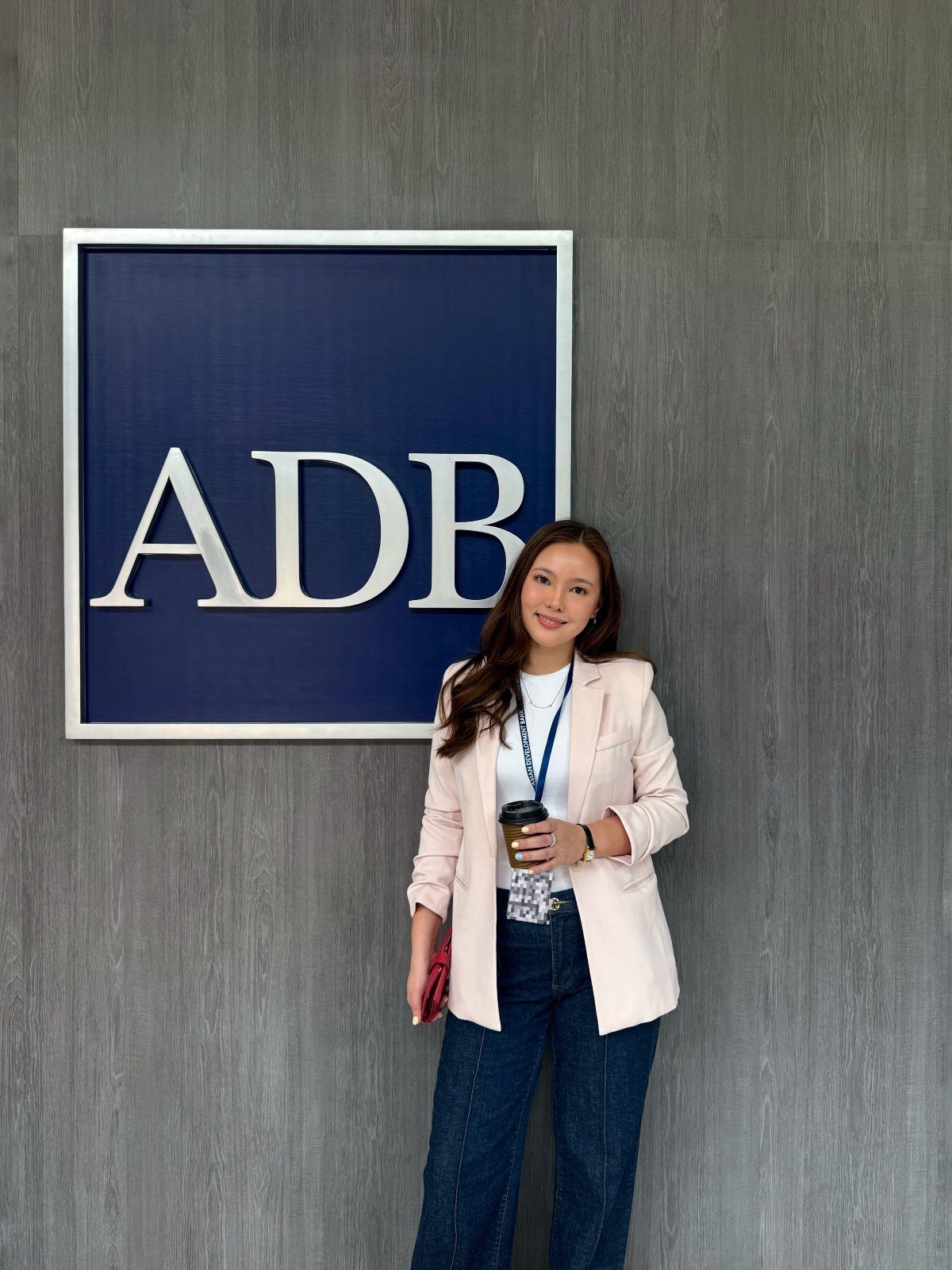
Dark jeans can work at a career fair, but only when the blazer, shoes and top around them look polished. A blazer does that job: a soft pink one over a plain white top reads friendly and still looks deliberate.
For networking, this is my pick when the employers are in creative or casual fields. You look approachable, which helps when you are starting dozens of short conversations.
Choose jeans in a deep, even wash with no rips or fading. Hold a coffee only before you go in; at the table, you want a free hand for shaking hands.
3. Well-fitting Dress
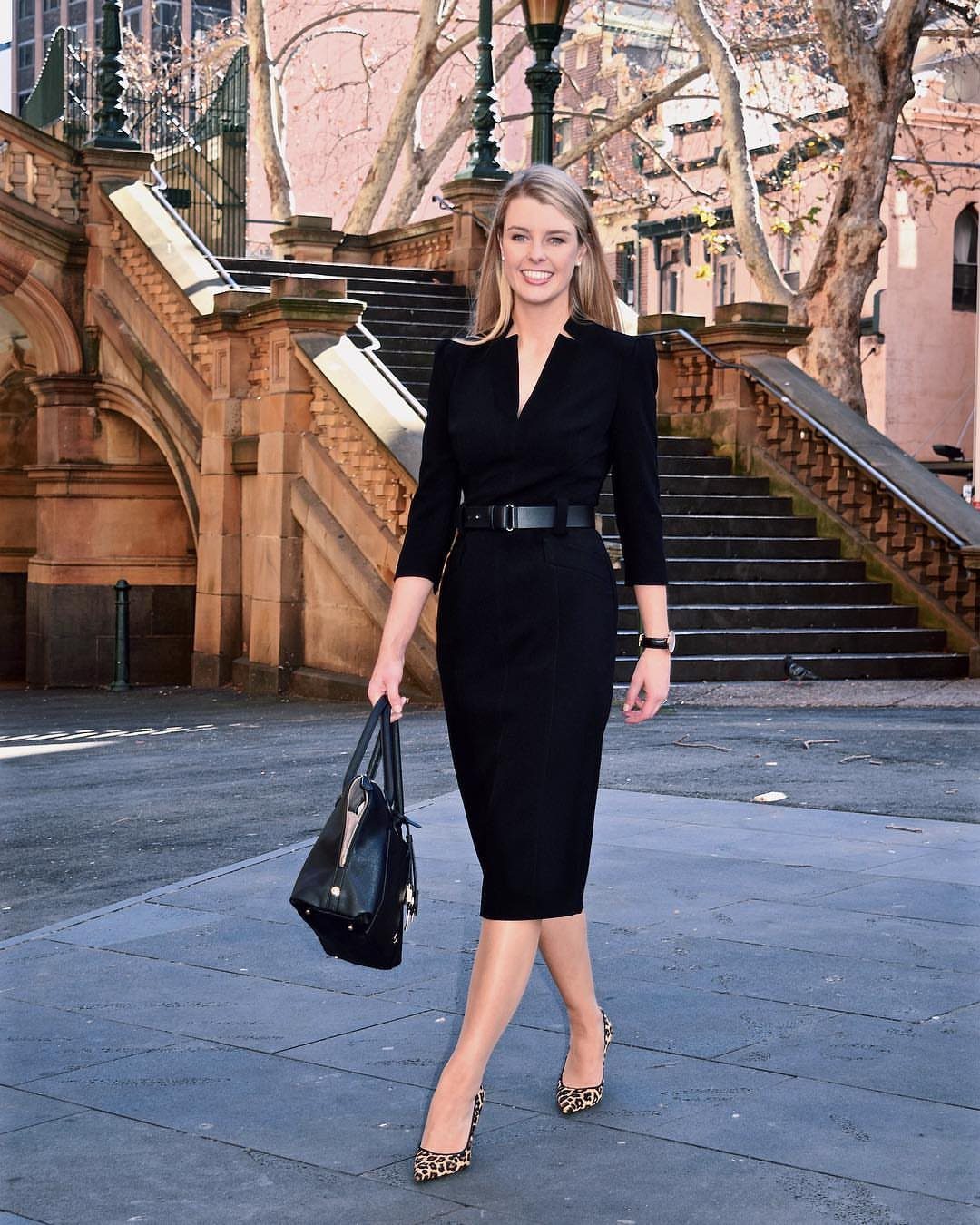
One piece, no styling puzzle: a fitted black midi dress is the fastest way out the door on a busy morning. The length lands near the knee or below, which keeps it office-appropriate.
A belt defines the waist and gives a straighter dress some shape, whatever your build. Pair it with a structured handbag that holds a folder of résumés.
Fit is everything here.
If the dress pulls across the hips or rides up when you sit, it will distract you all day. Try sitting, reaching, and climbing stairs in the mirror before you commit.
4. Neutral Colors Outfit
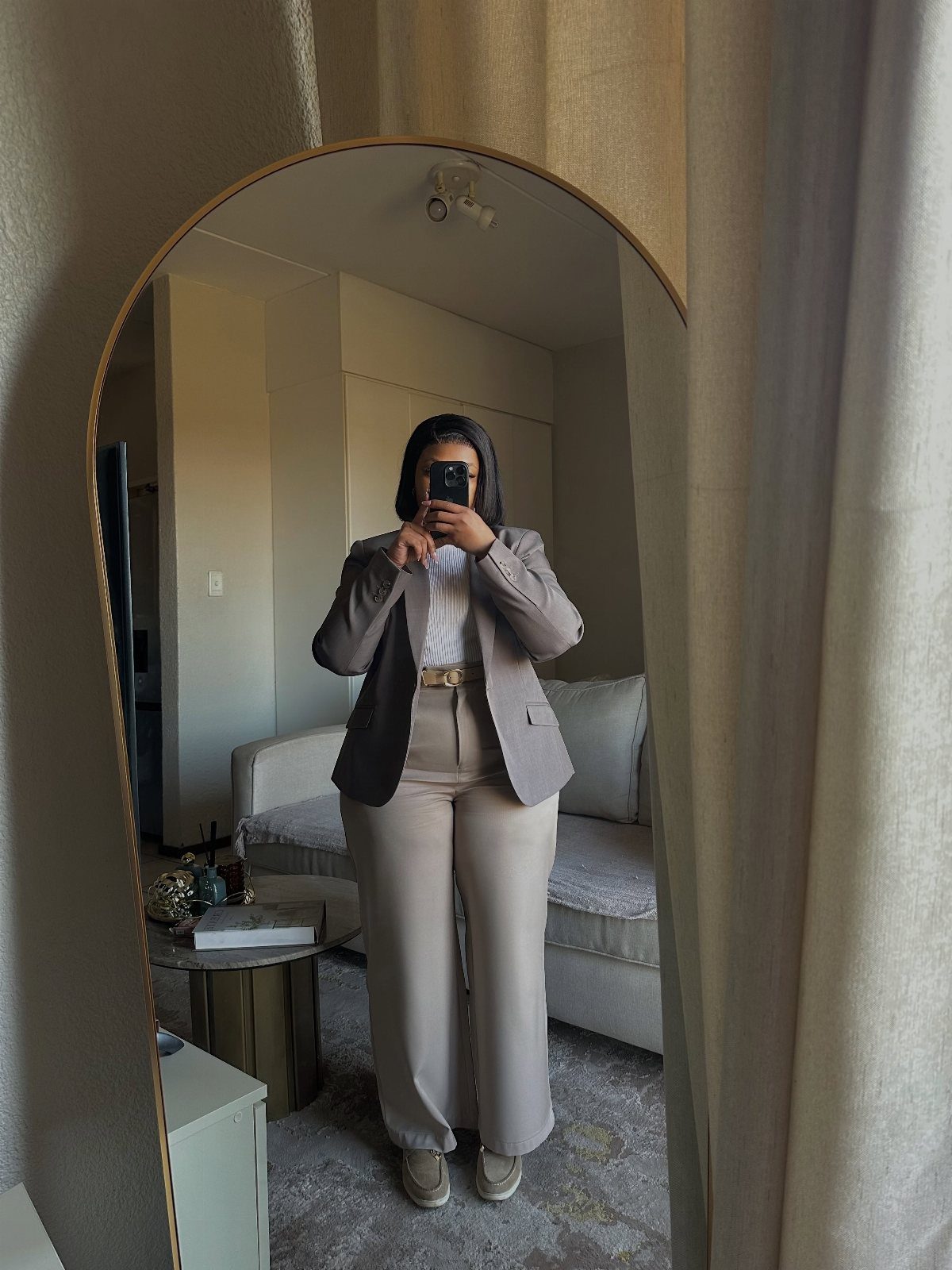
Taupe, beige, and white sit together so easily that getting dressed takes almost no thought.
Keep the blazer, top and wide-leg trousers within one shade family, such as taupe over white with close-toned trousers, and the eye reads one long, calm line from shoulder to hem.
Neutrals suit a wardrobe built on quality over quantity, because each piece pairs with the others you already own. I like keeping the tones within one family so nothing clashes.
The limit is that all-neutral can look flat. Add interest through texture, like a crisp weave, or one simple piece of jewelry.
5. Tailored Trousers
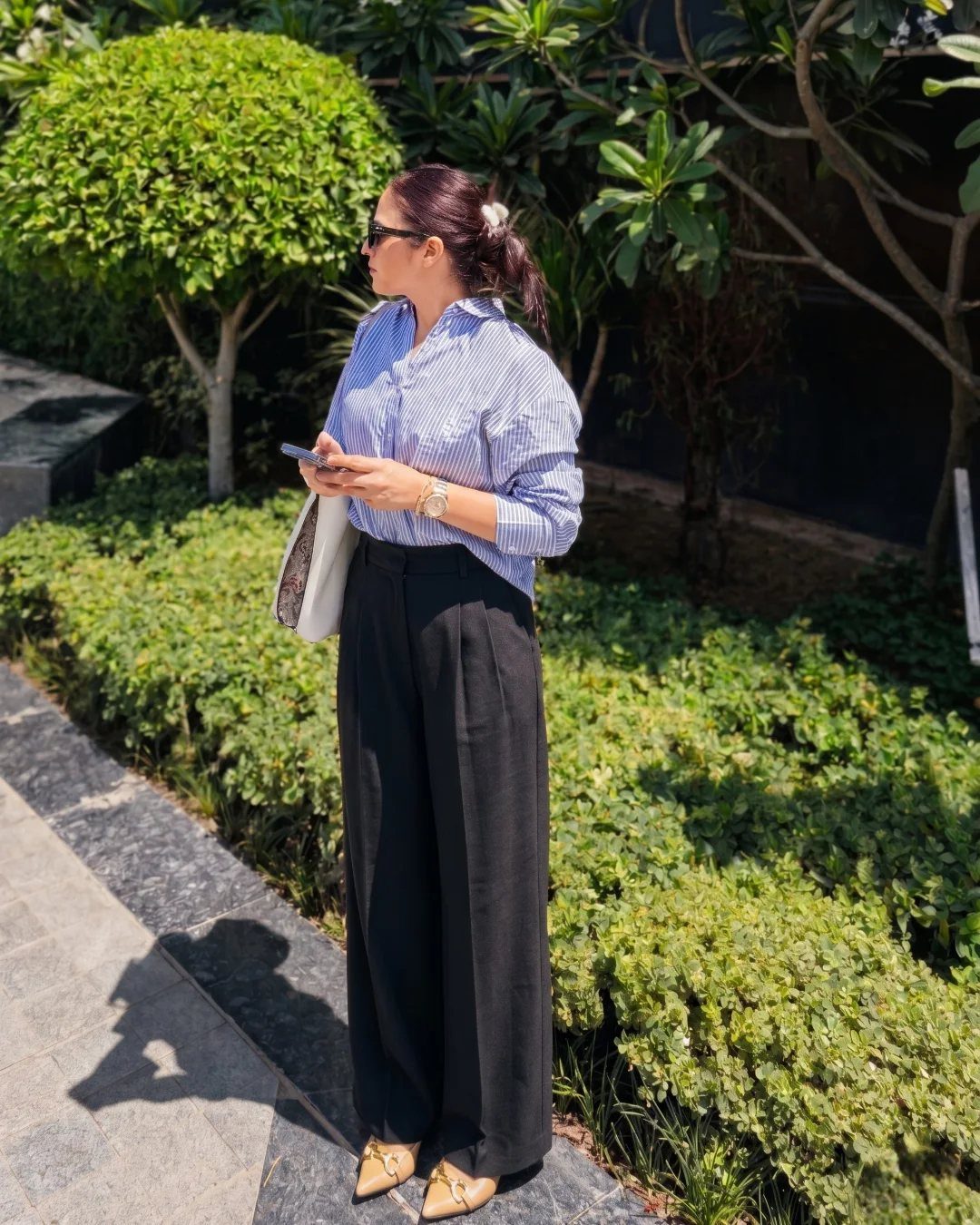
Wide-leg black trousers with a clean crease are the piece I would spend money on first.
Cut full from the hip and long enough to skim the top of your shoes, they lengthen the leg and move easily through a long day.
Tuck a button-down into wide trousers so the waist stays visible and the volume below does not swallow you. Black goes with nearly everything, which makes the trousers a repeat wear.
Check the waistband by sitting down. If it digs in or gaps at the back, a tailor can fix it for a modest cost.
6. Pantsuit with Patterned Blouse
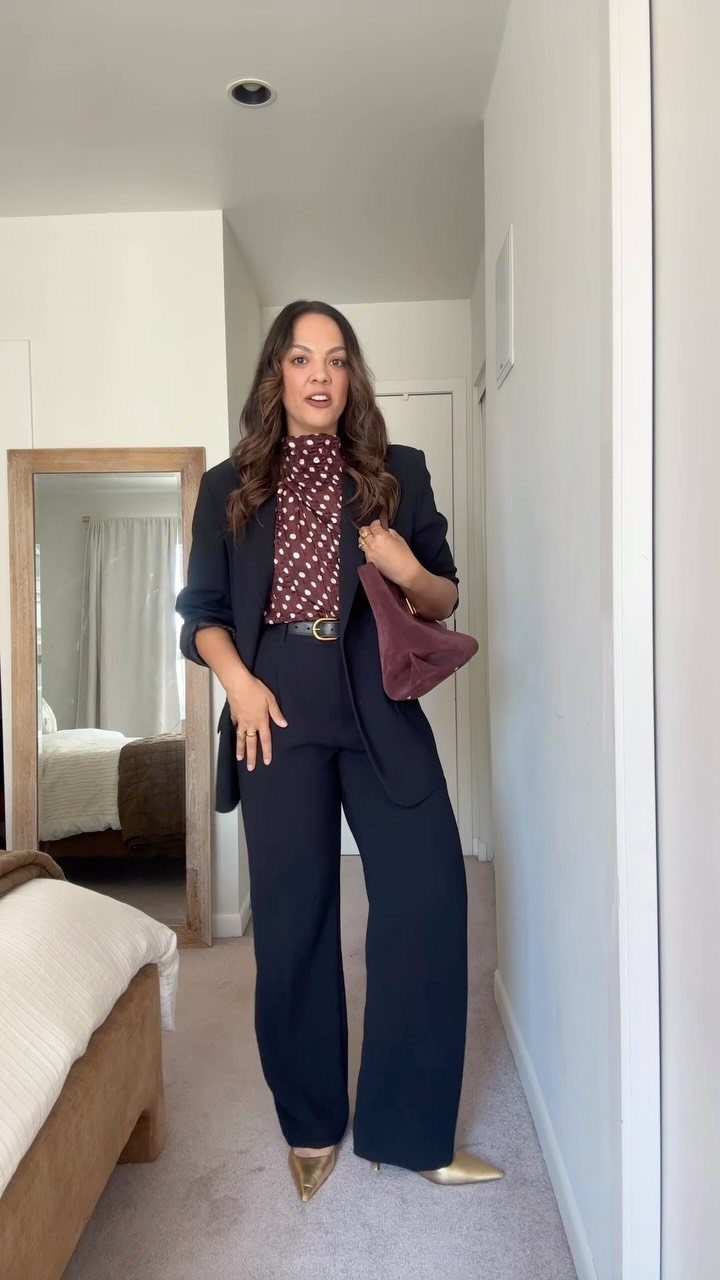
A navy pantsuit gives you a solid base, and a red and white polka dot blouse breaks it up without turning loud.
The dots are small enough to read as a pattern from a few feet away, which suits a booth conversation.
Keep the pattern to one piece. Here the blouse carries it, so the suit and metallic pointed-toe heels stay simple.
Navy feels a little softer than black, so it is a good option if black suits feel severe on you. Gold heels are fun, but pick a heel height you can stand in for hours.
7. Oversized Blazer and Trouser Suit
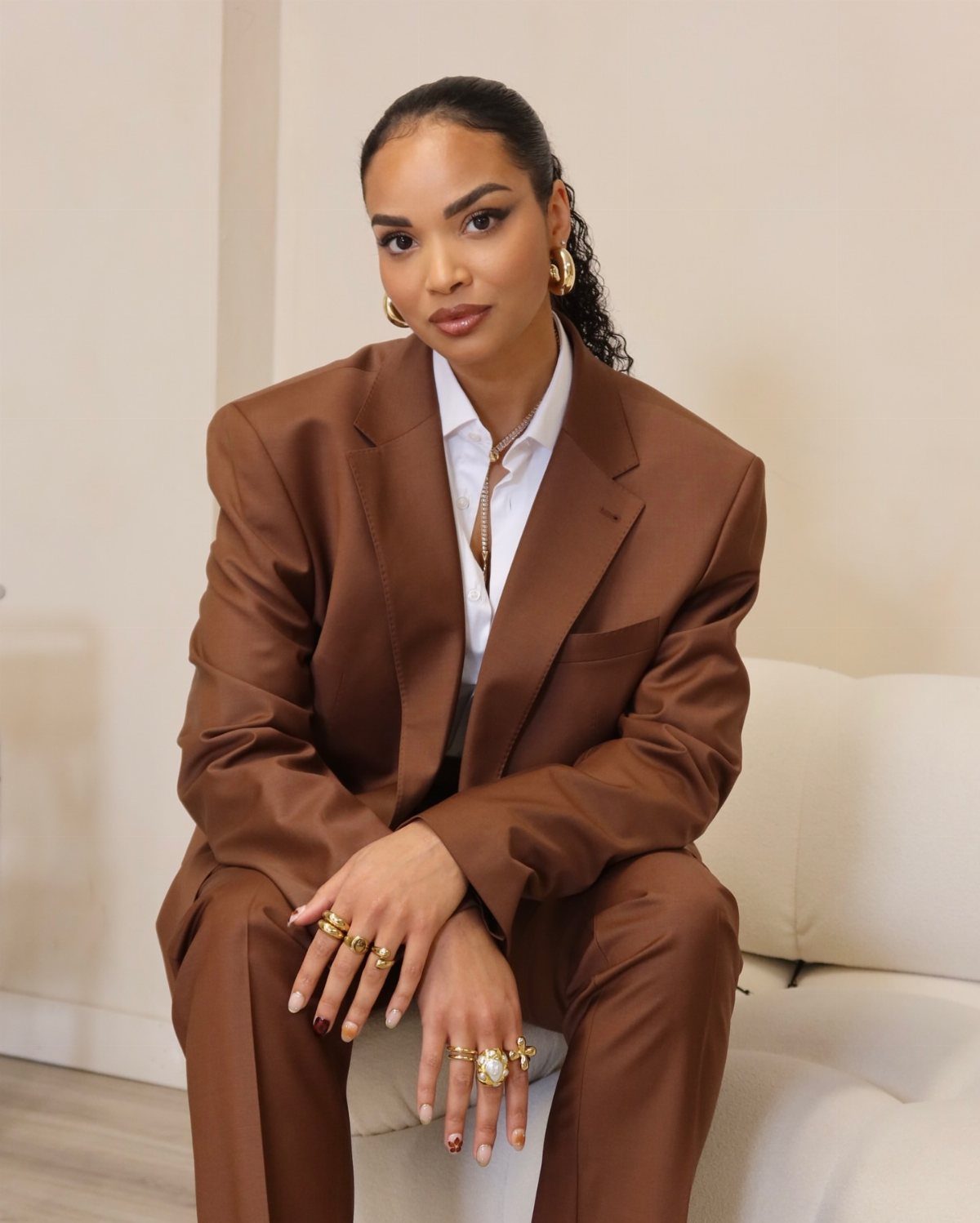
Matching brown pieces cut with extra room read as one deliberate outfit, and a white collared shirt underneath keeps the whole thing crisp. Oversized shapes look relaxed, so the shirt’s collar does the work of saying "professional."
Brown makes a softer choice than black or navy, and I like it for that reason. Wear the shirt tucked or half-tucked so your waist still shows under the extra volume of the jacket.
The limit is bulk. A very roomy blazer can swallow a petite frame, so check that the shoulder seam sits near your shoulder’s edge and the trousers end at your shoes rather than pooling.
8. Closed-toe Shoes
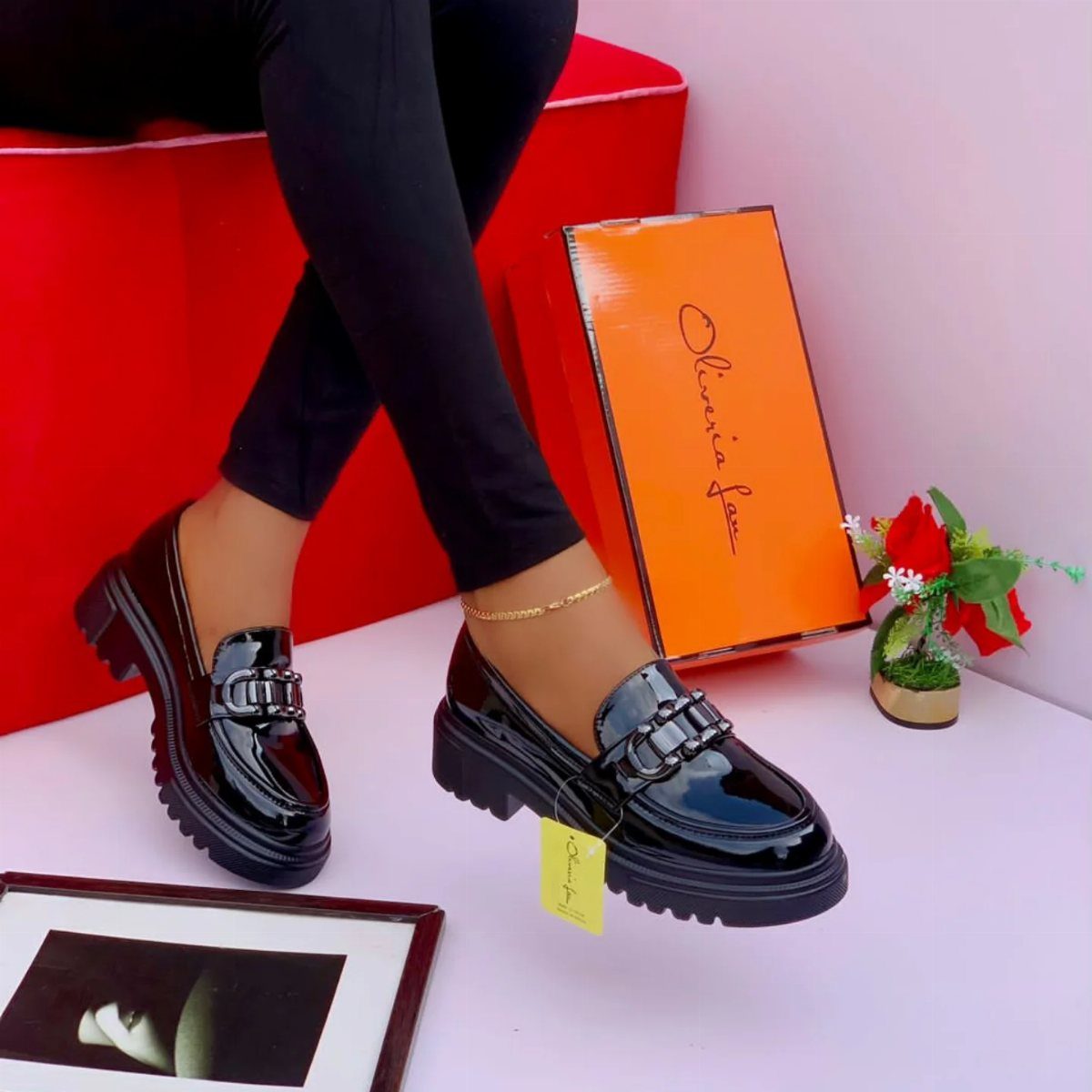
A closed-toe loafer with a modest buckle finishes black trousers, and a chunky sole is what gets you through hours of standing at booths.
Closed toes are the safe choice at a career fair, and a loafer is easier on your feet than a pointed heel. I would pick a pair that matches your trousers so the leg looks long and unbroken.
Patent leather shows scuffs, so wipe it down the night before. Break the shoes in at home first; new buckled loafers can rub, and a blister is a bad companion for a full day of handshakes.
Importance of First Impressions
Your outfit gets read before you say hello. Employers see it from across the aisle, and it shapes how professional and confident you seem before any conversation starts.
You are free to wear what you like, and comfort and self-esteem are a fair place to begin.
Still, many employers expect certain norms from candidates, and dressing inside them signals that you understand the setting and can work on a team.
Pressing, steaming, and a quick lint-roll belong on the calendar for the night before or earlier, so the morning of the fair isn’t spent fixing a wrinkled blazer or a scuffed heel.
Pressed clothes, tidy hair and clean nails take planning, and they are easy to skip when you are rushing.
When you walk into an interview, the way you present yourself — including what you wear — helps shape how employers view your professionalism, confidence, and awareness of workplace expectations.
Research Company Culture
Look up the employers on your list before you choose what to wear. Their websites, social pages and recruiting photos show how people there actually dress, and that tells you how formal to go.
Employers tend to expect candidates to dress within certain norms. Matching their level of polish shows you understand their world and would fit in with the team.
If two companies on your list sit at opposite ends, dress for the more formal one. It is easier to look slightly sharper than a booth than slightly underdressed for it.
Comfort and Confidence
Comfort is a good starting point, because clothes that feel right raise your self-esteem. When you are not tugging at a hem or shifting a waistband, your attention goes to the person in front of you.
Comfort still has to sit inside what employers expect. I would choose the most relaxed option that still looks polished, not the most relaxed option you own.
Wear the full outfit at home for an hour or two before the fair. Whatever bothers you by minute 30 will bother you far more at hour 4.
Frequently Asked Questions
What do employers wear to career fairs?
Employers often dress in business casual or professional attire. Before the fair, spend 10 minutes on the company’s site, its social accounts and any recruiting photos; how the staff dresses there is the best guide to your own formality level.
How do I dress classy for work as a woman?
Choose well-fitting, polished pieces in neutral colors with minimal accessories. Keeping the blazer, top and trousers in taupe, beige or white, all within one shade family, gives a single calm vertical line.
A flat look is the risk with all-neutral, so I add one crisp fabric, like a structured weave, or a single simple piece of jewelry.
Can I wear jeans to a career fair?
Yes, but only when everything around them looks polished. If you go with jeans, choose a dark, evenly colored wash with no rips or whiskering, and dress them up with a blazer, a plain top and polished shoes.
This suits creative or casual fields best; for more formal employers, go with a suit or tailored trousers.