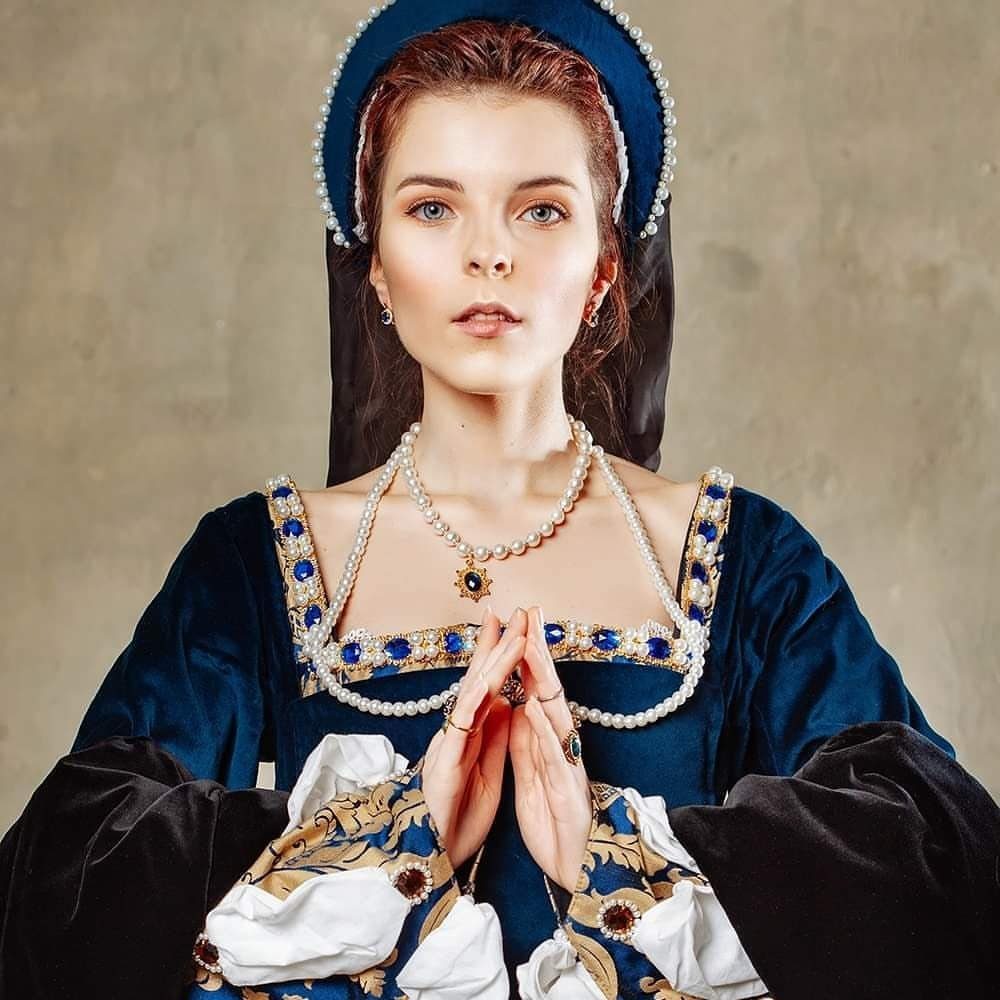
Where you plan to wear it settles the choice: the Gold and Teal Court Gown and the Blue and Gold Gable Hood Gown both call for an event, and the teal one needs a second person to lace you in, while the Working-class Wool Dress and Apron fits a faire or a cottage-style afternoon.
The list runs from pieces that work only as costume, like the Gable Hood Gown, to ones that are easy to copy at home, like the Linen Caps and Decorative Hoods or the Embroidered Green Velvet Gown.
Velvet, brocade and fur trim carry most of the richness, so a single gold or pearl detail is usually enough for daily wear.
1. Linen Caps and Decorative Hoods
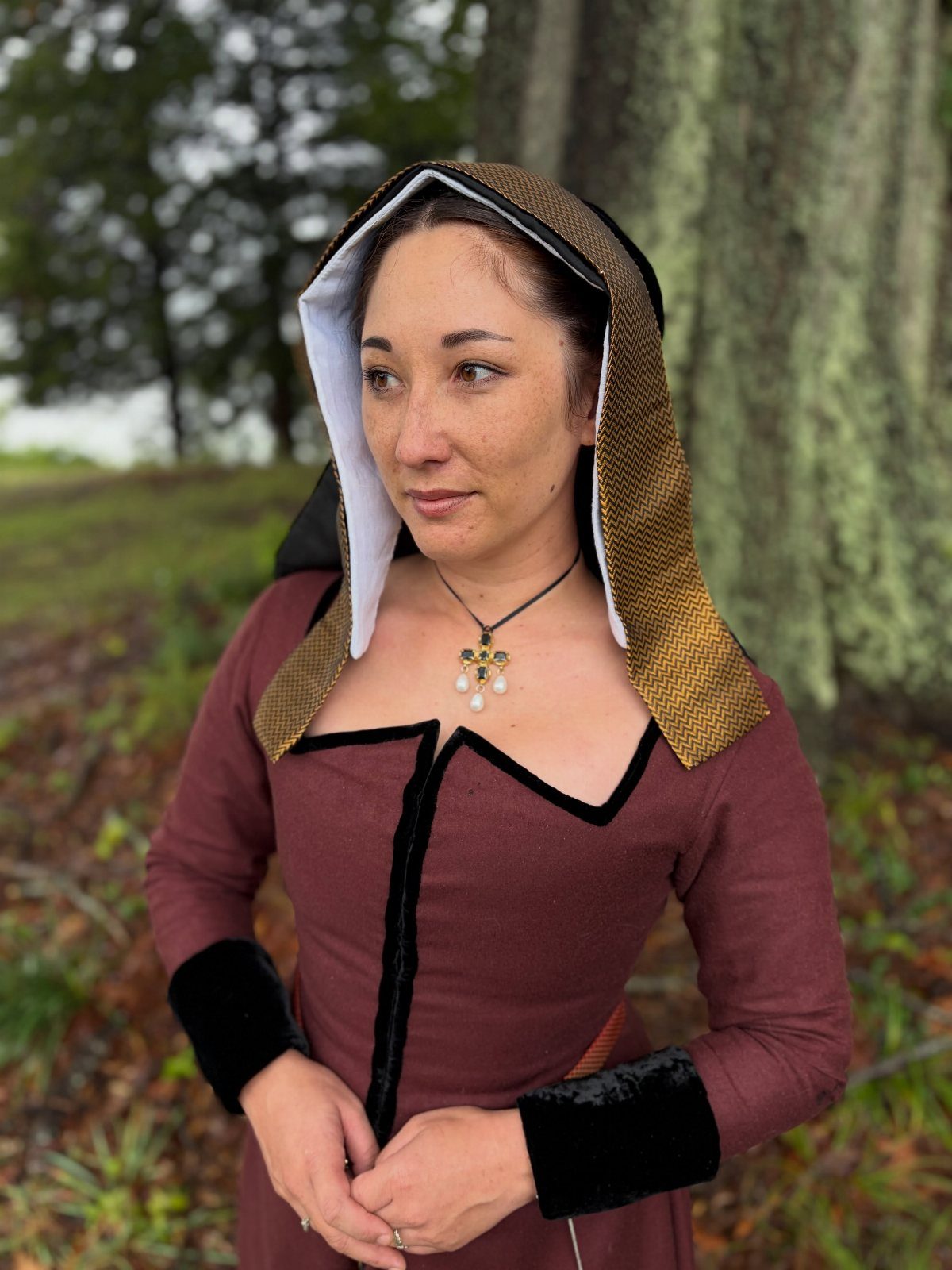
A white linen cap under a gold hood does more for a Tudor look than any extra layer of skirt. The cap frames the face and hides the hairline, so no styling is needed underneath.
Pair it with a plain, deep-toned gown, like the maroon or brown here, and let the hood be the only shiny piece. 2 bright accents compete.
For modern wear, I would borrow the idea with a crisp white scarf or a gold headband over a dark dress.
2. Embroidered Green Velvet Gown
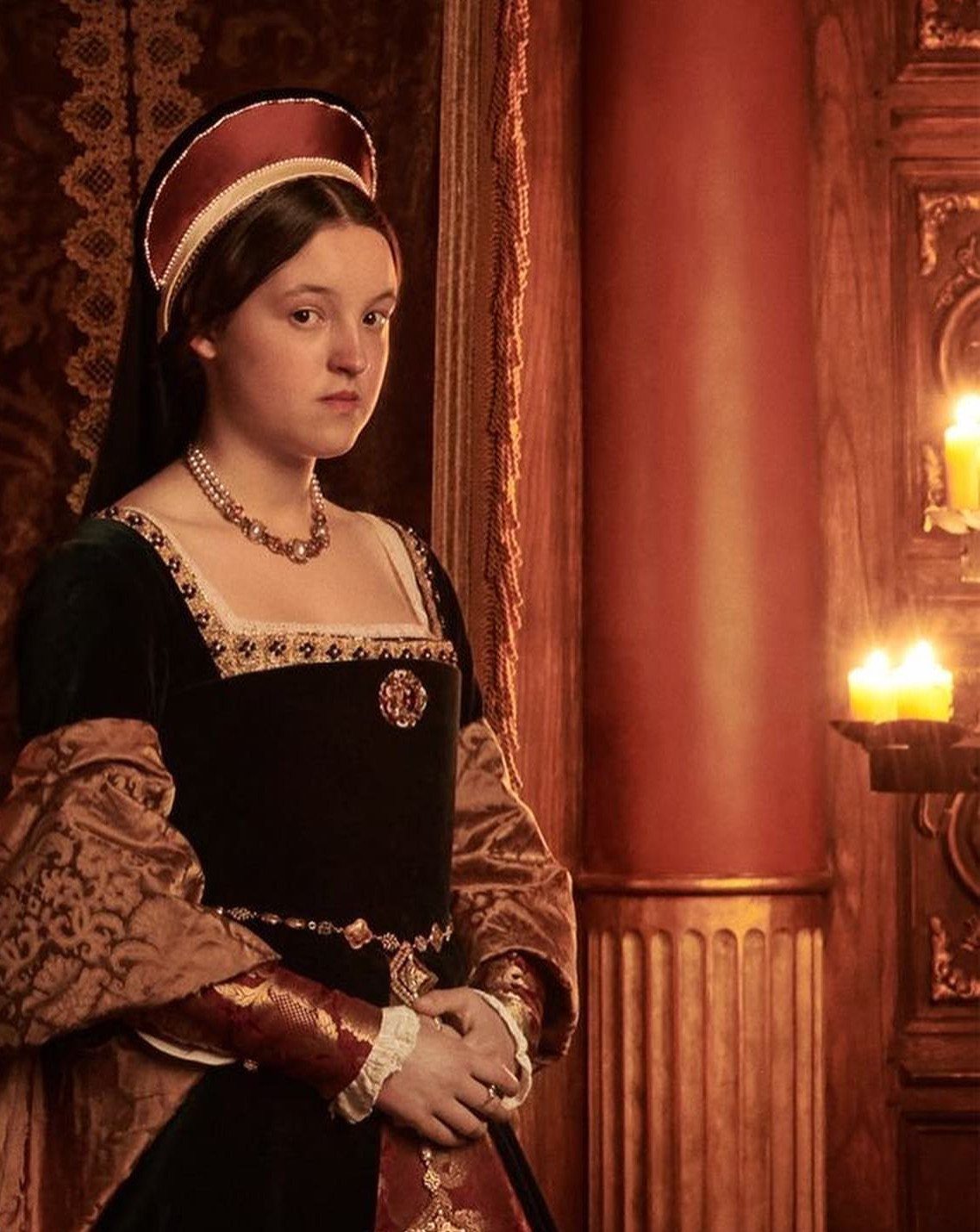
Dark green velvet with gold embroidery is the version I would pick if I could own only one Tudor gown. The color is rich without being loud, and the gold sits on it like jewelry.
Pearls at the neck keep the look soft. A red French hood adds contrast, though it is a bold choice; a matching green or black hood would be quieter.
To wear the idea today, try a forest green velvet dress with one gold or pearl detail, and stop there.
3. Fur-Trimmed Burgundy Velvet Gown
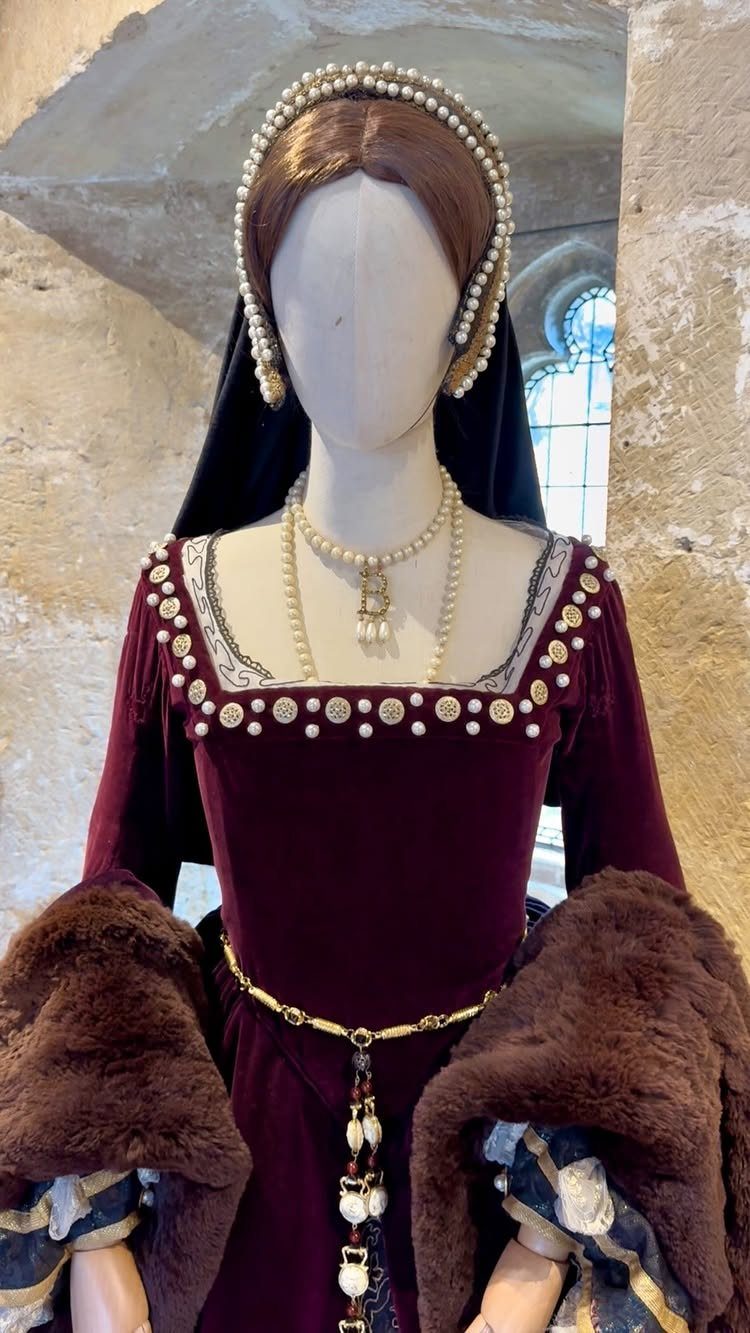
Brown fur on the sleeves is what gives this burgundy velvet gown its weight. Trim at the cuff draws the eye to the arms and balances a full skirt.
Pearl embellishments keep the deep red from looking heavy, and a matching headpiece ties it together. I like that the palette stays within one warm family.
For everyday dressing, a burgundy velvet dress with faux fur cuffs gets you close, and it suits colder evenings and holiday parties.
4. Blue and Silver Velvet Dress
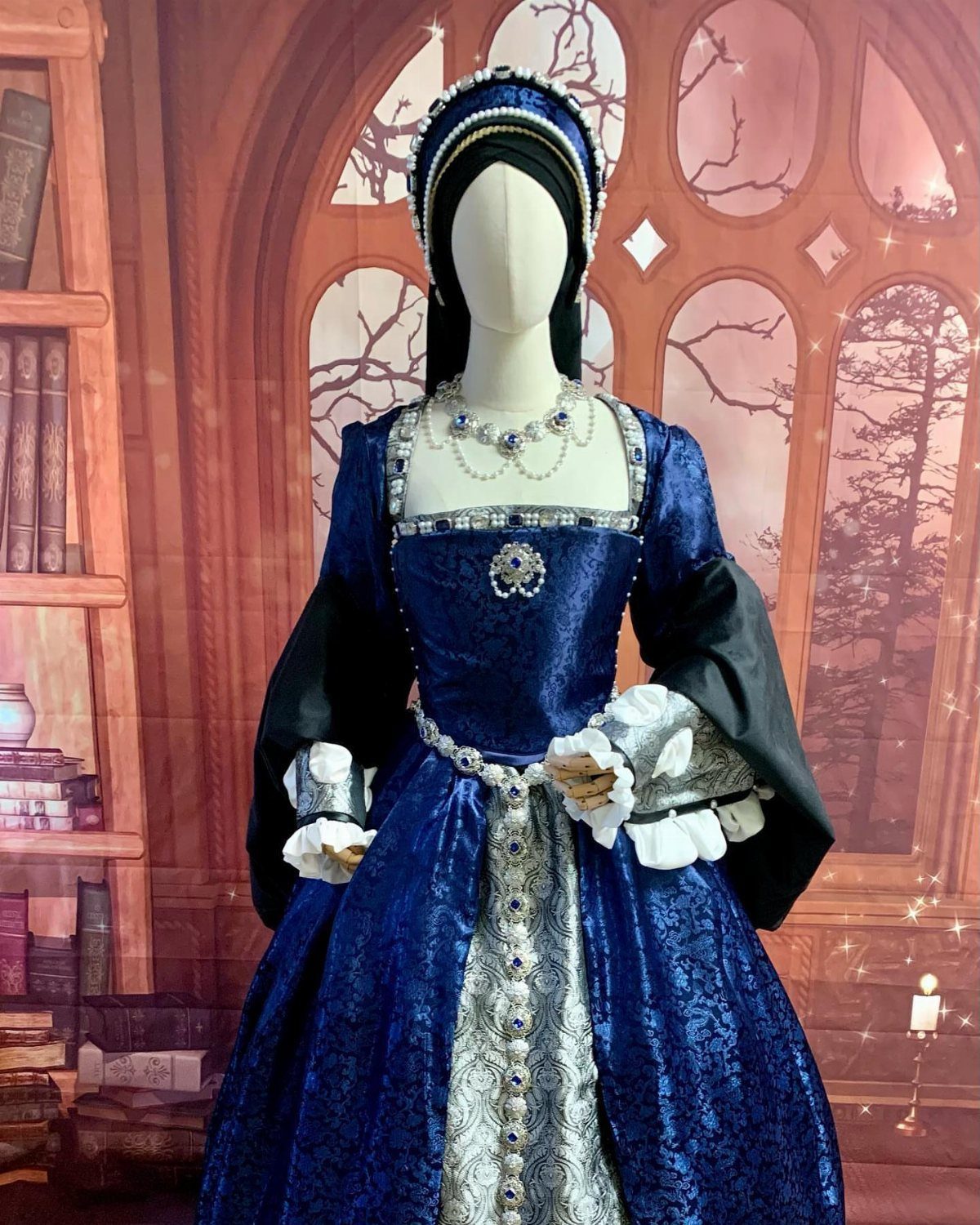
Blue and silver is the cool-toned answer to all the gold in Tudor dressing. Velvet in blue reads as deep and formal, and silver trim catches light without looking flashy.
The matching headpiece matters here: when hood and gown share a palette, the whole outfit looks planned rather than assembled.
If gold washes you out, this is the combination I would try first. A sapphire velvet dress with silver jewelry borrows the effect with no costume at all.
5. Black and Gold Brocade Gown
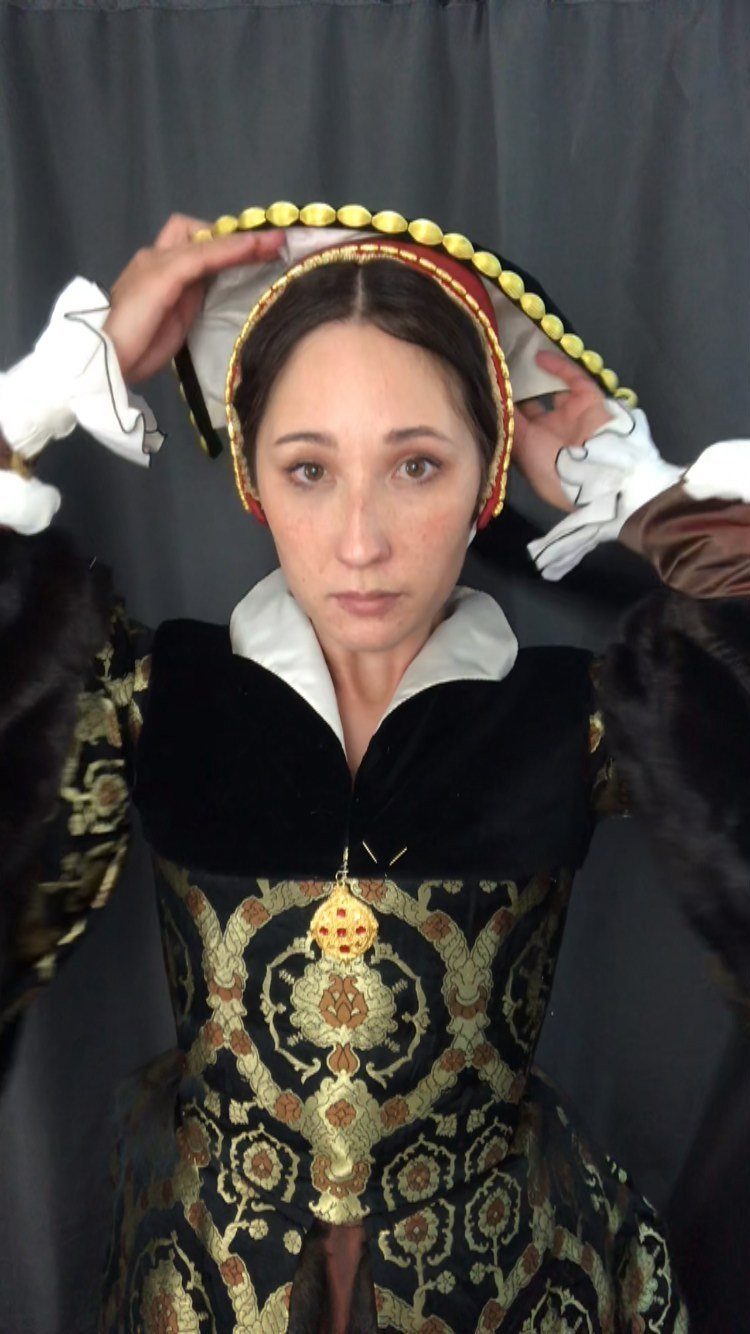
Black grounds gold brocade so it looks formal instead of flashy. The pattern does the decorating, which means you can skip extra trim and let the fabric lead.
A French hood completes the look, and its curved line frames the face well. Keep jewelry minimal, since the brocade already carries plenty of detail.
For modern wear, a black dress with gold brocade panels, or a brocade jacket over black, gives the same contrast. It works for evening events and dressy winter occasions.
6. Blue and Gold Gable Hood Gown
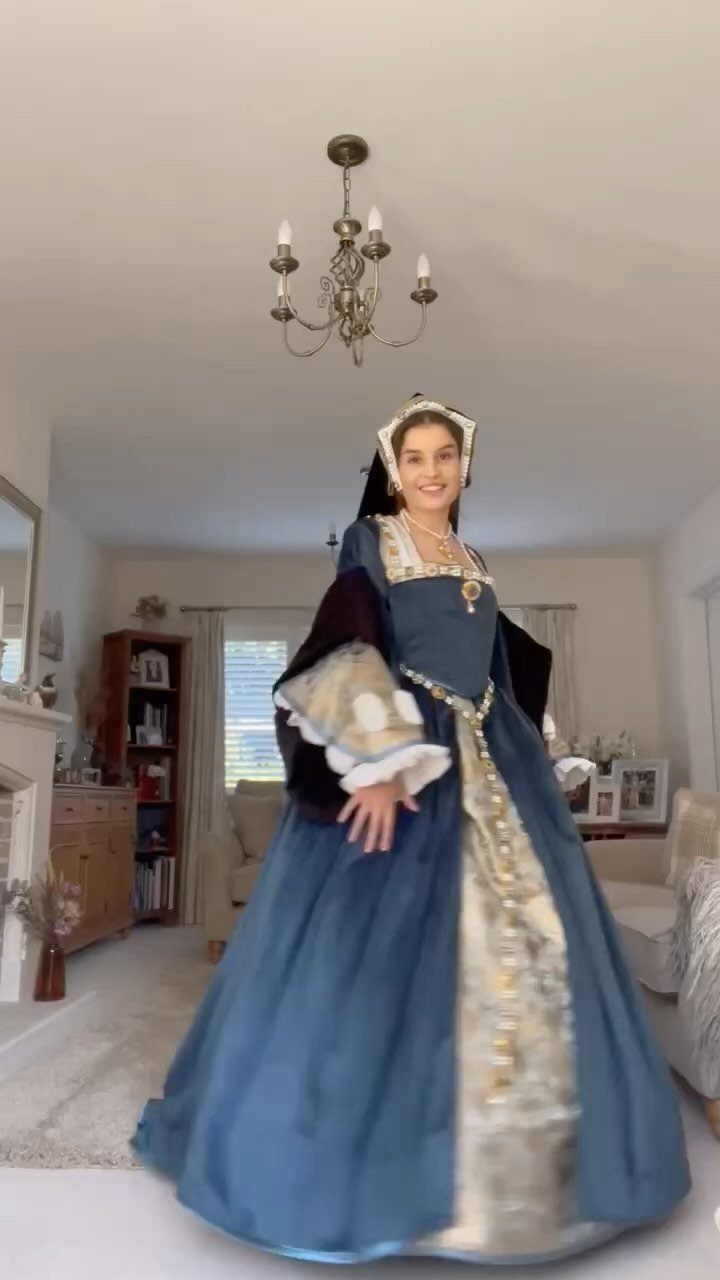
Gable hoods are the most structured headwear of the Tudor period, with a stiff, pointed frame that sits like a small roof over the face.
Matching the hood to the gown, here in blue and gold, keeps that shape from looking like an afterthought.
It is the hardest piece to wear casually, and I would say so plainly. Reserve it for costume events or faires.
For daily wear, take only the palette: a blue dress with gold earrings echoes it nicely.
7. Red and Gold Brocade Gown
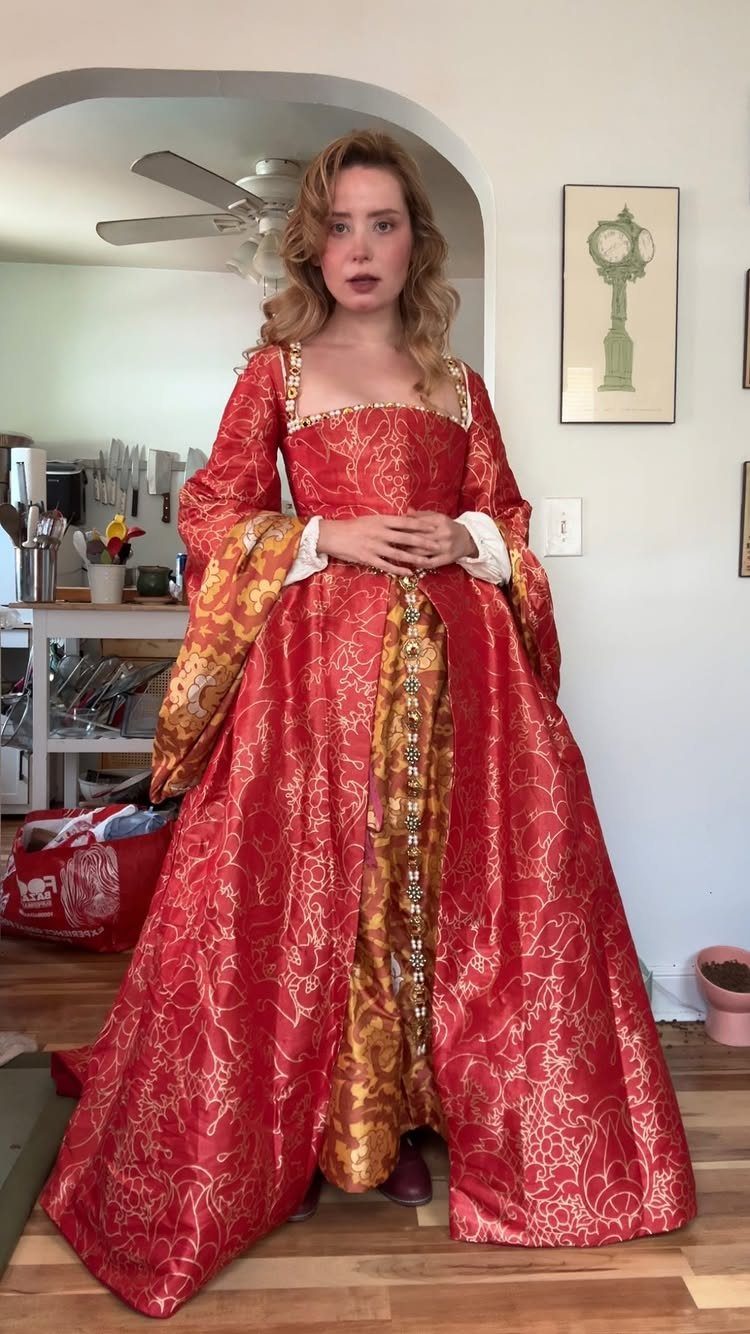
Wide bell sleeves and a square neckline are what make this red and gold brocade read as Tudor. The square neckline also leaves room for a necklace or a plain linen partlet, so the shape does the framing for you.
Red brocade is a loud fabric, so I would keep everything else quiet. Skip the extra trim and let the gold pattern carry it.
For modern wear, a red brocade dress with a square neck and a slightly flared sleeve gets the idea across. Add gold earrings and nothing more.
8. Working-class Wool Dress and Apron
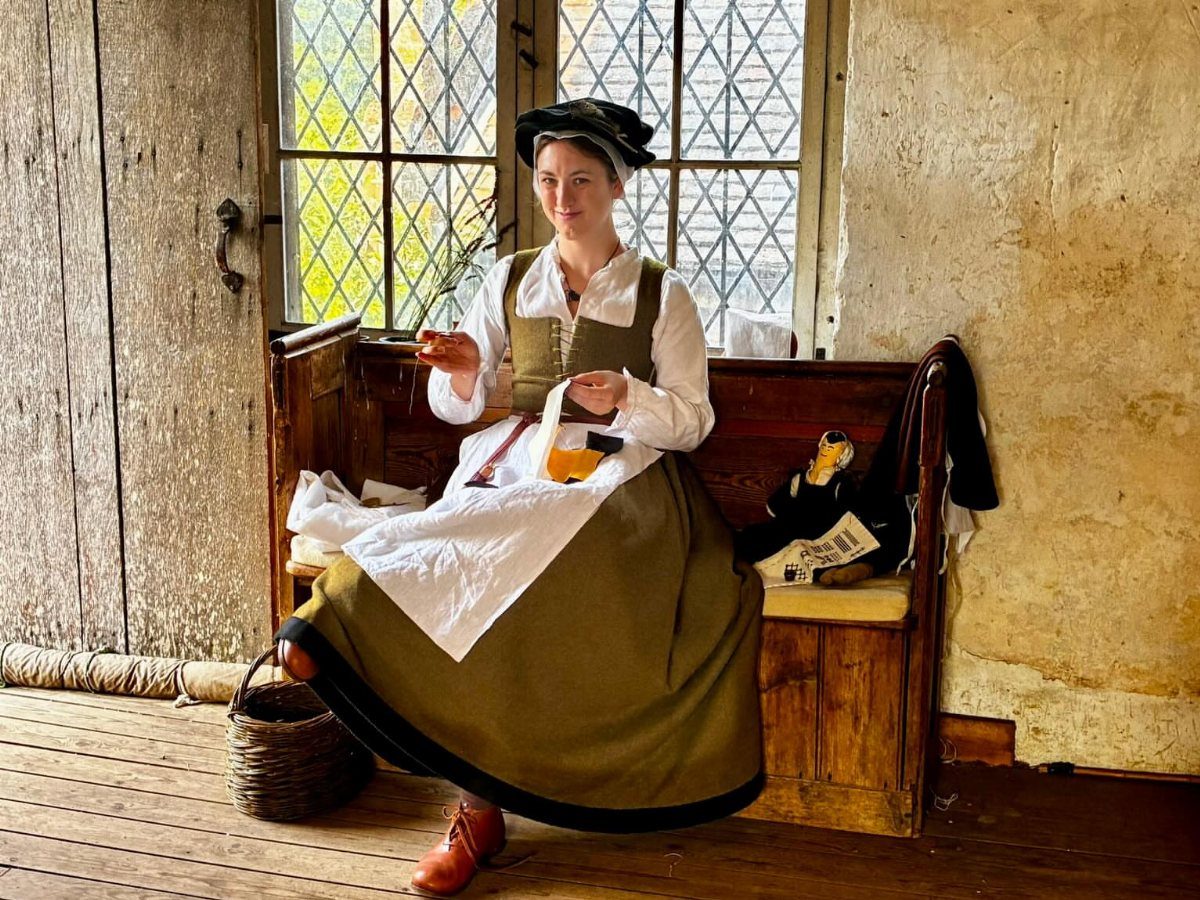
A brown wool dress with a white apron and cap is the Tudor look I could imagine wearing most often. It is plain on purpose, and the white pieces break up the brown so it never looks flat.
Both the apron and the cap are easy to copy. A brown or oatmeal wool dress, a crisp white apron tied at the waist and a simple white cap cover it.
It suits a cottage-style afternoon or a faire better than an office. Gold would look wrong here, so leave the jewelry at home.
9. Purple Velvet and Cream Gown
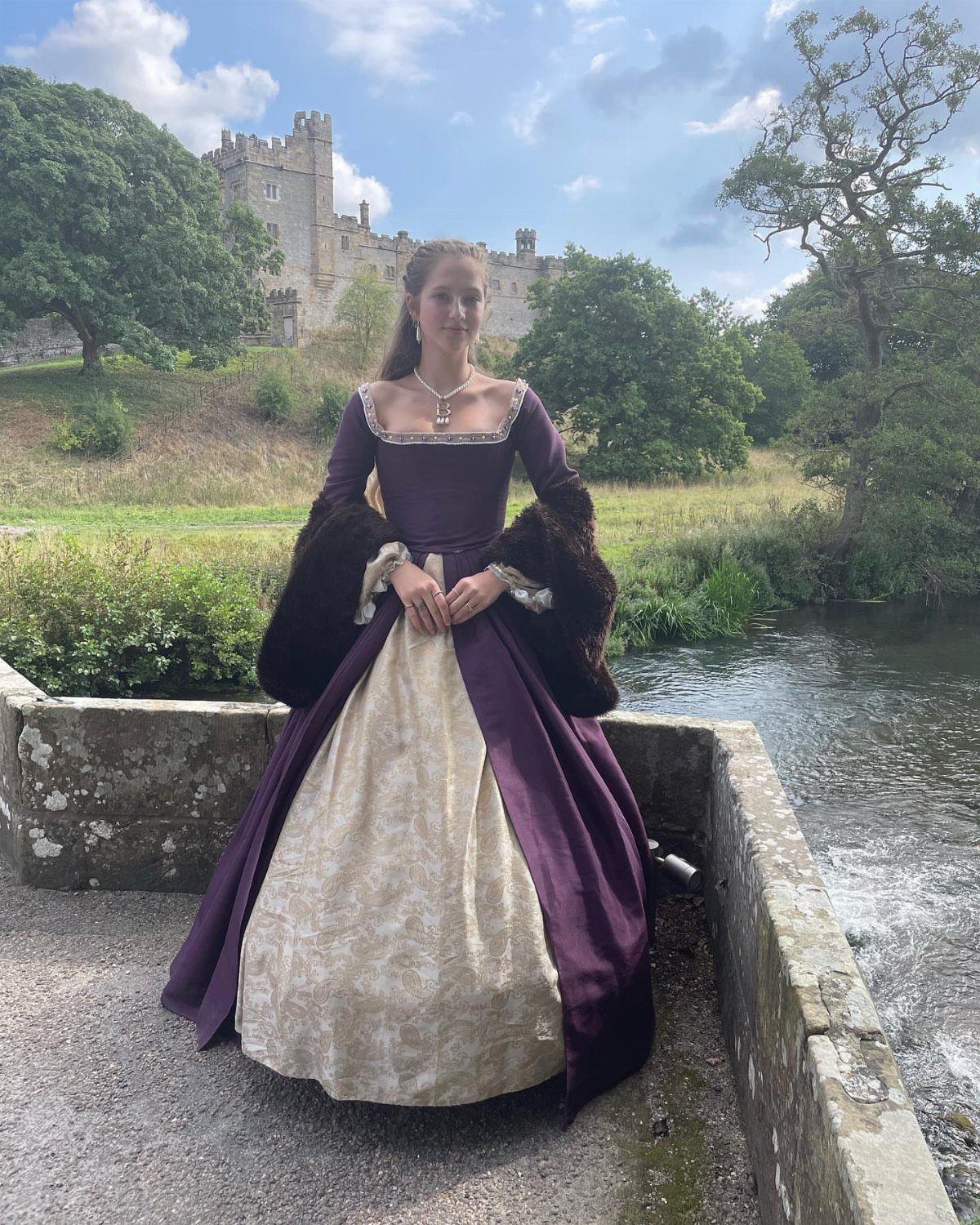
Cream under a purple velvet overskirt is a softer way to wear Tudor richness. The pale base lightens all that velvet, and fur on the sleeves adds weight right where the eye lands.
I would keep the 2 colors in clear halves, light on top and deep below, rather than mixing in a third. That keeps the gown from looking busy.
For everyday dressing, a cream knit top with a plum velvet skirt gets close. Faux fur cuffs on a coat sleeve borrow the trim.
10. Gold and Teal Court Gown
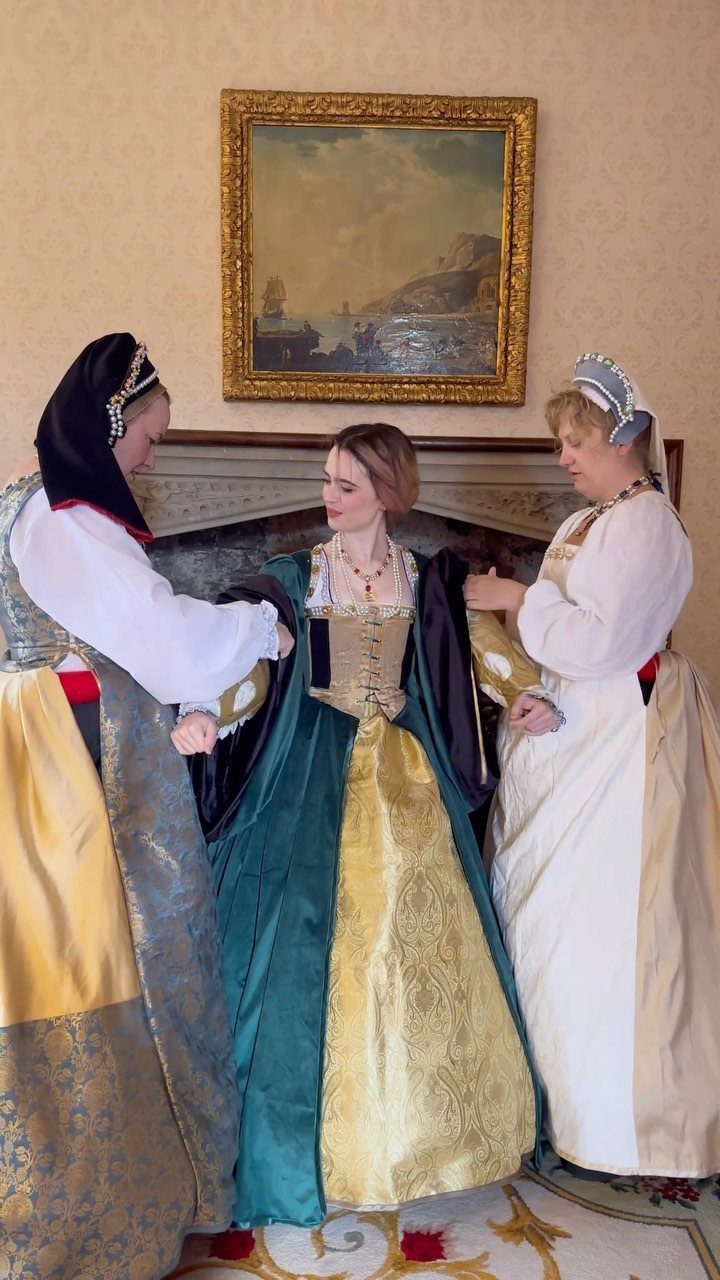
Gold and teal is the most formal pairing among Tudor court looks, and the stiff, structured bodice is what makes it read that way.
A gown like this holds its own shape, which is also why the attendants are needed to dress her.
Realistically, this is a costume or event piece, and getting into it alone is hard. Plan on help.
For daily wear, borrow the colors only: a teal dress with a gold necklace gives the same richness with no assistance required.
Frequently Asked Questions
What is Tudor fashion?
Under the Tudor kings and queens, English clothing shifted with a person’s rank, their sex, and whoever sat on the throne at the time.
Court women wore structured gowns in velvet and brocade, often trimmed with fur, pearls and gold, plus headwear like the French hood or gable hood. Working women wore plain wool dresses with a white apron and cap.
What did Tudor women wear on their heads?
Tudor women wore a white linen cap, often with a decorative hood over it.
The French hood has a curved line that frames the face, while the gable hood is stiff and pointed, like a small roof. Since a cap covers the hairline completely, nothing under it needs styling.
How can I wear Tudor style today without a costume?
Borrow one element and keep everything else quiet. For everyday wear, I’d start with velvet in a deep jewel tone: forest green with one gold or pearl accent, burgundy with faux fur cuffs, or teal with a gold necklace.
The gable hood and the full court gown are the hardest to wear casually, so I’d save those for faires and costume events.