Weather and setting decide which piece to pick: thicker wool and an embroidered cloak suit cold, outdoor events, while the overdress works for an indoor evening, and the hennin and veil only make sense at a formal occasion.
Every item on this list, from the pointed-toe shoes and the bodice up to the hennin and veil, follows the same rule: the outfit has to read as one rank, so a rich cloak over thin, rough basics looks wrong.
1. Overdress / Medieval Dress
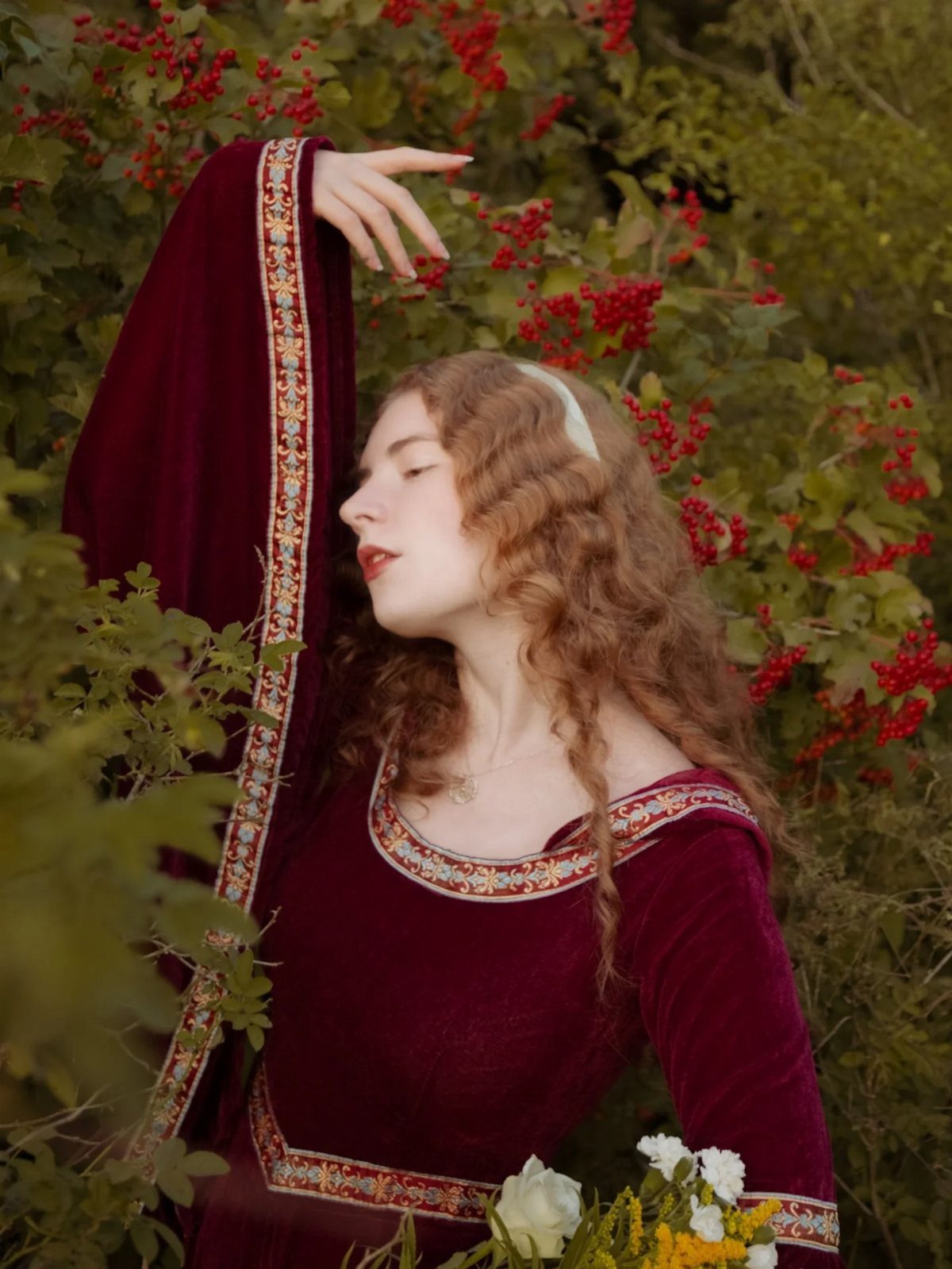
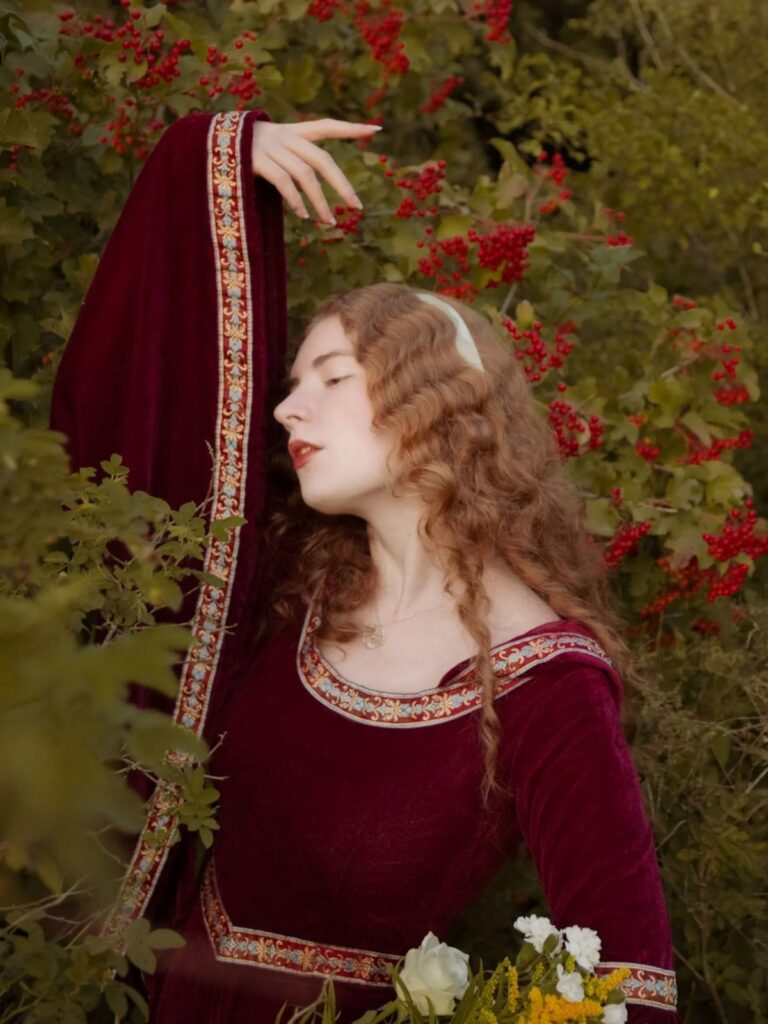
Velvet does the talking on a formal overdress. A deep maroon pile with gold embroidery reads as expensive from across a room, which is exactly how medieval dress signaled rank.
I would pick one rich color and let the embroidery carry the detail, rather than stacking trims. Velvet is heavy and warm, so it suits cool evenings and indoor events better than a summer fair.
Choose the best fabric you can afford over adding more pieces.
2. Thicker Wool for Winter
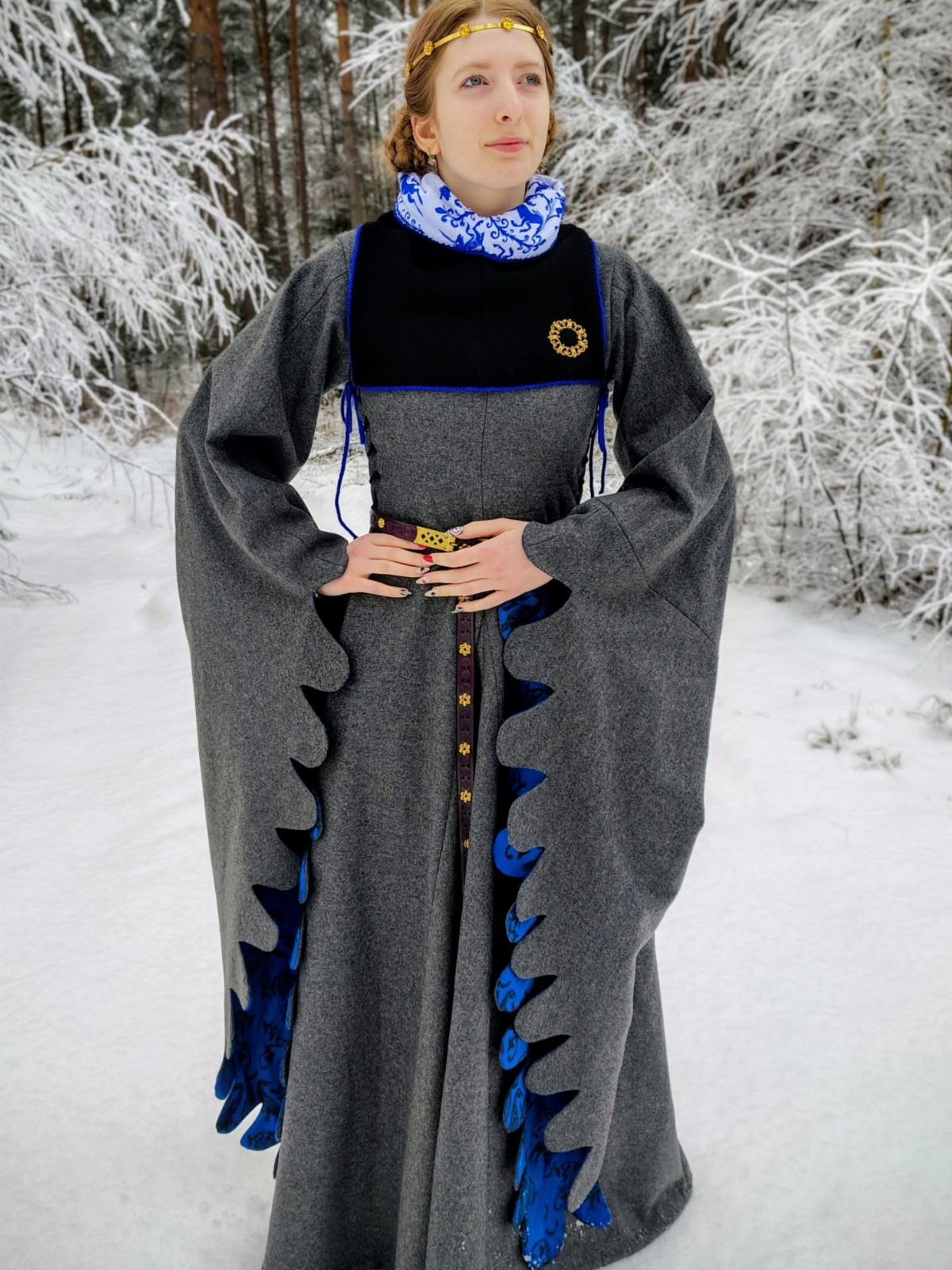
Grey wool in a heavier weight is my pick for cold-weather events. A gown like this one, with blue accents at the neck, looks formal without needing anything shiny.
Wool holds warmth, and a plain grey base lets one accent color do the work.
Weight is the cost of thicker wool: a heavy gown pulls on the shoulders, so try it on with the layers you plan to wear underneath.
3. Bodice
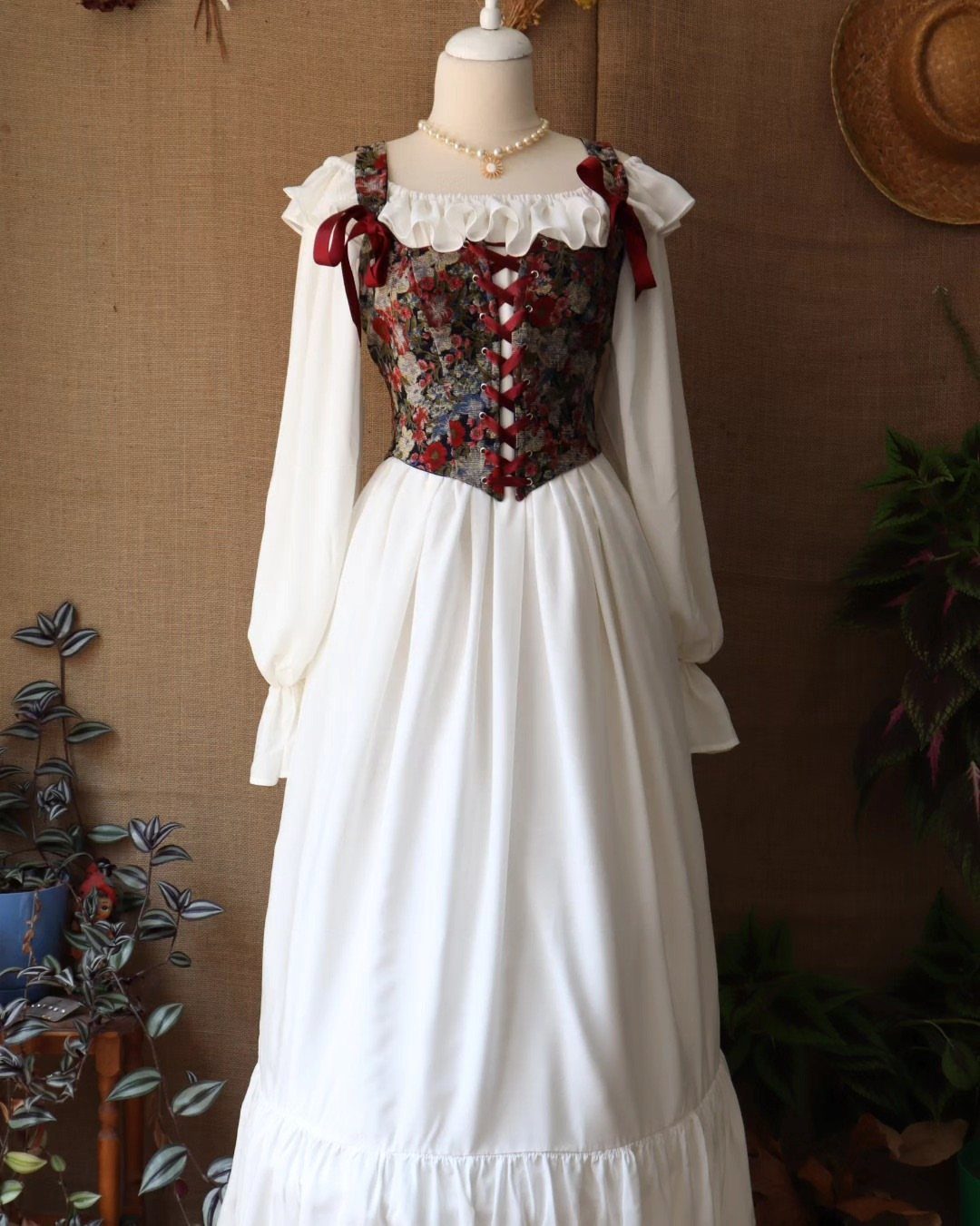
A bodice gives a medieval gown its shape.
For fit, check that it sits snug at the ribs and that you can still lift your arms. A pattern like this adds interest, while an undyed, solid-color linen gown beneath keeps the look from getting busy.
4. Pointed-toe Leather Shoes
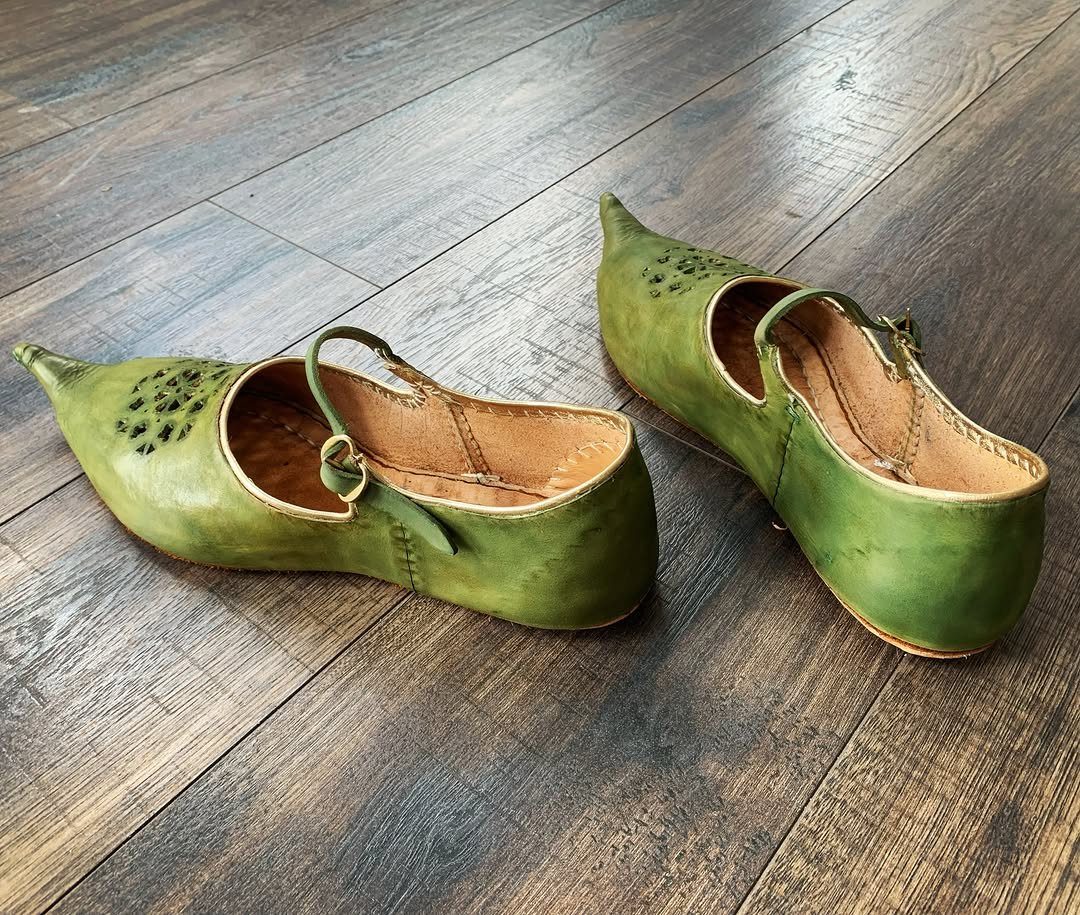
Pointed-toe leather shoes finish a formal look from the ground up. Green leather with decorative perforations and buckled straps is a bolder choice than the usual brown, and it shows under a long hem.
Straps and buckles let you adjust the fit, which helps if your feet swell during a long event. Leather is a sturdy material for walking on grass.
Keep the gown hem just above them so the detail stays visible.
5. Embroidered Medieval Cloak
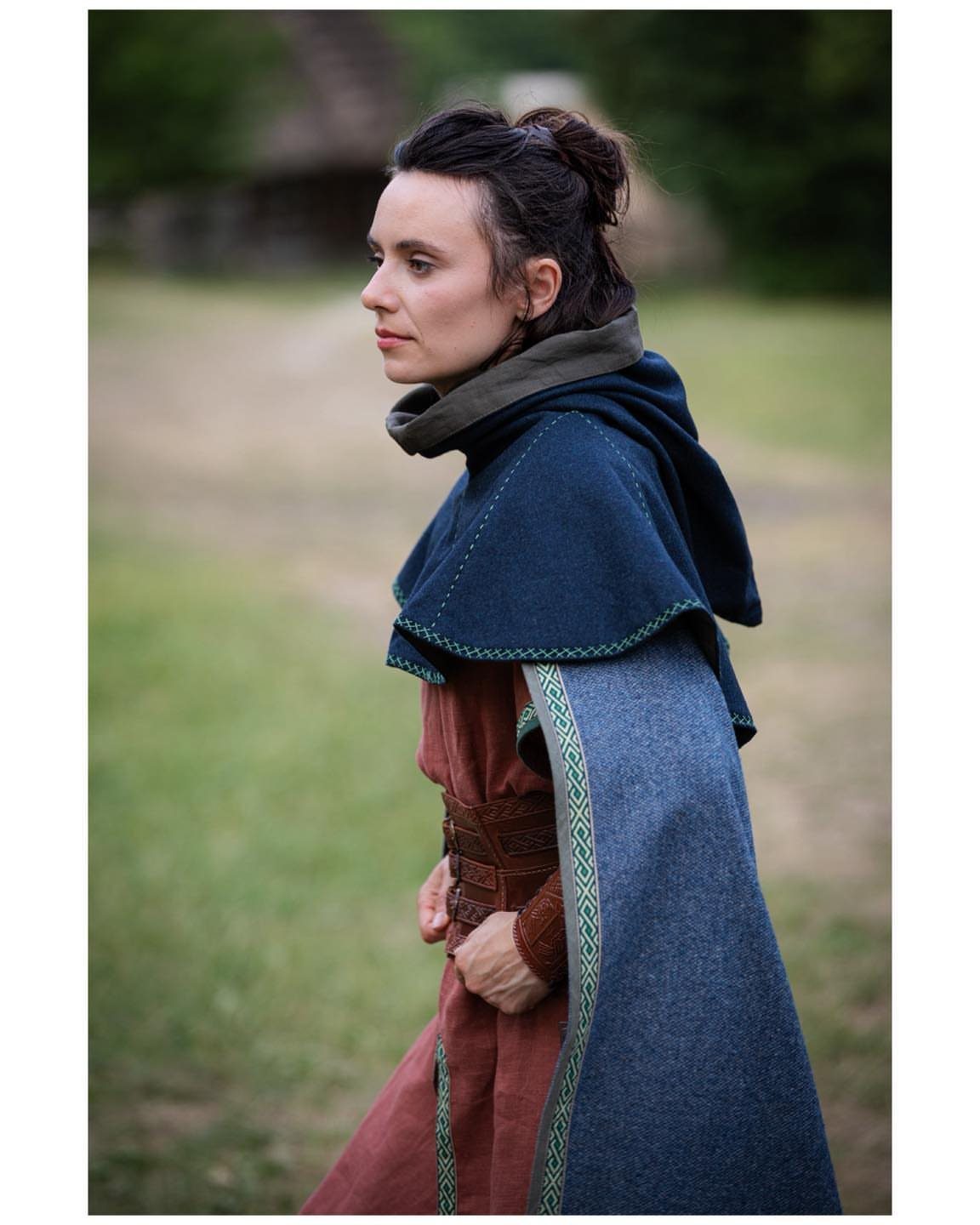
Over a red dress, a heavy blue wool cloak with green embroidered borders is the piece I would buy first for outdoor events. The border frames the whole silhouette and adds formality without extra pieces.
Blue against red gives strong contrast, so keep everything else simple. Wool is warm and drapes well, though it adds real weight.
Pick a length that clears the ground enough to walk comfortably on grass.
6. Medieval Hennin and Veil
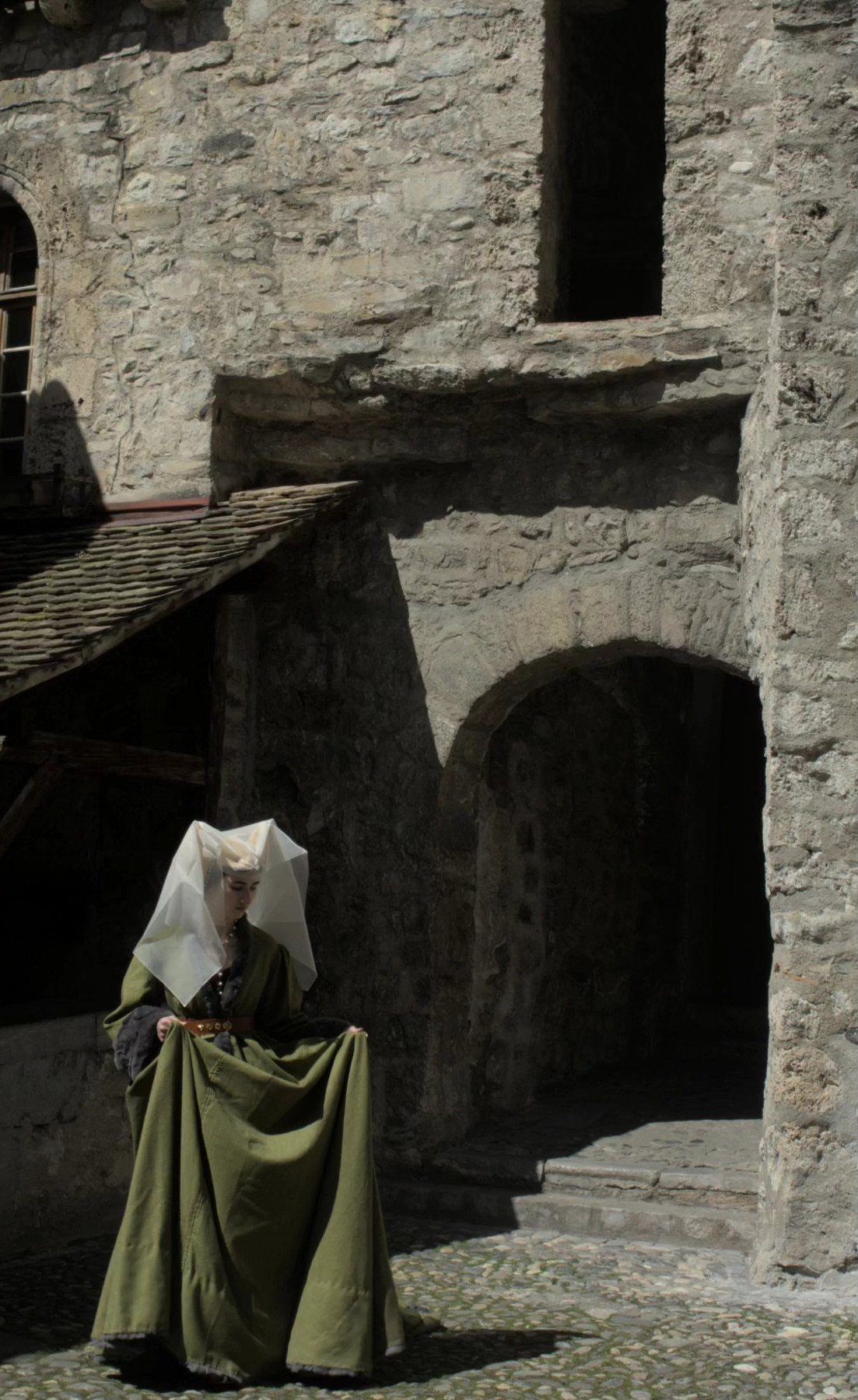
A structured white hennin with a flowing veil adds height and drama to an olive green gown. White against olive is clean and quiet, so the headdress becomes the focus.
Because the hennin is rigid, it needs to sit securely, so try it on and turn your head before committing. Keep hair tucked away neatly beneath it.
It suits a formal event best; it is not an everyday piece, and that is the trade-off.
Quality and Durability of Materials
Fabric choice decides how long a formal piece lasts, and medieval makers treated clothing as an investment. A well-kept silk dress could last 50 years or more, and handing a wedding dress down through generations was not unusual.
Wool was the main cloth for people of every class, so a good wool piece is the historically right buy, not a compromise.
Linen next to the skin felt softer than wool, and it had another advantage: it could be scrubbed and left out in the sun to bleach white again.
If you are choosing where to spend, put the money into the outer layer you will wear most. Silk is the splurge; it was extremely expensive then, too.
Natural dyes shaped the palette.
Red came from an insect, green from lichen, and blues from the dyer’s woad plant. That is why deep, saturated shades suit formal looks best.
Historical Context of Clothing
Medieval dress changed a lot between the early and late Middle Ages, so decide which period you want before you shop. Mixing eras is the quickest way to make a formal outfit look like a costume.
Cut also followed status.
Middle-class women wore simple dresses in natural colors, fitted more closely over time, which made daily chores easier. Women of noble rank dressed in richer, brighter colors, and their gowns often had wide, sweeping sleeves.
For a formal event, that gives you 2 clear directions.
Natural tones and a closer fit read as modest and practical. Bright color and wide sleeves read as grand, so wear them only when you want the attention.
Role of Clothing in Social Status
Rank ran through every part of medieval life, and what a person wore announced where they stood on that ladder. Walk through a market and the clothes alone would sort the crowd into nobles and commoners before anyone spoke.
Dress codes controlled who could wear what, and those rules were often written into law. Silk on a peasant would have been scandalous, and a noblewoman dressed in rough, undyed linen would have been just as strange.
Use that as a styling rule.
For a formal look, pick richer fabric and brighter color, since those were the signals of high rank. For a working-class character, stay with plain cloth and natural shades.
Keep the whole outfit at one rank. A single rich piece over rough basics looks like a mistake.
Frequently Asked Questions
What’s the dress code for medieval times?
Law, not taste, decided what a person wore, and sumptuary rules tied clothing to rank.
Commoners could be forbidden certain colors and furs that belonged to the nobility, and wearing royal purple without the standing for it could land a person in real trouble.
What did a kirtle look like?
A kirtle was a gown or dress worn by women, often ankle-length. For a formal outfit, I would treat it as the gown layer and keep the hem just above your shoes so the footwear stays visible.
Is there an online store that sells medieval clothing?
Yes, several online retailers specialize in medieval clothing.
Leonardo Carbone, a German shop, stocks the full range, from plain underdresses up to noble gowns, and it’s aimed at fairs and reenactment. Medieval-market.com offers court gowns, casual dresses and woolen coats, plus fabric and custom costumes.
Did medieval women wear black dresses?
Yes, black dresses were worn, especially by women of higher status.