Where you will be sitting, standing and walking matters more than the print or the color, so check the hem, the neckline and the fabric against your day before you fall for a pattern.
These 8 run from a floral maxi with a hem that can drag to a short flare dress, and from a light blue chiffon one-shoulder for a wedding to a black fit-and-flare that goes from office to dinner with only the shoes changed.
Most casual dresses land between $25 and $50, so a pretty one rarely needs a big budget.
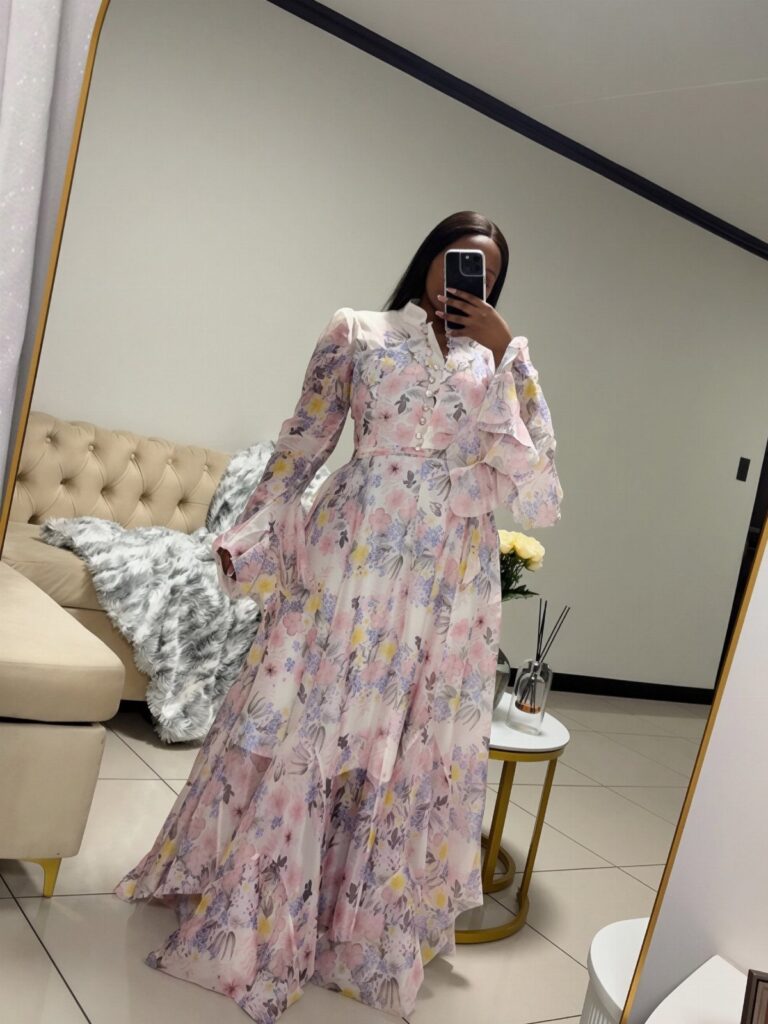
1. Floral Print Maxi Dress
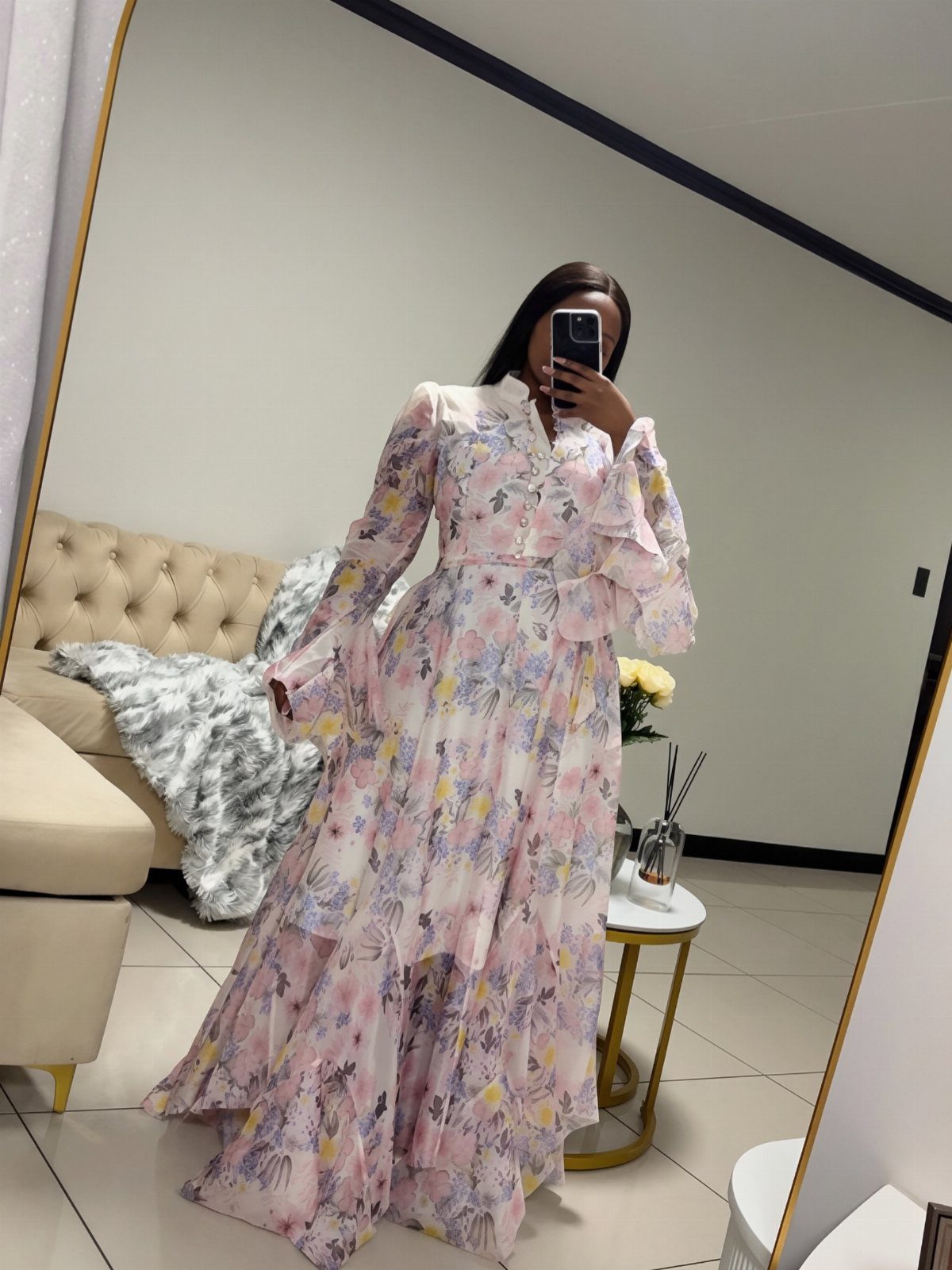
A floral maxi is the easiest dress to build a whole day around, since the print does the work and the shoe can stay simple.
Flat sandals or white sneakers keep it casual, and a small belt at the waist gives a long, straight cut some shape.
Check the hem before you buy. On a long dress, even an inch of extra length means dragging or tripping, so try it with the shoes you plan to wear.
If the print is busy, I would keep the bag and jewelry plain.
2. Yellow Floral Printed Puff Sleeve Mini Dress
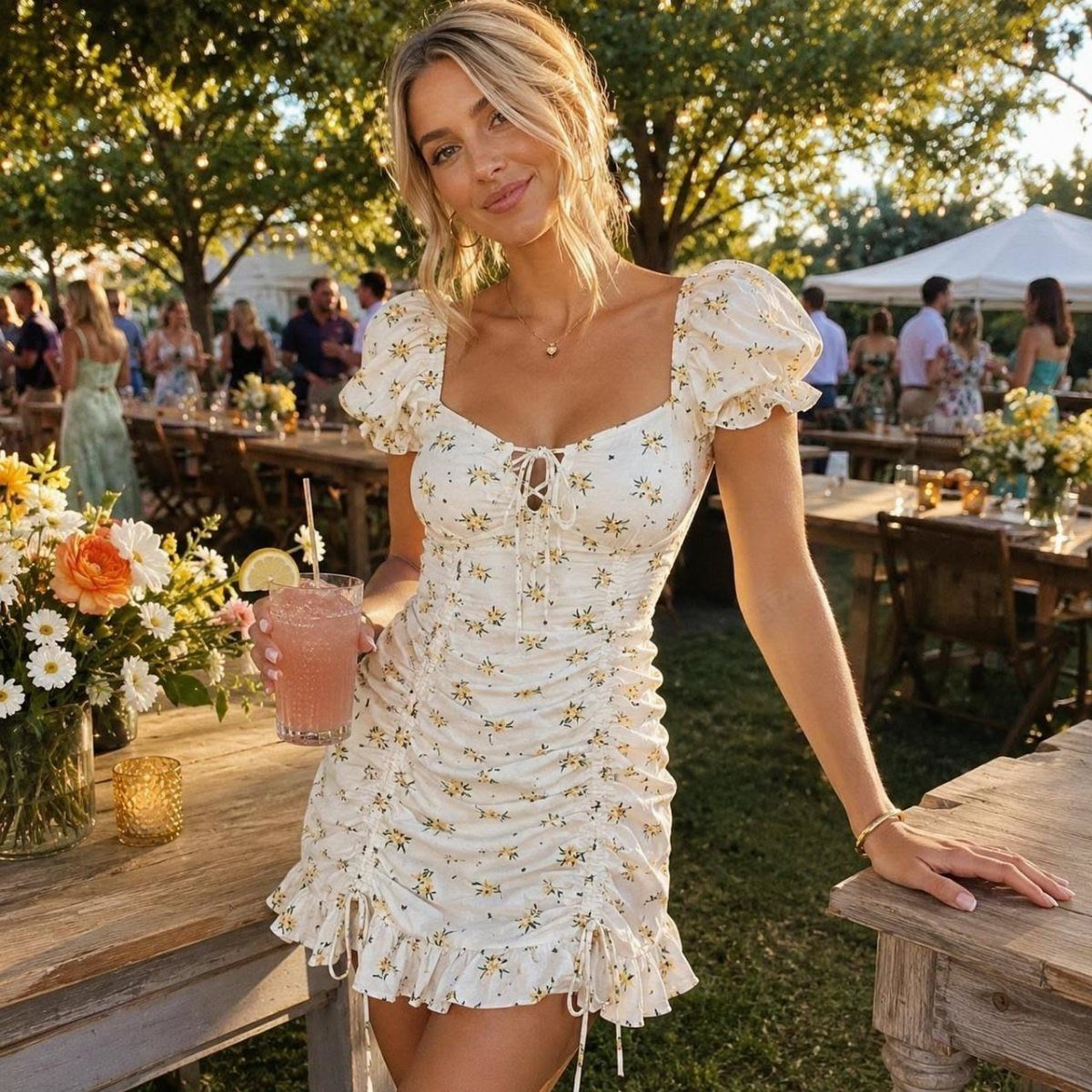
Puff sleeves give a short dress a playful shape, which is why this one suits a garden party so well.
The sleeve adds volume at the shoulder, so the skirt looks best when it stays simple and fitted lightly through the body.
I would pair it with flat sandals or low block heels and skip a necklace, since the sleeves already frame the neckline.
Raise your arms in the fitting room. Puffed sleeves that pull tight at the elbow or shoulder get annoying fast.
3. Tiered Skirt Dress
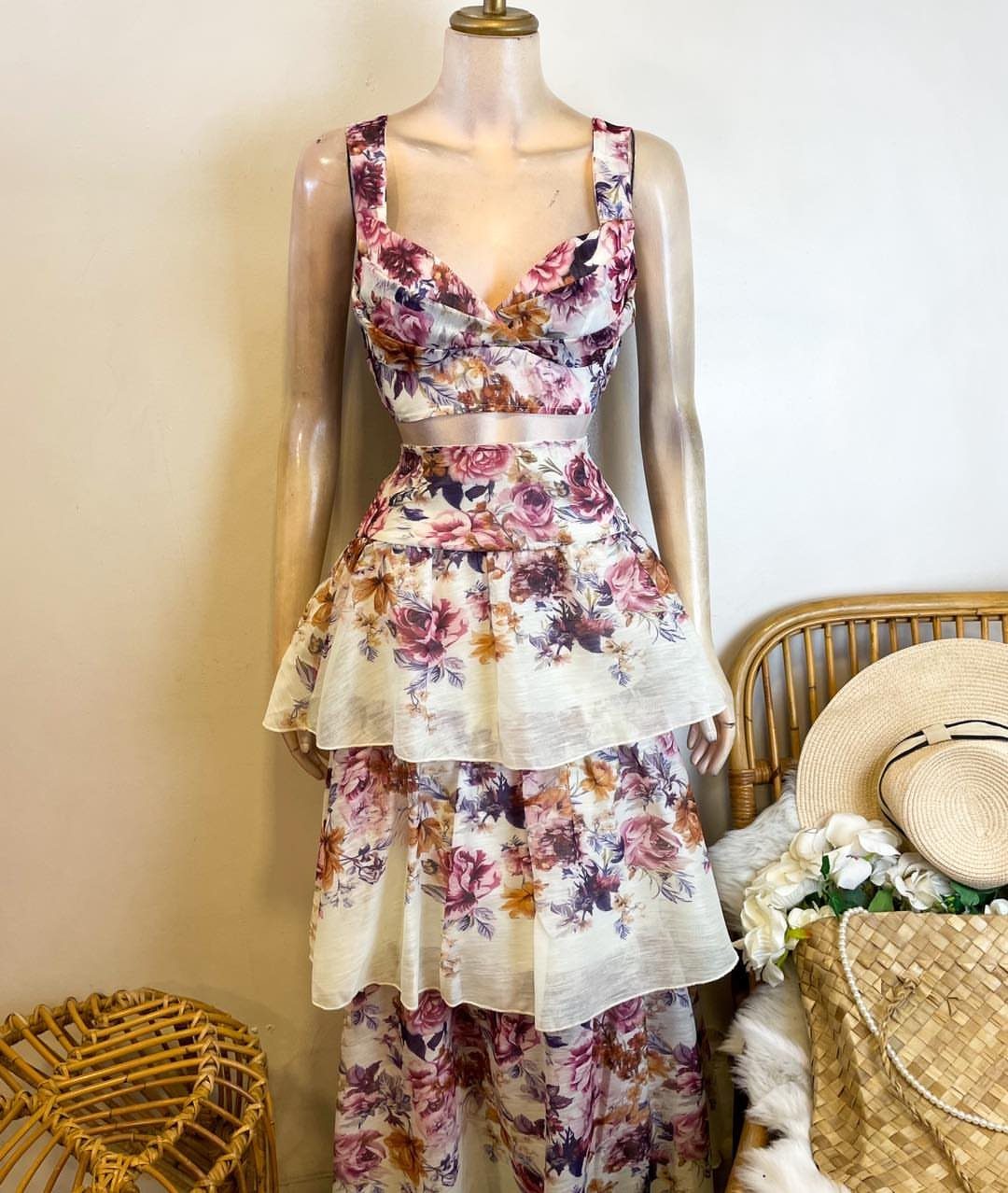
The tiered skirt on this dress makes the cut forgiving if you like room around the hips and thighs.
Fabric weight matters most here. A light, drapey fabric keeps the layers swinging, while a stiff one can make the skirt look bulky.
I like a fitted top half to balance the fullness, and a straw bag keeps the look easy for warm weather.
4. Maxi Dress with Ruffles
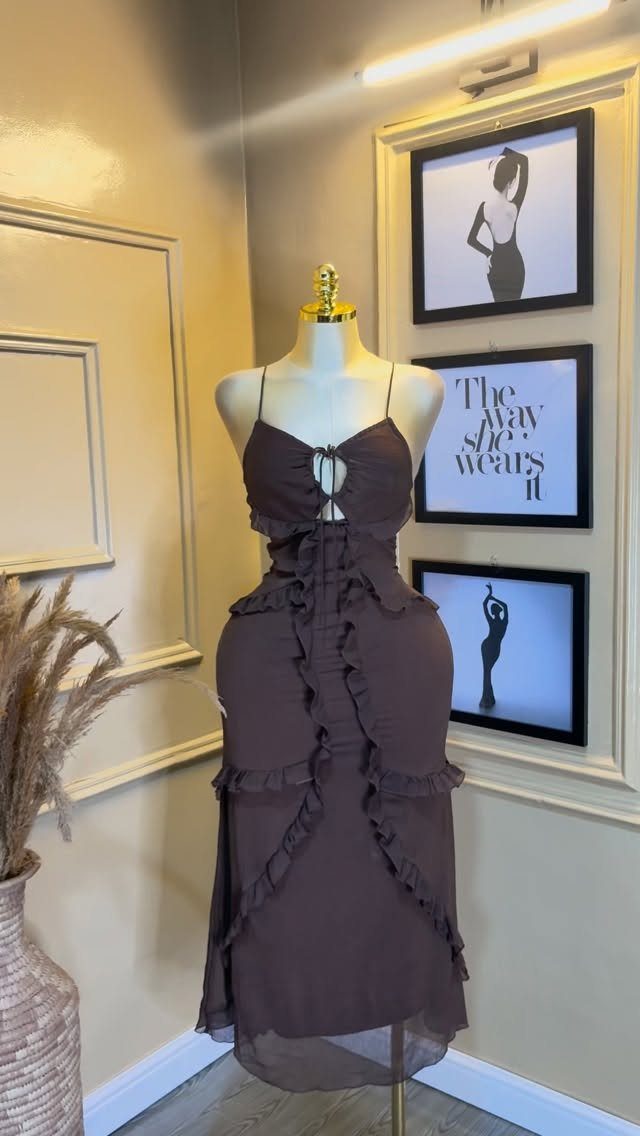
Ruffles on a maxi read as feminine without needing much else, and a deep brown keeps them grounded instead of sweet. Because the trim already adds texture, I would leave off extra layers and keep the accessories small.
Placement is the choice to make. Ruffles at the neckline or hem add volume in those spots, so pick the position you want emphasized.
Try sitting down in it before buying. Long, ruffled hems can bunch and snag more than a plain skirt.
5. Red One-shoulder Ruffle Mini Dress
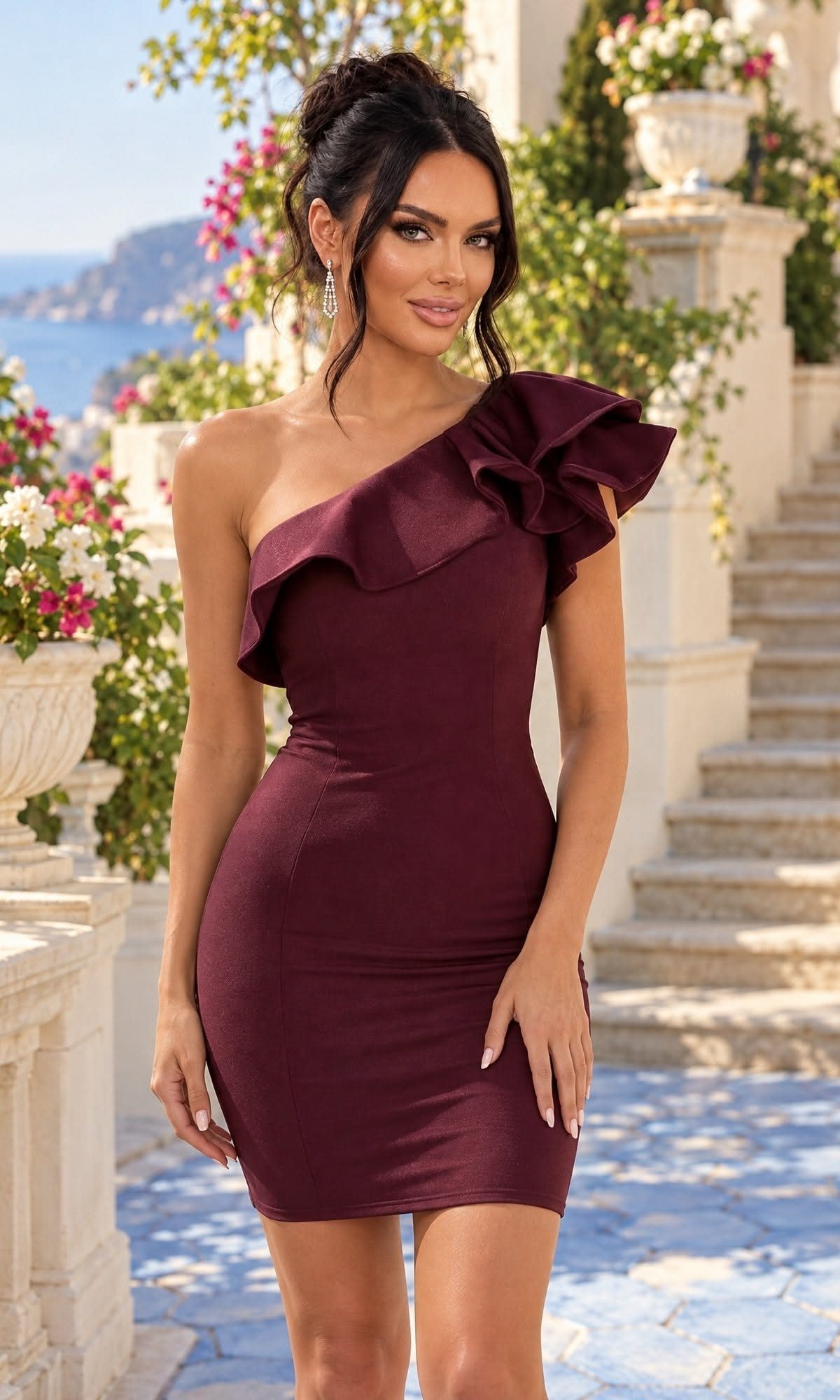
One shoulder bare, one covered: that asymmetry is the whole design, and ruffles along the neckline add softness to it. A burgundy shade looks rich in daylight and works just as well for an evening event.
Skip statement necklaces, because the neckline has no room for them. Earrings are the better move, and a strapless bra or a sturdy bonded one-shoulder style will keep the dress in place.
Test it by moving your arms. A single strap can shift if the fit is loose.
6. Sleeveless Black Fit-and-flare Dress
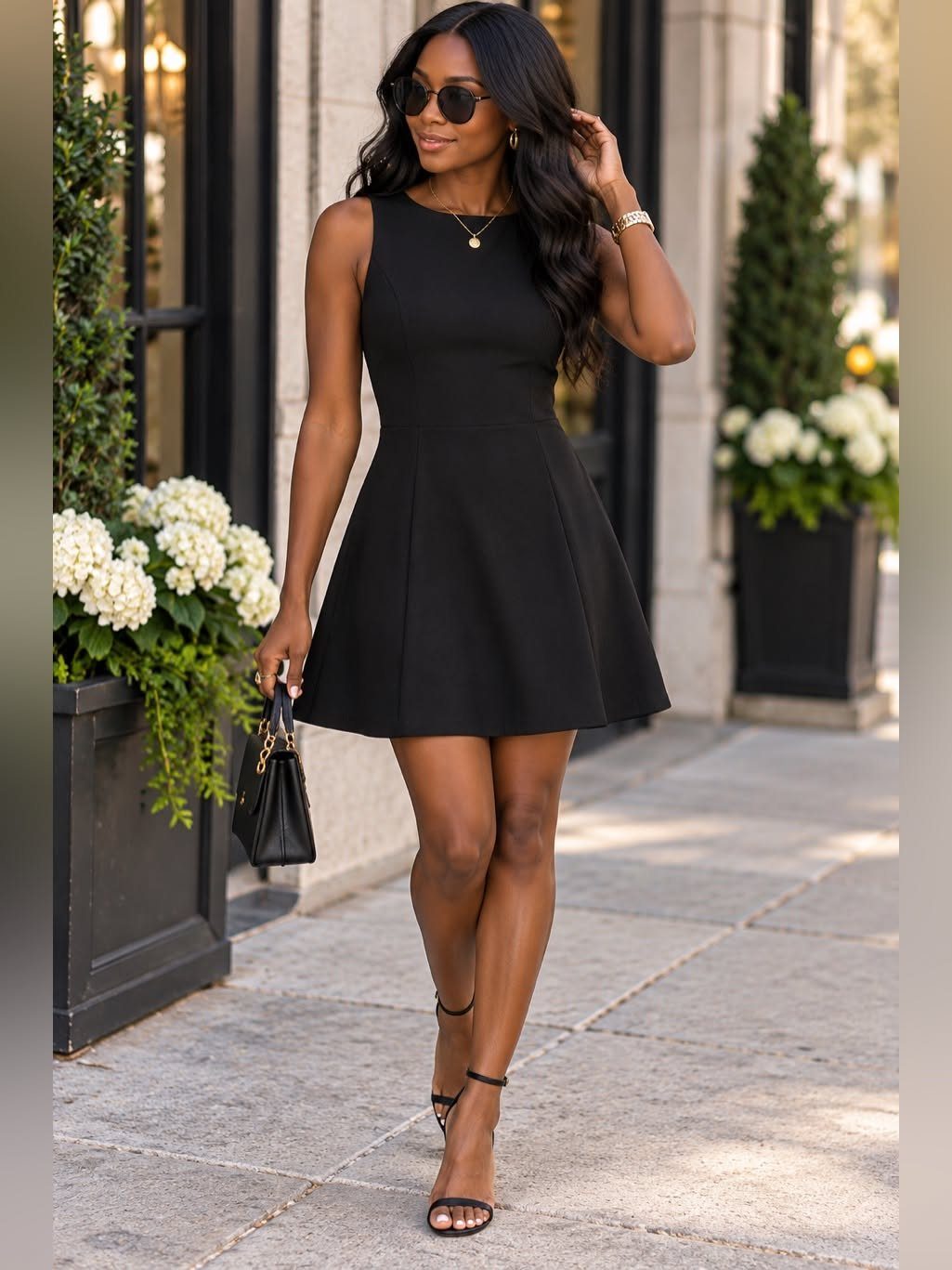
A fitted bodice that flares from the waist is one of the most reliable shapes for defining the waist while leaving the skirt free to move.
In black and sleeveless, it works for an office day or dinner with only the shoes changing.
I would choose a waist seam that sits at your natural waist, since a seam that lands too high or low throws off the whole shape.
Add a blazer or cardigan for cooler hours, and heels or flat sandals both work.
7. Light Blue Chiffon One-shoulder Dress
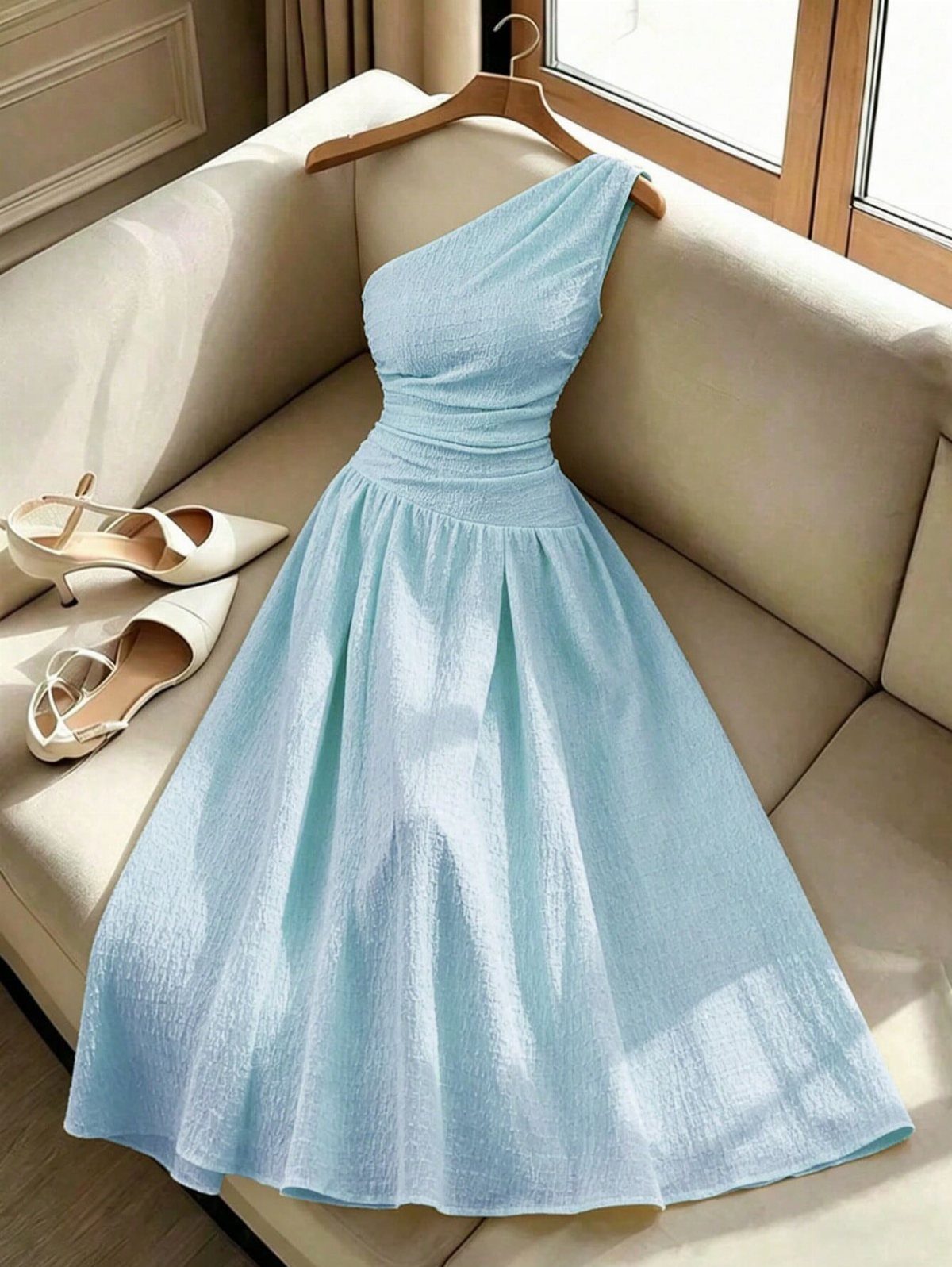
Chiffon is sheer and light, so a one-shoulder cut in pale blue falls soft instead of stiff. The flared skirt moves with every step, which suits a wedding guest look or a daytime event.
White pointed-toe heels make a clean match, and they lengthen the leg. Keep jewelry to earrings, since the bare shoulder already shapes the neckline.
Chiffon can cling or show seams, so check it in daylight and ask whether it comes lined before you order.
8. Short Flare Dress
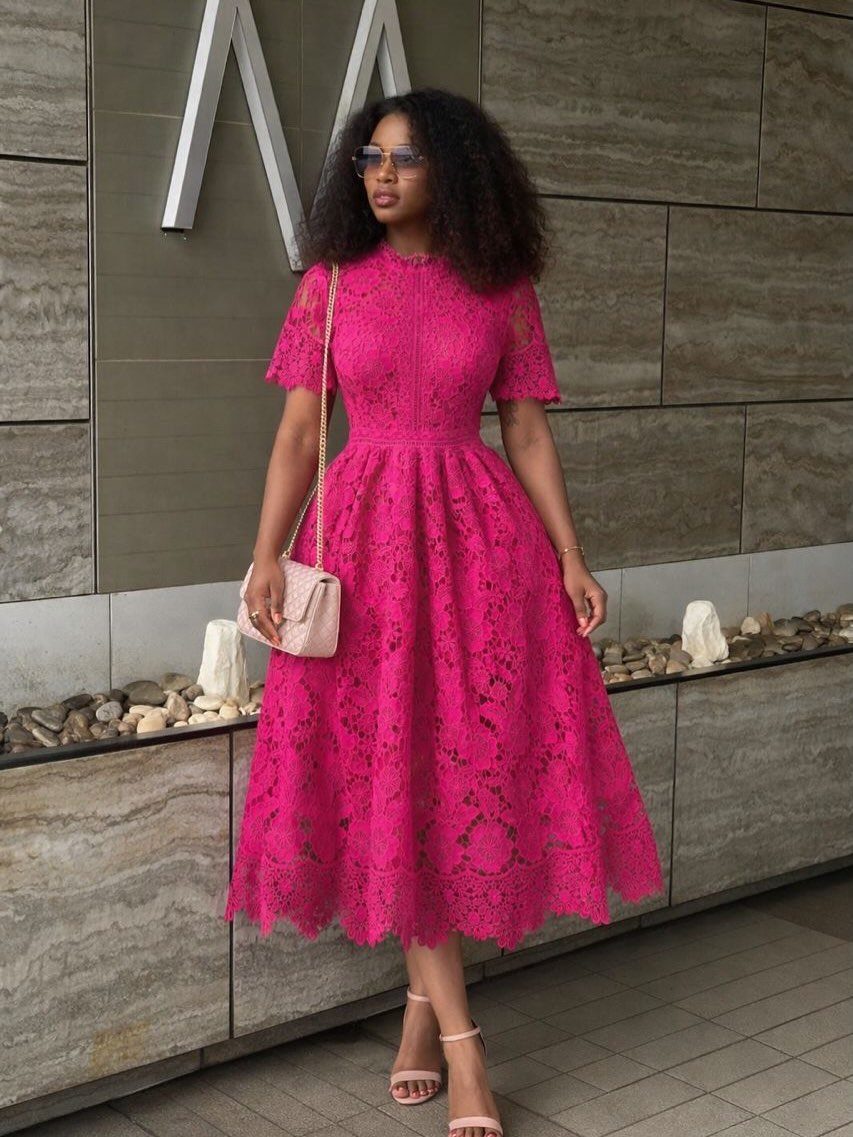
Short and flared, this dress swings from the waist and stops well above the knee, so the shoes do a lot of the styling.
Nude heels keep the line of the leg unbroken, which lets a bright color or lace carry the look while the shoe stays quiet.
Lace tends to feel more polished than plain cotton, so I would choose it for a dinner or party.
The flare gives room through the hips, which helps if you want a fitted top and a skirt that does not cling.
Sit and bend in the fitting room to check the length.
Dress Styling Tips
Shoes and a bag set the formality of a dress faster than the dress itself. A flat sandal and a canvas tote read daytime; a small structured bag and a heel read evening, even on the same dress.
Match the metal in your jewelry to the hardware on your bag and shoes. Gold buckle, gold earrings, done.
Carry only one statement piece. If the bag is bold, let the shoes stay neutral, and the other way around.
Before you leave the house, walk across the room in the full outfit. Shoes that slip or a bag strap that keeps sliding off your shoulder will bother you all day.
Occasion Suitability
Start with where you will be sitting, standing and walking, then pick the dress. A long afternoon on your feet calls for a forgiving fabric and a hem that stays put; a seated dinner can handle something more fitted.
Casual dresses cover a wide price range. In one retailer’s casual dress category, most pieces fall between $25 and $50, with a smaller group at $100–$150, so a dependable everyday dress does not have to cost much.
Fit & flare is the most common style in that same category, which says a lot about how easy it is to wear.
Petite and tall sizing is also offered, so check the length options before you assume a hem needs tailoring.
For formal events, spend your budget on fabric and fit, and keep the rest simple.
Color Coordination
Hold the fabric next to your face in natural light before you decide. If your skin looks brighter and your eyes stand out, the color works; if you look tired or washed out, move on.
Warm undertones tend to like olive, rust and ivory. Cool undertones usually look better in navy, burgundy and true blue.
Then check the dress against what you already own. A color that matches your shoes, a cardigan and a bag means you will wear it often, which is the better use of money.
Black, navy and neutral shades are the easiest to pair. Brighter colors work best when everything else around them stays quiet.